15.06.2026 11:01
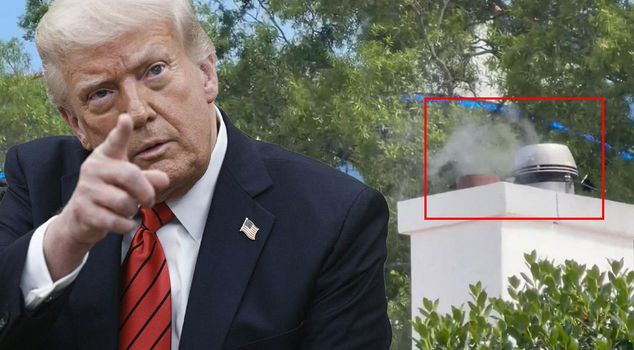
The months-long war between the USA and Iran, which has shaken the global economy, is officially ending as a result of diplomatic contacts. With 'white smoke' rising from the White House signaling that a peace agreement has been reached, the Strait of Hormuz, the heart of global energy trade, will reopen to international maritime traffic after the historic agreement to be signed on June 19.
A historic turning point has been reached in the major crisis that has lasted for months, deeply shaking both the Middle East and the global economy. The war between the US and Iran, which has paralyzed global energy lines, is officially ending after long-running, intense diplomatic talks behind closed doors.
The military process, during which Iran did not back down despite US President Donald Trump's harsh threats and tensions escalated, has concluded with the parties reaching a consensus at the peace table.
PEACE ANNOUNCED FROM THE WHITE HOUSE
The address where the peace, watched with bated breath by the world public, was heralded was Washington. "White smoke" rising in the skies over the White House was captured on cameras. According to political traditions, white smoke rising from the White House signifies full agreement on the final Peace Agreement between the parties. It was announced that the historic signing ceremony, which will officially end the war that pitted two superpowers against each other, will take place on June 19.
STRAIT OF HORMUZ TO REOPEN
The development most closely concerning global markets and the energy sector under the agreement will be regarding the Strait of Hormuz. According to a statement by US President Donald Trump, immediately after the official signatures on June 19, military activity at the critical transit point will cease, and mine clearance operations will begin swiftly.
ENERGY PRICES EXPECTED TO FALL
The Strait of Hormuz, the most vital artery of global oil and natural gas trade, will be reopened to international maritime transport and ship traffic once the clearance operations are completed. With this development, energy prices, which skyrocketed during the war, are expected to fall, and the crisis in global supply chains is expected to ease rapidly.
14-ARTICLE DRAFT AGREEMENT
1- Permanent and immediate cessation of hostilities on all fronts, including Lebanon.
2- The US commitment to non-interference in Iran's internal affairs and respect for the sovereignty of the Islamic Republic of Iran.
3- Complete lifting of the naval blockade within 30 days.
4- The US commitment to withdraw its military forces around Iran.
5- Reopening of the Strait of Hormuz within 30 days, subject to Iran's regulations.
6- Suspension of sanctions on the sale of oil, petrochemical products, and derivatives, and full access for Iran to its financial resources.
7- Presentation of reconstruction plans worth at least $300 billion by the US and its allies.
8- Conducting 60 days of negotiations to reach a final agreement based on nuclear issues and to lift US primary and secondary sanctions, as well as UN Security Council and IAEA-related restrictions.
9- Iran reiterating its commitment under the NPT not to produce nuclear weapons.
10- The US not increasing its forces in the region and not imposing new sanctions during the negotiation process.
11- Release of $24 billion from frozen Iranian funds in the final 60-day period of negotiations, with half of this amount given to Iran before the negotiations begin.
12- Establishment of a monitoring mechanism for the implementation of the agreement.
13- Approval of the final agreement by a UN Security Council resolution.
14- The final negotiations to cover only the fate of enriched uranium, enrichment activities, lifting of sanctions, and Iran's economic reconstruction; excluding Iran's missile program and its support for allied groups in the region from the negotiation agenda.