01.09.2026 11:21
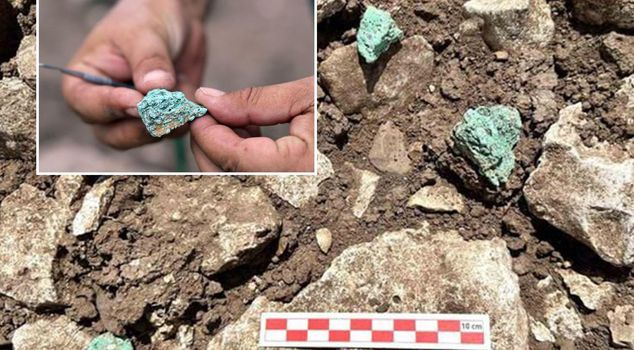
In the 2026 excavations at Çayönü Tepesi in the Ergani district of Diyarbakır, a mining workshop of approximately 5 square meters, dating back to 6900-6800 BC, was uncovered. In the workshop, which is about 7,000 years old, raw and semi-processed malachite, copper beads, various copper objects, and a stone-paved working area were found. The discovery provided significant data revealing that mining in Çayönü was carried out in specific production areas.
The traces of 7,000-year-old mining have been unearthed in Diyarbakır. In the production area uncovered at Çayönü Tepesi, finds belonging to different stages of mining, from raw material to processed product, were identified.
7,000-YEAR-OLD MINING WORKSHOP FOUND
Minister of Culture and Tourism Mehmet Nuri Ersoy announced that an important discovery was made during the 2026 excavations at Çayönü Tepesi in the Ergani district of Diyarbakır. In the excavations carried out in the western part of the settlement, a mining workshop of approximately 5 square meters, dating back to 6900-6800 BC, was uncovered in a holistic manner.
Minister Ersoy said, "We continue to carry the traces of the past to the future with scientific excavations at Çayönü Tepesi, which bears the marks of great transformations."
STAGES OF MINING UNCOVERED IN THE SAME AREA
Raw and semi-processed malachites, processed malachite samples, copper beads, and various copper objects were found in the workshop. The fact that the finds represent different production stages, from raw material to semi-finished product and then to the processed product, showed that mining at Çayönü was not merely about finding or using ore. The new data indicated that specialized production activities were carried out in specific work areas approximately 7,000 years ago.
THEY SET UP A 5-SQUARE-METER PRODUCTION AREA
During the excavations carried out under the direction of Associate Professor Dr. Savaş Sarıaltun with the permission of the Ministry of Culture and Tourism, the architectural features of the workshop were also determined. At least 6 post holes were identified around the approximately 5-square-meter production area, and a stone-paved working area was found in its center. The post holes are considered important data indicating that the area may have been covered with a canopy and that the production space was deliberately organized.
42 MALACHITE AND COPPER FINDS IDENTIFIED
18 malachite samples were found in the center of the workshop, and approximately 24-25 malachite samples were found in and around the workshop. Considering the wider working area, the number of malachite and copper finds reached approximately 42. It was stated that the known traces of copper and malachite use at Çayönü date back to around 9100 BC. Ersoy stated, "The new discovery reveals that the mining tradition here continued for approximately 2,000 years and that specialized production activities were carried out in specific work areas."
NEW DATA ON ÇAYÖNÜ'S THOUSAND-YEAR-OLD PAST
In the 2026 studies, besides the mining workshop, new finds related to the cultural continuity of the settlement were also uncovered. In the excavations in the western area, pottery belonging to the Proto-Hassuna culture, dating from the early stages of the Pottery Neolithic Period, was found. It is planned to determine the precise chronology of the finds, dated to 6800-6600 BC, through Carbon-14 and other archaeometric analyses.