16.08.2026 10:50
A critical transformation has occurred in Turkey's satellite broadcasting. The Türksat 3A satellite, which has been providing uninterrupted service since 2008, will now broadcast its new transmissions via the 4A satellite. So, how is the new TÜRKSAT 4A satellite update performed? How are the new satellite frequency settings adjusted?
Türksat Satellite Communication Cable TV and Operation Inc. transferred the broadcasts on the Türksat 3A satellite, which provides services to televisions and radios, to other high-capacity satellites on the night connecting August 15 to August 16, 2026. In the statement made by the company, it was stated that the Türksat 3A satellite, which was put into service in 2008, has successfully served the country and the sector's communication and television broadcasting needs for many years. So, how is the new TÜRKSAT 4A satellite update done? How are the new satellite frequency settings made?
IS IT NECESSARY TO INSTALL A NEW SATELLITE ANTENNA?
In the statement made by the company, it was stated that the Türksat 3A satellite, which was put into service in 2008, has successfully served the country and the sector's communication and television broadcasting needs for many years.
In the statement, it was stated that since the Türksat 3A satellite is approaching the end of its design and technological life for television and radio services, and in line with the goal of presenting the new global standards achieved in television broadcasting to viewers with the strongest infrastructure, the broadcasts transmitted via the satellite will be transferred to other high-capacity satellites in the TÜRKSAT satellite fleet:
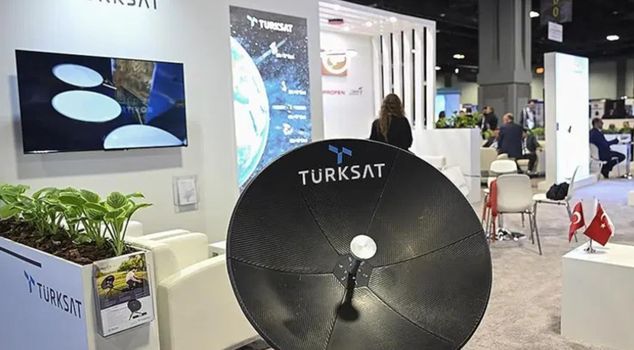
“Necessary technical planning has been made to ensure that our citizens and television channels broadcasting via our Türksat 3A satellite are not adversely affected during the transition process and that broadcast continuity is ensured without interruption. In this context, the broadcast transfer will be carried out on the night connecting August 15 to August 16. Since the TÜRKSAT satellites to which the broadcasts will be transferred are located in the same orbital position as Türksat 3A, our viewers do not need to install a new satellite antenna or make any changes to the direction or settings of their existing antennas.”
TKGS-COMPATIBLE DEVICES WILL BE UPDATED AUTOMATICALLY
In the statement, it was noted that after the transfer, SD and HD television broadcasts offered via satellites will continue in their current broadcast formats, and viewers can continue to follow their broadcasts through the same satellite antenna.
In the statement, which pointed out that thanks to the TÜRKSAT Channel Update System (TKGS), which is standard in next-generation televisions and satellite receivers and developed by TÜRKSAT, the channel lists of compatible devices will be updated automatically, the following information was included:
“Therefore, our viewers with TKGS-compatible devices do not need to perform any settings or manual channel search. However, users of older generation standard built-in or external satellite receivers that do not support the TKGS feature will need to perform a channel scan again on their devices to access current television and radio channels after the broadcast transfer.”
HOW TO MAKE THE NEW SATELLITE FREQUENCY SETTING?
In the statement, it was reported that users who will perform manual channel scanning should enter the frequency information "12380 MHz vertical (V) polarization, 27500 symbol rate, FEC 3/4 and 12423 MHz horizontal (H) polarization, 30000 symbol rate, FEC 3/4" into their satellite receivers and then perform a "network scan".
WHAT WILL CHANGE WITH THE NEW 4A SATELLITE?
In the statement, which drew attention to the fact that TÜRKSAT Inc. continuously renews its satellite fleet and broadcast infrastructure in line with technological developments, the following was recorded:
"With the high signal power of our new satellites, broadcasts will not be affected by adverse weather conditions, and with increased capacity efficiency, it will lead the way for higher resolution (4K/Ultra HD) broadcasts to become standard on our screens. With this transfer work to be carried out, it is aimed to use satellite capacity more effectively, ensure the continuity of broadcast services, and enable the broadcasting infrastructure to respond more strongly to future needs."
##20147550##