02.09.2026 22:30
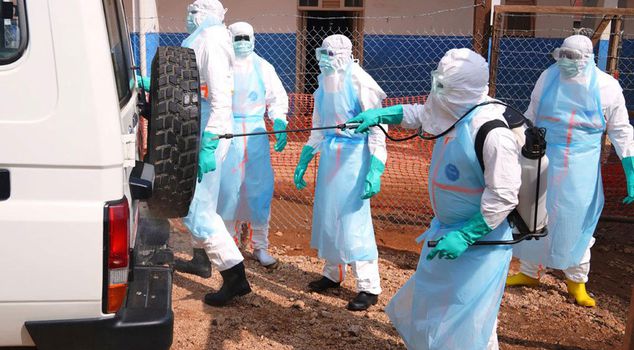
World Health Organization (WHO) Director-General Tedros Adhanom Ghebreyesus reported that the Ebola outbreak in the Democratic Republic of the Congo is the second largest on record and the fastest-spreading one seen so far. Ghebreyesus said, "Many deaths are occurring among people who are not on the list of known contacts. This means there are chains of transmission we do not know about. Until each chain is found and broken, the outbreak will continue."
World Health Organization (WHO) Director-General Tedros Adhanom Ghebreyesus met with journalists from the Association of Accredited Press Correspondents (ACANU) at the WHO headquarters in the United Nations Office at Geneva, where he made assessments regarding global health issues.
"THE FASTEST-SPREADING EPIDEMIC WE HAVE SEEN SO FAR"
Using the phrase "The Ebola epidemic in the DRC is the second largest on record and the fastest-spreading epidemic we have seen so far," Ghebreyesus noted that the number of cases has exceeded 6,000 and deaths have reached 3,000.
Ghebreyesus emphasized that the epidemic currently affects 60 health zones in six provinces and covers a very wide geographical area, saying, "Ituri province continues to be the epicenter of the epidemic, accounting for 85 percent of cases and 88 percent of deaths."
Ghebreyesus underlined that the most concerning situation is that most deaths occur outside treatment centers, and noted that the failure to safely bury those who died due to the epidemic fuels transmission.
"THE EPIDEMIC WILL CONTINUE UNTIL EVERY CHAIN IS FOUND AND BROKEN"
Ghebreyesus said, "(In the DRC) Many deaths occur among people who are not on the list of known contacts. This means there are transmission chains we do not know about. The epidemic will continue until every chain is found and broken. This situation will continue to pose a threat to the DRC, its neighbors, and the entire region."
Ghebreyesus underlined that the Ebola epidemic is not the only health threat facing the people in this region, stating that this part of the DRC has suffered for decades from conflict, displacement, poverty, and hunger.
Ghebreyesus emphasized that WHO, under the leadership of the DRC government, is working in partnership with the Africa Centres for Disease Control and Prevention (Africa CDC) and many other organizations to expand every area of the response, noting that they have deployed more than 330 tons of emergency supplies and more than 300 experts here.
Stating that safety trials for two new vaccines against the Bundibugyo virus are being conducted in the UK and Canada, Ghebreyesus said, "There is also an approved vaccine against the Zaire ebolavirus, which is responsible for most previous Ebola outbreaks, but we do not know if it is effective against the Bundibugyo virus. WHO is working with partners to advance all three vaccines for efficacy trials in the DRC, which will begin in October or November."
Ghebreyesus noted that the humanitarian crisis in Gaza is deepening and major public health risks are increasing as winter approaches.
"GAZA'S ALREADY OVERBURDENED HEALTH SYSTEM IS NOT EQUIPPED TO MANAGE THESE INCREASES"
Reminding that most people are displaced in overcrowded tent camps, Ghebreyesus assessed, "Overflowing sewage, accumulating waste, and limited access to safe water are creating increasingly dangerous conditions. Water contamination is increasing, and cases of acute watery diarrhea have nearly doubled this year. With the onset of rains, floodwaters are likely to spread sewage and contaminated water into densely populated areas, increasing the risk of disease. Gaza's already overburdened health system is not equipped to manage these increases."
Ghebreyesus noted that the need for rehabilitation in Gaza is also enormous, highlighting that more than 6,600 people with amputated limbs need long-term rehabilitation and prosthetic or orthotic services.
Ghebreyesus said, "Although assistive devices such as wheelchairs and crutches have entered Gaza, WHO has not been permitted to send prosthetic and rehabilitation equipment to Gaza for more than 2 years. As a result, only a small fraction of those who have lost limbs have been able to receive prosthetic devices. We reiterate our call for the unhindered and accelerated entry of essential medicines, rehabilitation equipment, and public health supplies at the scale needed to meet the needs of Palestinians in Gaza."
"EVERY LIFE SAVED IS VERY IMPORTANT"
Teresa Zakaria, Head of WHO's Humanitarian, Disaster Action and Health Emergencies Response Unit, responding to the question "What pressure should be put on Israel to deliver more humanitarian aid to Gaza?", stated that no matter how limited, difficult, and complex the conditions have been in many different crisis zones over the years, there are always things that can be done.
Zakaria said, "Every life still saved is very important. This pushes us not to despair and to continue working. Since October 2023, we have seen WHO and the regional health team, as well as many of our partners who remained on the ground and refused to leave to ensure services continue appropriately. We continue to call on the whole world to ensure there is sufficient collective demand for better and safer access in Gaza, as well as more humane treatment."
Pointing out the importance of even small amounts of humanitarian aid entering Gaza, Zakaria called for unhindered access to Gaza and more humane conditions for the suffering population there.
"MORE THAN 1,000 DEATHS REPORTED IN NEPAL, THOUSANDS STILL MISSING"
Ghebreyesus noted that the sudden floods on the Nepal-China border last week caused devastating loss of life and widespread destruction.
Noting that search and rescue efforts are ongoing, Ghebreyesus said, "More than 1,000 deaths have been reported in Nepal, and thousands are still missing. There are also deaths and missing persons in China. Entire communities have remained isolated due to damage to roads, bridges, electricity, and communication networks, while many health facilities have been destroyed and are no longer operational."
Ghebreyesus recalled that within hours of the disaster and upon the request of the Nepalese government, they mobilized emergency health supplies, infection prevention and control materials, and temporary facilities.
Emphasizing that they have allocated funds and deployed additional personnel to strengthen surveillance and response in Nepal, Ghebreyesus assessed, "Our biggest concern right now is the risk of outbreaks and restoring essential health services for those in need."
EBOLA CAUSED THE DEATHS OF THOUSANDS OF PEOPLE IN AFRICA
The Ebola virus, which causes a type of hemorrhagic fever, first emerged in 1976 with simultaneous outbreaks in Nzara, Sudan, and Yambuku, DRC.
Since the outbreak in the DRC began in a village near the Ebola River, the disease was named after this river.
The Ebola virus had spread in West Africa in December 2013. In the outbreak seen in Guinea, Liberia, and Sierra Leone between 2014 and 2017, 30,000 people were infected, and more than 11,000 of the patients died. After 246 suspected cases and 65 deaths were announced in Ituri province in the east of the DRC, an outbreak was declared in the country on May 15. According to officials, the Bundibugyo Ebola variant that broke out in May has no approved treatment or vaccine.