25.03.2026 15:28
High-level sources from Pakistan, acting as mediators in the war that began with the US-Israel attack on Iran, explained the current situation. The sources announced that a critical move is expected within the next 48 hours for negotiations between the US and Iran. They stated that Tehran has refused to limit its missile capabilities and is demanding compensation.
Turkey, Egypt, and Pakistan are making intense efforts to bring the U.S. and Iran to the same table by intervening in the war in the Middle East.
Pakistani sources made a statement to AA regarding the U.S.-Iran negotiations. The sources stated that Iran, which is "seeking assurances," has rejected the limitation of missile capacity and is demanding compensation, saying, "A move is expected within 48 hours for negotiations."
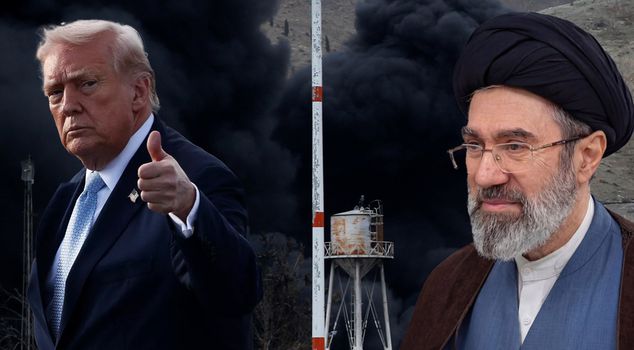
U.S. President Donald Trump claimed in a statement yesterday that they are actively negotiating with Iran. Iranian officials denied Trump's claims. U.S. and Israeli media suggested that Iranian and American officials could meet with Pakistan's mediation.
GOAL OF TEMPORARY CEASEFIRE AND PERMANENT AGREEMENT
On the other hand, the U.S. administration aims to create a negotiation ground for a more comprehensive agreement along with a ceasefire that will last for a month. During this process, it is planned for the parties to discuss a draft consisting of 15 articles.
15-ARTICLE DRAFT AGREEMENT EMERGED
According to information from Al Hadath, based on Israeli Channel 12, the draft agreement includes the following articles:
1- The automatic removal of the threat of re-imposing sanctions
2- The complete elimination of Iran's current nuclear capacity
3- Iran's commitment that it "will never seek nuclear weapons"
4- The prohibition of any nuclear enrichment activities on Iranian soil
5- The delivery of enriched uranium to the International Atomic Energy Agency (IAEA)
6- The decommissioning and destruction of nuclear facilities in Natanz, Isfahan, and Fordow
7- Granting full access to all information to the IAEA
8- Iran's abandonment of its "proxy forces" strategy
9- The cessation of funding and arms support to militia groups in the region
10- Keeping the Strait of Hormuz open without closing it
11- The postponement of decisions regarding the ballistic missile program
12- The use of ballistic missiles solely for defensive purposes
13- The lifting of all sanctions against Iran
14- Support for the development of the civilian nuclear program in Bushehr
15- The automatic cancellation of the threat of re-imposing sanctions
NO OFFICIAL CONFIRMATION RECEIVED
No confirmation has yet been made regarding the plan from the U.S., Iran, or other official authorities. However, diplomatic sources indicate that contacts between the parties may begin in the upcoming process.
The claims that have emerged during a period of ongoing tension in the region suggest that a possible ceasefire and agreement could have significant consequences for global balances.
U.S.-ISRAEL ATTACKS ON IRAN
While negotiations are ongoing between Tehran and Washington, Israel and the U.S. launched a military attack on Iran on February 28.
Iran responded with attacks on targets it identified in several regional countries, including Qatar, the United Arab Emirates (UAE), and Bahrain, where U.S. bases are located, in addition to Israel.
In the U.S.-Israel attacks, many high-ranking officials, including former Iranian leader Ali Khamenei, were killed.