06.09.2026 10:20
As tension between the US and Iran spreads to energy transportation, CENTCOM announced that three Iranian crude oil tankers were struck. Since the attack occurred over the weekend, its impact has not yet been reflected in the markets, and the market eagerly awaits Brent crude's reaction on Monday, which closed the week at $96.28. Due to potential increases in oil, freight, and insurance costs, attention in Turkey has also turned to fuel prices.
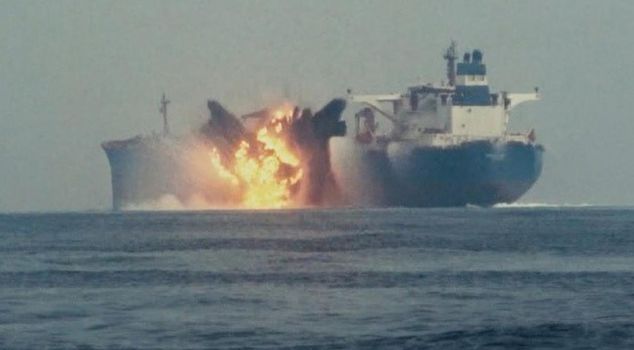
A new development closely watched by energy markets has emerged in the tension between the US and Iran. CENTCOM announced that three Iranian crude oil tankers were targeted in an operation held on September 5.
It was stated that the operation took place after Iran's Revolutionary Guard launched ballistic missiles at a US aircraft carrier and a guided-missile destroyer operating in the region. It was announced that American ships avoided the attacks and no US personnel were harmed.
IRAN'S 3 OIL TANKERS STRUCK
According to CENTCOM's statement, the M/T Downy was struck and disabled off Kharg Island, one of Iran's key oil export points, while the M/T Stark 1 was hit and disabled near Jask.
It was also noted that the unmanned M/T Kylo (Noxen) in the Gulf of Oman was struck and rendered unusable after the crew abandoned the ship.
There is no confirmed information that the Kharg oil terminal was hit or that oil loadings there have stopped.
OIL CLOSED THE WEEK WITH A SHARP RISE
As the attack occurred over the weekend, the direct impact of the tanker strikes on oil prices has not yet been observed.
Brent crude closed Friday up 7.6% at $96.28, while WTI ended about 10% higher at $91.48. Following the attack on the tankers, it will be closely monitored whether the geopolitical risk premium will rise further in the first pricing of the new week.
SHIP TRAFFIC IN THE STRAIT OF HORMUZ DRAWS ATTENTION
The energy markets' focus is also on the Strait of Hormuz. According to Kpler data, the number of commodity vessels passing through the strait fell to 4 on Thursday. It was noted that the average over the last 10 days was about 15 ships.
Ships changing their routes or rising transportation costs due to security risks in the region are cited among developments that could increase pressure on oil prices.
ATTENTION TURNS TO MONDAY IN TURKEY
For Turkey, the critical issue is not only the potential rise in the barrel price of oil. If military tensions in the region escalate, rising tanker freight rates and war risk insurance premiums could also increase energy costs.
A sustained rise in oil prices is expected to create cost pressure on sectors including transportation, aviation, petrochemicals, and logistics, especially on fuel.
Therefore, with the opening of Asian markets on Monday, the initial reaction of oil will also be closely followed for the course of fuel prices in Turkey.