21.06.2026 12:10
The closely watched US-Iran talks have officially begun in Switzerland. While initial contacts between Pakistani Prime Minister Shehbaz Sharif and the US delegation have taken place, it is expected that Iranian and US representatives will meet at the same table later today. The parties are set to discuss the ceasefire in Lebanon, Iran's nuclear program, sanctions, frozen assets, and the Strait of Hormuz crisis. The talks are regarded as a critical diplomatic process that could shape the future of the Middle East.
The US-Iran talks, which the world is watching, have officially begun in Switzerland. As initial contacts start between Pakistani Prime Minister Shehbaz Sharif and the US delegation, representatives from Iran, the US, Pakistan, and Qatar are expected to meet at the same table later in the day. The Strait of Hormuz crisis, the ceasefire in Lebanon, and Iran's frozen billions of dollars in assets are among the most critical topics of the talks.
WORLD'S EYES ON SWITZERLAND: CRITICAL TALKS BEGIN
The critical day has arrived in the diplomatic process that began after nearly four months of war between the US and Iran. Within the scope of the talks held in the Swiss town of Burgenstock, the first meeting between Pakistani Prime Minister Shehbaz Sharif and the US delegation started at 12:00 Turkish time.
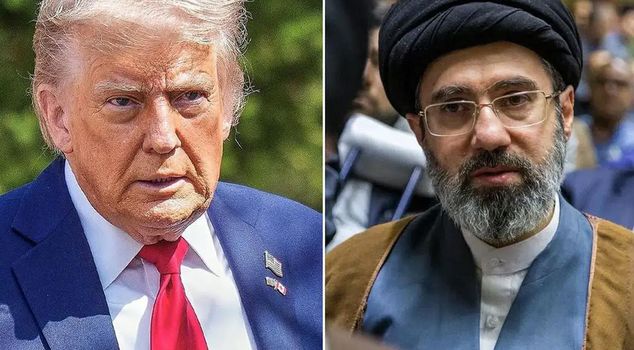
The diplomatic process, mediated by Pakistan, entered a new phase following the 60-day ceasefire agreement signed in recent days between US President Donald Trump and Iranian President Masoud Pezeshkian. The international community is focused on whether the parties can turn the temporary ceasefire into a permanent agreement.
IRAN: WE WILL BRING LEBANON ISSUE TO THE TABLE
Iranian Foreign Ministry Spokesman Ismail Bekayi said in a statement before the talks that the US's failure to maintain the ceasefire in Lebanon would be one of the most important issues on the table.
Bekayi stated that the meeting in Switzerland serves as a follow-up to the previously signed agreement, expressing that Iran expects the US to fulfill its commitments. The Tehran administration argues that Israel's operations in Lebanon continue, which violates the spirit of the ceasefire.
QATAR AND PAKISTAN WILL ALSO BE AT THE SAME TABLE
Iranian officials announced that a joint session will be held later in the day with the participation of representatives from Iran, the US, Qatar, and Pakistan.
According to diplomatic sources, this meeting will be one of the most critical sessions determining the framework of the negotiation process.
The parties are expected to comprehensively address security topics as well as energy, sanctions, and economic relations.
IRAN'S DEMAND LIST IS EXTENSIVE
In the talks, Iran is bringing not only ceasefire and security topics but also its economic demands to the agenda.
The Tehran administration is requesting the easing of restrictions on the sale of Iranian oil to international markets, the expansion of sanctions exemptions, and the release of frozen Iranian assets abroad. Experts assess that economic topics are among the most challenging dossiers of the negotiations.
JD VANCE ALSO IN SWITZERLAND
It was reported that US Vice President JD Vance has also arrived in Switzerland to participate in the talks.
The US delegation also includes Donald Trump's special envoy Steve Witkoff and advisor Jared Kushner.
In a statement before the talks, Vance said he believes the ceasefire will be maintained, expressing his expectation for progress especially on the nuclear program and Lebanon issues.
STRAIT OF HORMUZ CRISIS RAISES TENSION
The biggest point of tension before the talks was the Strait of Hormuz. The Fars News Agency, close to Iran's Islamic Revolutionary Guard Corps, reported citing military sources that the Strait of Hormuz will remain closed and that the IRGC Navy will not allow ships to pass until further notice.
While this statement caused concern in global energy markets, different statements came from the US side.
The US Central Command (CENTCOM) announced that 55 commercial ships had passed through the strait in the last 24 hours, carrying over 17 million barrels of oil to world markets.
The contradictory statements between the parties indicate that the Strait of Hormuz will be one of the most sensitive topics in the negotiations.
THE OUTCOME OF THE TALKS COULD AFFECT THE MIDDLE EAST'S FUTURE
The international press describes the contacts in Burgenstock as the most critical US-Iran talks in recent years.
On the table are the nuclear program, regional security, sanctions, energy corridors, the ceasefire in Lebanon, and the future of the Strait of Hormuz.
Diplomatic circles note that the results emerging from Switzerland could directly affect not only relations between Washington and Tehran but also global energy markets and power balances in the Middle East.