08.06.2026 10:20
On Chile's Robinson Crusoe Island, a race against time is underway to save the world's only remaining "Dendroseris neriifolia" (tree daisy). Seeds collected from the last tree on a steep cliff, secured with ropes to prevent it from falling and kept under 24-hour surveillance, were sent to the Millennium Seed Bank in England. The first eight seedlings have sprouted in a laboratory, offering hope for the species' future.
On the edge of a cliff hundreds of kilometers from mainland Chile, a tree, the last of its kind in the world, is fighting for survival. The Chilean National Forest Corporation (CONAF) and British scientists have launched a global rescue operation to prevent the extinction of the "Dendroseris neriifolia" tree, of which only a single individual remains in the world.
SECURED TO THE CLIFFS WITH ROPES, GUARDED 24 HOURS A DAY
Endemic to the Juan Fernández Islands and commonly known as the "tree daisy," Dendroseris neriifolia is found on Robinson Crusoe Island. Due to habitat loss, invasive species brought to the island, and past unsuccessful conservation attempts, the species' population had declined to just eight by 1980. Today, only one of these trees remains in the wild. To prevent it from falling and being lost, teams have secured the last tree to the cliffs with ropes and placed the area under 24-hour surveillance.
CLIMBING THE CLIFF FOR SEEDS
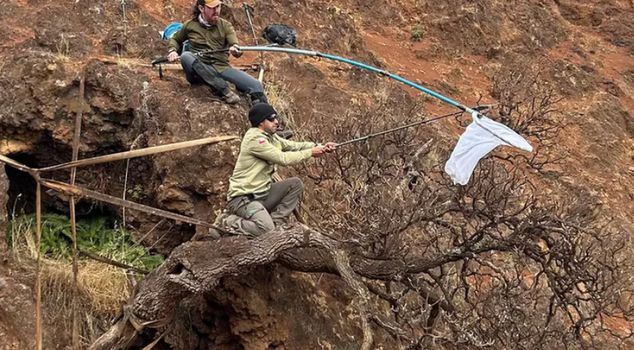
The last surviving member of the tree is located on a steep, nearly inaccessible cliff. Every March, CONAF experts make dangerous climbs to the tree's trunk to collect mature seeds using special nets. This year, approximately 400 seeds were collected, some of which have been sent to the Millennium Seed Bank in the UK, which protects endangered plants.
FIRST PROMISING NEWS FROM ENGLAND
X-ray analyses were immediately conducted on the seeds that arrived at the Millennium Seed Bank in Kew Wakehurst, West Sussex. The examinations confirmed in a laboratory setting that 25 out of 29 seeds had germination potential, and through meticulous work, 8 new seedlings were successfully grown. It was stated that some of these seedlings will be sent to the Royal Botanic Garden Edinburgh, and the remaining seeds will be stored in deep freezers for future restoration projects.
THE BIGGEST OBSTACLE: GENETIC CLONING
Scientists point out a serious biological obstacle to saving the species: low genetic diversity. Due to years of geographic isolation, most seeds have lost viability, while the few specimens previously grown in botanical gardens have hybridized with other plants, further complicating the effort.
Experts Warn: "The next few years will determine the fate of this species. These 8 seedlings grown in a lab in England maturing and producing new seeds is our greatest guarantee to prevent the tree daisy from completely disappearing from the world."