16.03.2026 07:51
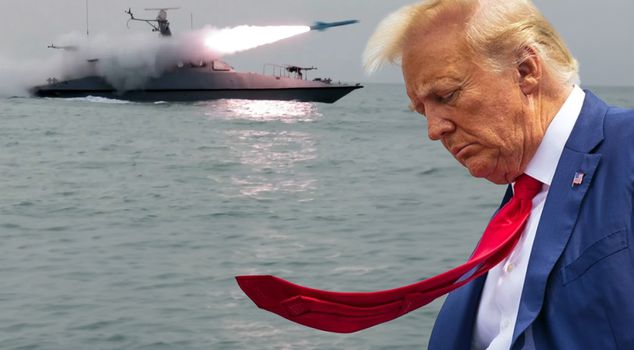
U.S. President Trump's request for his allies to send warships to protect the Strait of Hormuz was met with rejection from Japan and Australia; both countries announced that they do not plan to send naval forces to the region.
As the war between the US-Israel and Iran enters its third week, tensions in the Middle East continue to shake global energy markets. The significant halt in tanker traffic in the Strait of Hormuz, through which approximately 20% of the world's oil passes, has raised international concerns.
US President Donald Trump called on allied countries to form an international coalition to ensure the security of the strait. Trump argued that countries receiving oil from the Gulf have a responsibility to protect the Strait of Hormuz.
"COME AND PROTECT YOUR REGION"
Speaking to reporters on Air Force One, Trump stated, "I am asking these countries to come and protect their own region because this is their area. This is where they get their energy." It was noted that the Trump administration has contacted seven countries regarding this issue, but it was not disclosed which countries were discussed.
JAPAN: NO DECISION TO SEND WARSHIPS
Japanese Prime Minister Sanae Takaichi stated that her country does not plan to send warships to the Middle East. Takaichi noted that Japan must act cautiously due to its anti-war constitution.
Speaking in Parliament, Takaichi said, "We have made no decision to send escort ships. We are examining what Japan can do independently and what steps can be taken within the legal framework."
AUSTRALIA WILL NOT PARTICIPATE EITHER
Australia, a key US ally in the Indo-Pacific, has also displayed a similar stance. Minister Catherine King, who serves in Prime Minister Anthony Albanese's government, announced that her country would not send warships to the Strait of Hormuz.
In a statement to the state broadcaster ABC, King said, "We know how important this is, but we have not received such a request from us, and we are not contributing to this operation."
TRUMP ALSO CALLED ON CHINA
Trump stated that China must also take responsibility for the opening of the Strait of Hormuz. Speaking to the Financial Times, Trump noted that China receives about 90% of its oil from this strait, emphasizing that the Beijing government should also be involved in the process.
The US President also mentioned that the meeting planned with Chinese President Xi Jinping in Beijing at the end of this month could be postponed if China does not provide support.
Trump also called on European countries, stating that if NATO members do not support Washington, the alliance could face "a very bad future."
THE STRAIT OF HORMUZ IS DE FACTO CLOSED
After the intense bombardment initiated by the US and Israel against Iran on February 28, tensions in the region quickly escalated. Although some Iranian vessels continue to transit, the Strait of Hormuz is effectively closed for the majority of the world's tanker fleet.
These developments have also affected global energy markets. The price of Brent crude oil rose by over 1%, exceeding $104.50 per barrel.
DRONE ATTACKS IN THE GULF
The effects of the war are also being felt in Gulf countries. Following a drone attack on a fuel tank in Dubai, flights at the airport were temporarily halted. Saudi Arabia announced that 34 drones were shot down in the eastern region within an hour. While US officials predict that the war could end within a few weeks, the Iranian government states that the country is "strong and stable" and is ready to defend itself as needed.
Iranian Foreign Minister Abbas Arakchi rejected US claims of a ceasefire, stating, "We have never requested a ceasefire. We are ready to defend ourselves as much as necessary."