23.03.2026 09:03
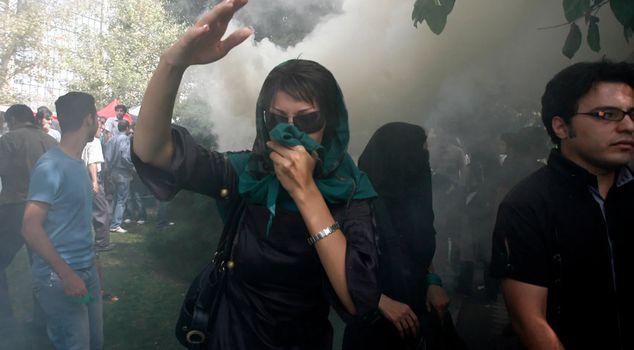
US media reported that Israel's plan to incite a rebellion in Iran to weaken the regime has failed. According to the news, Netanyahu used this plan prepared by Mossad to convince US President Donald Trump, but the attempt did not yield results. There was a disagreement between the US and Israel regarding the involvement of Kurdish groups.
The U.S. media assessed that Israel's plan to "incite a rebellion to overthrow the regime in Iran" is a "fundamental misconception" and that the Trump administration's optimistic approach to this plan, regardless of the situation on the ground, is a "mistake."
The American New York Times (NYT) newspaper, in an analysis report based on senior U.S. and Israeli officials, explained how the two countries' "plans to incite a rebellion in Iran" did not materialize. In the analysis shared under the headline "Israel thought it could incite a rebellion in Iran, but it did not happen," it pointed to the lack of analysis by Israeli intelligence on this issue and the optimistic stance of the U.S. independent of the situation on the ground.
THE PLAN BEHIND THE SCENES
According to the analysis, Israel's Foreign Intelligence Service Mossad presented a plan to Prime Minister Benjamin Netanyahu that "the regime would fall by inciting a rebellion in Iran." Netanyahu used this Mossad plan in the process of convincing U.S. President Trump.
THE SECRET SCENARIO EMERGED
According to the analysis, before the Iranian attacks began, Mossad Chief David Barnea came to Israeli Prime Minister Benjamin Netanyahu with a comprehensive plan on "how they could incite an internal rebellion in Iran." Barnea explained to Netanyahu that they could mobilize Iranian opposition figures for rebellion within a few days of the war starting, which could trigger other rebellions that might even lead to the collapse of the Iranian regime.
According to the plan, at the beginning of the attacks, the assassination of Iranian leader Ayatollah Ali Khamenei and a series of intelligence operations aimed at promoting regime change could pave the way for a mass uprising that could quickly end the war. The Mossad Chief also presented the same plan to senior Trump administration officials during his visit to Washington in mid-January.
THE PROCESS OF CONVINCING TRUMP
While Netanyahu embraced the plan, he also used Mossad's optimism in the process of convincing Trump. Some senior American intelligence officials expressed their doubts about the "feasibility" of the plan and their views that the situation on the ground did not align with the plan, in contrast to the optimistic stance of the two leaders regarding the rebellion.
However, in the third week of the war, American and Israeli intelligence assessments concluded that Iran's "theocratic government has weakened but is actively maintaining its existence."
"FUNDAMENTAL MISCONCEPTION" DETECTION
According to the article based on interviews with numerous U.S. and Israeli officials, it was revealed that the belief that Israel and the U.S. could "initiate a widespread rebellion in Iran" is a "fundamental misconception." Netanyahu expressed his disappointment that Mossad's promises of inciting a rebellion in Iran had not materialized, stating in an angry tone during a security meeting held days after the attacks began that "Trump could decide to end the war at any moment" and that "Mossad operations have not yet yielded results."
On the other hand, some U.S. military officials emphasized to Trump that "Iranians would not take to the streets to protest the regime in an environment where American and Israeli bombs are falling." Similarly, U.S. intelligence officials conveyed to the White House their assessment that the likelihood of a mass uprising threatening the regime is low.
The article also included the views of Shahar Koifman, the former head of the Iran desk in the Israeli Defense Forces Military Intelligence Research Division. Koifman emphasized that he does not believe that overthrowing the Iranian government is an achievable goal in the current conflict process.
THE KURDISH CARD BACKFIRED
Another notable point in the NYT analysis was the situation that emerged in Washington regarding the idea of using Kurdish groups in the region in a possible rebellion plan in Iran by Mossad. American officials noted that both the CIA and Mossad have provided weapons and various support to Kurdish forces in recent years, and that the CIA has taken steps to support Iranian "Kurdish fighters."
This section of the analysis stated, "However, American officials are no longer as warm to the idea of using (Israel's) Kurds as proxy forces as they were before the war; this has led to tensions with their Israeli counterparts." In this context, reference was made to Trump's statement on March 7, in which he explicitly told "Kurdish leaders not to send militias to Iran."
In the same section, it was noted that Turkey warned the U.S. counterpart Marco Rubio, through Foreign Minister Hakan Fidan, not to support "any Kurdish initiative." On the other hand, it was recorded that U.S. intelligence assessed in simulations conducted before the attacks began that "the complete collapse of the Iranian regime is a relatively low probability."