10.06.2026 20:41
Abdirahman Mahamud, Director of Health Emergency Alerts and Response Operations at the World Health Organization, reported that they are far behind the control curve in the Ebola outbreak in the Democratic Republic of the Congo, noting that despite increased testing and contact tracing efforts, many challenges persist.
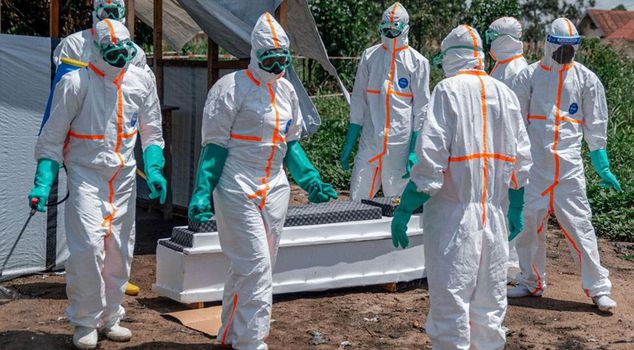
The Director of the World Health Organization's (WHO) Health Emergency Alerts and Response Operations, Abdirahman Mahamud, participated online in the weekly press conference of the United Nations (UN) Office in Geneva, providing assessments on the situation in the Democratic Republic of the Congo (DRC) and Uganda, where the Ebola outbreak has been observed.
“WE ARE BEHIND THE EPIDEMIC CONTROL CURVE”
Mahamud recalled that the Ebola outbreak caused by the Bundibugyo virus in the DRC has been ongoing for more than three weeks, noting that he has witnessed significant response efforts in the Bunia region of the DRC, where he has been for 15 days.
Mahamud stated, “As of June 8, 550 confirmed cases, 101 deaths, and a total of 19 recoveries have been reported in the DRC. The outbreak is concentrated in Ituri province, which accounts for 94% (487) of confirmed cases. This increase in confirmed cases is due to enhanced testing and contact tracing activities, which is good news. However, we are behind the control curve of the epidemic, and many challenges persist. We also have ongoing investigations to confirm or rule out approximately 100 suspected cases.”
Regarding Uganda, Mahamud noted that 19 confirmed cases, 2 deaths, and one probable death have been recorded, stating that there is no evidence of community transmission in Uganda.
Mahamud emphasized that the WHO continues to support local authorities and health partners in the DRC.
EBOLA OUTBREAK
A state of epidemic was declared in the country on May 15 following the announcement of 246 suspected cases and 65 deaths in Ituri province in eastern DRC.
The WHO had declared an international public health emergency on May 17 due to the re-emerging Ebola outbreak.
According to health authorities, the current outbreak is caused by the “Bundibugyo” virus, a rare Ebola variant, for which no approved treatment or vaccine exists.
It is reported that the number of cases in this outbreak has exceeded 1,000.