01.03.2026 17:51
Iran's Deputy Foreign Minister Said Khatibzadeh stated in an interview with CNN that Iran cannot directly reach the U.S. mainland, which is why they are targeting regional military bases under Washington's jurisdiction. While American facilities in Iraq, Syria, and the Gulf region were hit by hypersonic and ballistic missile attacks, the U.S. strengthened its air defense systems, the front line of the war expanded, and uncertainty in global markets increased.
The Iranian Deputy Foreign Minister Said Khatibzadeh clearly outlined Tehran's strategic approach in the ongoing war in a statement to CNN. Khatibzadeh stated, "Iran cannot reach American soil, so we have no choice but to attack bases within the jurisdiction of the U.S."
"BASES ARE THE TARGET" MESSAGE
Khatibzadeh's statement provides a direct justification to the public regarding the scope and target selection of Iran's retaliatory attacks against the U.S. and Israel. The Iranian government argues that due to geographical limitations, it cannot directly access the U.S. mainland, claiming that American bases in the region are legitimate targets.
This statement is also interpreted as a sign that the understanding of attacks on enemy lines in the war will be conducted "through regional bases."
CURRENT ATTACKS AND ELEMENTS
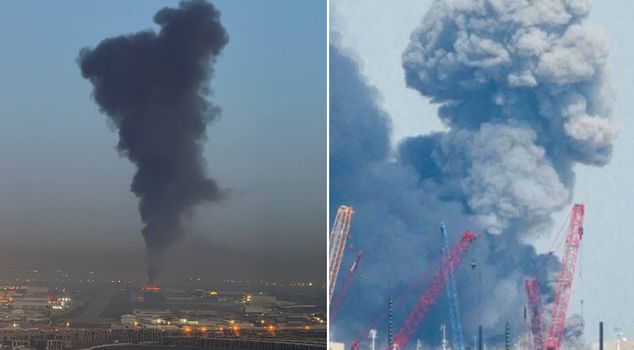
Recently, Iran has begun targeting Israeli and U.S. bases with various weapons, including hypersonic missiles and long-range ballistic systems. In the wave of retaliation, American facilities in northern Iraq, military points in Syria, and some bases along the Gulf line were hit.
In response, the U.S. has further deployed Patriot and THAAD air defense systems to the region and announced that some bases have been put on alert. Israel, on the other hand, has kept its air defense systems active to prevent Iranian air attacks.
Khatibzadeh's defense regarding U.S. bases confirms the "expanding front" highlighted by diplomatic and military reports amid the war. Experts indicate that Iran's targeting of regional bases with its current military capabilities shows that the war has evolved from a more localized conflict into a prolonged tension.
As energy markets react sensitively to these developments, fluctuations in oil prices and movements in gold and currency markets are being recorded. Global markets show an increased demand for safe-haven assets amid uncertainty in the Middle East.
At the international level, both calls for peace and ceasefire efforts continue. The United Nations Secretary-General and European Union officials are reiterating their offers of mediation to the parties to prevent the escalation of violence. However, military clashes on the ground and the expansion of targets emerge as the most significant factors complicating diplomatic solutions.