17.06.2026 15:50
The Zero Waste Foundation continues to strengthen its work in global climate diplomacy and circular economy through international partnerships. Following the comprehensive cooperation framework established on May 4 in Paris with G7 countries on zero waste, circular economy, waste-related emission reduction, and climate action, it was decided to establish a special working group for G7 countries to conduct joint efforts in the COP31 and COP32 processes.
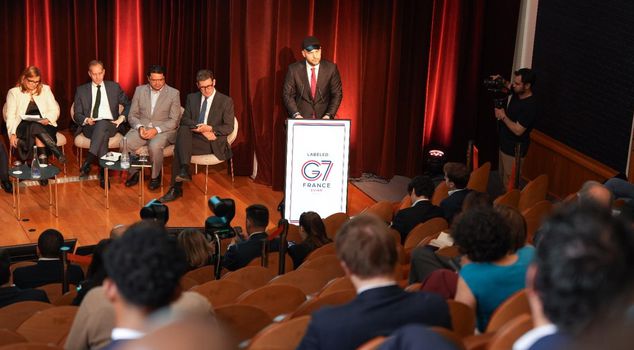
Under the vision and patronage of Emine Erdoğan, founder of the Zero Waste Movement, President of the United Nations High-Level Advisory Board on Zero Waste, and Honorary President of the Zero Waste Foundation, the Zero Waste Foundation aims to bring the zero waste approach to the center of international climate policies through strong dialogues established with key actors of the global environmental agenda. In this context, early last May, under the leadership of Samed Ağırbaş, President of the Zero Waste Foundation and COP31 High-Level Climate Champion, the discussions with G7 countries focused on expanding zero waste solutions, strengthening circular economy models, reducing methane emissions, developing climate finance mechanisms, and integrating local practices into global climate action.
UNITED FOR COMMON GOALS
Joint Work Period with G7 Countries on the Road to COP31 and COP32. Through a special working group to be established by the Zero Waste Foundation, the aim is to develop joint projects focused on zero waste and circular economy with G7 countries during the COP31 and COP32 processes, increase knowledge sharing, and expand practices that contribute to global climate goals.
"WILL BE AN IMPORTANT COOPERATION PLATFORM"
"As the Zero Waste Foundation, We Are Establishing a Working Group with G7 Countries" Samed Ağırbaş, President of the Zero Waste Foundation and COP31 High-Level Climate Champion, emphasized the importance of international collaborations, highlighting that the zero waste approach offers concrete and applicable solutions to the climate crisis. Ağırbaş stated, "We continue our work with our international partners to strengthen our Zero Waste vision on a global scale and transform climate action into results with on-the-ground impact. The working group we will establish with G7 countries will be an important cooperation platform for common goals in the COP31 and COP32 processes."
STRONG INTEREST IN THE FORUM IN ISTANBUL
Strong Participation from G7 Countries at the Zero Waste Forum. The Zero Waste Forum, organized by the Zero Waste Foundation in Istanbul on June 5-7, became one of the key meeting points of global environmental diplomacy, with strong participation from G7 countries. The forum was attended by representatives from G7 countries, international organizations, public institutions, academics, local governments, and non-governmental organizations. With the participation of G7 presidency representatives and high-level representatives from France, the forum addressed opportunities for global cooperation in zero waste, circular economy, and climate action. The forum demonstrated that Turkey's zero waste vision has international resonance and established an important foundation for future joint work with G7 countries.
INTENSE DIPLOMATIC TRAFFIC IN EUROPEAN CAPITALS
Zero Waste Diplomacy on the Global Climate Agenda. The cooperation process developed by the Zero Waste Foundation with G7 countries goes beyond waste management; it aims to ensure efficient use of resources, promote sustainable production and consumption models, prevent food loss, and develop inclusive solutions in the fight against climate change. One of the key steps in the Zero Waste Foundation's cooperation process with G7 countries was high-level contacts held as part of the G7 meetings in Paris. Samed Ağırbaş, President of the Zero Waste Foundation and COP31 High-Level Climate Champion, met with representatives from various countries, including France, Germany, and the United Kingdom, during the G7 meetings to discuss zero waste, circular economy, methane emission reduction, and climate finance. The meetings addressed the role of zero waste and circular economy solutions in the COP31 process, strengthening climate action, and increasing international cooperation. In contacts with representatives from the German Federal Ministry for the Environment, Nature Conservation, Nuclear Safety, and Climate Action, topics such as integrating zero waste practices into climate policies and supporting on-the-ground applications were evaluated. Meetings with scientific representatives and climate organizations from the United Kingdom discussed the contribution of academic networks, scientific studies, and innovative solutions to the COP31 process. Contacts with the European Climate Foundation and the Global Methane Hub also evaluated the future of global climate policies, strategies for reducing methane emissions, and opportunities for solution-oriented partnerships.
"A HOLISTIC CLIMATE SOLUTION"
The Zero Waste Foundation Continues to Contribute to Global Climate Action. Ağırbaş also emphasized during the G7 meetings that the zero waste approach is not just about waste management, but a holistic climate solution encompassing resource efficiency, preventing food loss, circular economy, and sustainable development. The conducted contacts created a strong diplomatic foundation for joint work to be developed by the Zero Waste Foundation with G7 countries during the COP31 and COP32 processes. As part of the work on the road to COP31, the Zero Waste Foundation continues to contribute to global climate action through international partnerships that bring together the public sector, private sector, academia, and non-governmental organizations.