23.01.2026 10:34
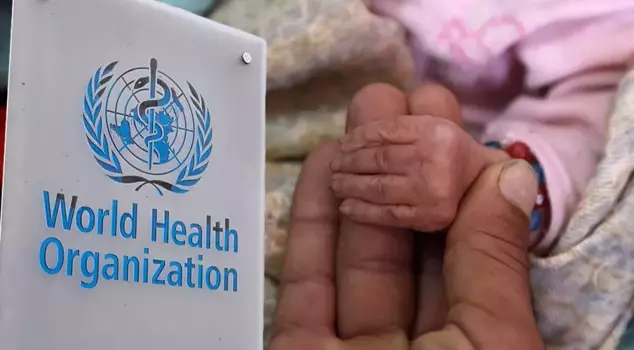
The process of the United States' withdrawal from the World Health Organization, of which it has been a member for 78 years, has officially ended. While the U.S. debt to the organization exceeds 130 million dollars, U.S. officials indicate that the withdrawal process was not smooth. It is believed that the U.S. withdrawal, which is known to have provided approximately 680 million dollars in voluntary contributions to the organization, could seriously weaken global health initiatives such as the eradication of polio and the detection of new viruses.
The U.S. Department of Health and Human Services (HHS) announced that, one year after President Donald Trump's decision to withdraw, the United States has officially ended its 78-year membership in the United Nations (UN) agency World Health Organization (WHO).
ALL STAFF RECALLED
The statement noted that all American funding to the WHO has been cut and that all personnel working within the organization have been recalled. Thus, the process of withdrawal from the WHO, which began with the executive order signed on the first day of Trump's second term, has officially come to an end.
DEBT TO THE ORGANIZATION EXCEEDS 130 MILLION DOLLARS
According to the WHO, the U.S. debt to the organization exceeds 130 million dollars (approximately 5 billion 640 thousand TL), while U.S. officials state that the withdrawal process has been completed but that the separation is not "complete and smooth." On the other hand, experts warn that there may be gaps in the U.S. access to critical health data that provides early warnings about pandemics from other countries.
Lawrence Gostin, a public health law expert from Georgetown University, stated that the U.S. withdrawal from the organization would weaken the fight against global pandemics and negatively impact the capacity of American scientists and pharmaceutical companies to develop vaccines and treatments against new threats.
Gostin remarked, "In my view, this is one of the most devastating presidential decisions made in my lifetime."
THE U.S. PROVIDED ABOUT 680 MILLION DOLLARS IN SUPPORT TO THE ORGANIZATION
The U.S., which played a pioneering role in the establishment of the WHO and has been one of its largest financial supporters over the years, provided approximately 111 million dollars in annual dues and 570 million dollars in voluntary contributions to the organization, according to official data.
The WHO coordinates interventions for global health threats such as mpox, Ebola, and polio, provides technical support to poor countries, contributes to the distribution of vaccines and treatments, and publishes guiding principles for hundreds of diseases. Almost all countries in the world are members of the organization.
WARNING THAT "GLOBAL HEALTH INITIATIVES MAY WEAKEN"
Experts warn that the U.S. withdrawal will seriously weaken global health initiatives such as the eradication of polio, maternal and child health programs, and the detection of new viruses.
Dr. Ronald Nahass, President of the Infectious Diseases Society of America, described the decision as "narrow-minded and scientifically irresponsible."
TRUMP'S DECISION TO WITHDRAW FROM THE WHO
Donald Trump signed the presidential executive order envisioning the U.S. withdrawal from the WHO shortly after taking office.
The executive order stated that the reasons for the U.S. withdrawal included "the organization's mismanagement of the COVID-19 pandemic arising from global health crises in Wuhan, China, its failure to adopt urgently needed reforms, and the WHO's inability to maintain its independence against the inappropriate political influence of member states."
The text also mentioned that the WHO "continued to unjustly demand heavy payments from the U.S."