23.02.2026 13:28
A development that will escalate tensions in the Middle East has occurred ahead of the third round of nuclear talks between the U.S. and Iran. The British press claimed that a secret defense agreement worth approximately $589 million has been signed between Tehran and Moscow.
Tensions in the Middle East have risen ahead of the third round of nuclear talks between the U.S. and Iran, scheduled to take place in Geneva on February 26, 2026. According to documents obtained by the British Financial Times, a secret defense agreement worth approximately $589 million has been signed between Tehran and Moscow.
Under the agreement, Russia's state arms export company Rosoboronexport will provide Iran with 500 units of the "Verba" portable air defense system and 2,500 units of the "9M336" missile. Deliveries are planned to be made in three phases between 2027 and 2029. It was reported that the Iranian Ministry of Defense made the official request for these systems last July.
U.S. ATTACKS AND NUCLEAR DISCUSSION
In June of last year, the U.S. conducted attacks targeting Iran's three main nuclear facilities. U.S. President Donald Trump announced that the facilities had been completely destroyed. However, an initial assessment by American intelligence revealed that the attacks did not eliminate Iran's nuclear capacity, but only caused a delay of a few months. Iran claimed that it had compensated for its losses and strengthened its capacity.
The U.S. administration states that Iran's possession of a stockpile of uranium enriched to 60% purity could pave the way for nuclear weapon production. U.S. official Witkoff suggested that Iran could be a week away from "industrial-scale bomb material." Tehran emphasized that its nuclear activities are for peaceful purposes.
STRATEGIC PARTNERSHIP AND MILITARY PREPARATION
Strategic cooperation between Russia and Iran continues despite not including an official mutual defense clause. At the beginning of February, a corvette belonging to the Russian navy conducted joint exercises with Iranian warships in the Gulf of Oman.
Iran has increased its military preparations against a possible U.S. attack. Ballistic missiles have been deployed to the western borders, while systems capable of targeting U.S. bases and naval assets have been positioned along the southern coast. Scenarios for the temporary closure of the Strait of Hormuz were also tested in strategic exercises.
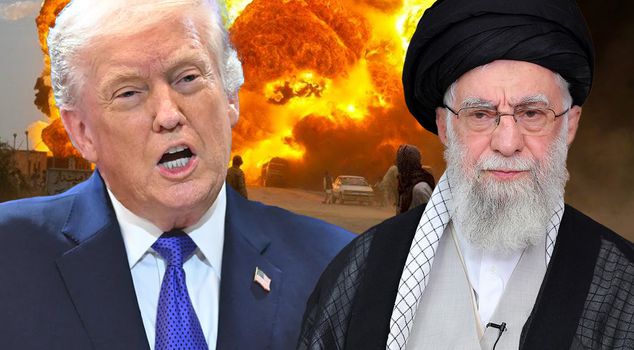
Iran's religious leader Ali Khamenei instructed the preparation of an emergency action plan to be activated in the event of a possible attack. Security agencies established crisis procedures against assassination and attack possibilities. Iranian Foreign Minister Abbas Araghchi stated in an interview with CBS, "If the U.S. attacks, we have every right to defend ourselves. This would be legitimate self-defense."
DIPLOMACY TABLE IN GENEVA
The U.S. and Iran held talks in Oman on February 6 and in Geneva on February 17, following indirect contacts initiated with the mediation of Oman. The parties agreed to continue the discussions. The third round of talks on February 26 will particularly address Iran's uranium enrichment rate and the status of its high-level enriched uranium stockpile.