28.02.2026 07:30
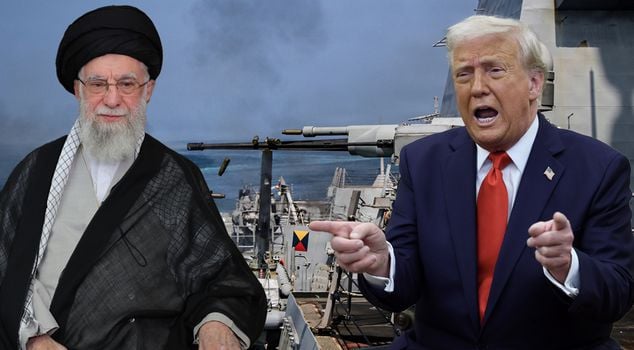
While speaking hopelessly about the ongoing negotiations with Iran, U.S. President Donald Trump stated that there has been significant progress towards a "peace agreement" from Oman's Foreign Minister Bedr bin Hamed al-Busaidi, who is one of the mediators. Busaidi expressed that Iran has confirmed it will not stockpile enriched uranium and will never possess nuclear weapons.
Oman Foreign Minister Bedr bin Hamed al-Busaidi stated that significant progress has been made towards a "peace agreement" in the ongoing nuclear talks between the US and Iran, mentioning that there will be "zero stockpiling" of enriched uranium, which will be verified by the International Atomic Energy Agency.
"I AM CONFIDENT WE WILL REACH A PEACE AGREEMENT"
Mediator Oman Foreign Minister Busaidi commented on the Iran-US negotiations in an interview with CBS News' "Face the Nation" program. Busaidi, who said he is "confident that a peace agreement is attainable" between the US and Iran, expressed, "I do not think any alternative to diplomacy will solve this issue."
"WE HAVE SOLVED THE NUCLEAR BOMB ISSUE"
Busaidi noted that they have made significant progress towards an agreement, stating, "If the ultimate goal is to ensure that Iran can never have a nuclear bomb, I believe we have solved this issue thanks to these negotiations."
"I THINK IT IS A SIGNIFICANT ACHIEVEMENT"
In response to the question of what issues Iran has agreed upon, Busaidi stated, "I think the most important achievement is the agreement that Iran will never have nuclear material capable of making a bomb." He noted that this is something completely new and has made the discussion of enrichment less significant, saying, "Because we are now talking about zero stockpiling (of enriched uranium). This is very important because if you cannot stockpile enriched material, there is no way to make a bomb, whether you enrich it or not."
Busaidi stated, "There will be zero stockpiling and full verification," adding that the complete and comprehensive verification to be conducted by the International Atomic Energy Agency (IAEA) is also significant.
ARAKCHI: IT WAS THE MOST SERIOUS NEGOTIATION WE HAD WITH THE US
After the third round of negotiations in Geneva, Iranian Foreign Minister Abbas Arakchi stated, "This was the most serious negotiation we had with the US. It was a serious negotiation regarding sanctions and the nuclear issue."
TRUMP: I AM NOT HAPPY WITH THE DIRECTION
US President Trump stated in a press conference yesterday, "(Iran) It would be great if they negotiated in good faith and openly, but they do not understand that." He mentioned that he has not yet made a decision regarding military operations but asserted that Iran should not have nuclear weapons, saying, "We will wait and see, but I am not happy with the direction."
President Trump noted that they do not accept Iran's uranium enrichment, stating, "Even 20% enrichment is not acceptable. Iran wants to enrich a little uranium, but there is no need for that with so much oil."
The US-Iran negotiations are expected to take place next week in Vienna, the capital of Austria.
RUBIO INSTRUCTS AMBASSADORS IN THE MIDDLE EAST: DO NOT COMMENT
Meanwhile, it has been reported that US Secretary of State Marco Rubio has asked US ambassadors and officials to stop making comments that could complicate the Iran talks.
According to a report by The Guardian, Rubio instructed US ambassadors in the Middle East to avoid statements that could escalate tensions.
Rubio asked ambassadors to refrain from making statements that could undermine President Donald Trump's pressure on Iran regarding nuclear issues. He urged ambassadors to avoid comments, interviews, and social media posts on this matter, stating, "Discipline in public messaging is especially important right now."
This instruction came after US Ambassador to Israel Mike Huckabee claimed in an interview with journalist Tucker Carlson that "it would be good for Israel to take over the entire Middle East." Huckabee's statements raised concerns in the White House, leading the US Secretary of State to decide to instruct officials to avoid commenting on Iran.
In the Middle East, the USS Abraham Lincoln aircraft carrier, along with more than a dozen US warships, including nine destroyers and three other combat ships, is present. The Washington administration, which is increasing its military buildup in the region, has also sent the world's largest aircraft carrier, the USS Gerald R. Ford, to the Israeli coast for a potential operation against Iran.
As tensions rise, many countries have called on their citizens in Israel and Iran to leave the region or avoid traveling there unless necessary.
NEGOTIATIONS BETWEEN IRAN AND THE US CONTINUE
The nuclear negotiations between Iran and the US, which were interrupted by attacks from Israel and the US in June 2025, have been revitalized through the initiatives of regional countries, especially Turkey, and with the mediation of Oman.
While the US's threats of attack and massive military buildup continue, the parties met in Oman for indirect negotiations on February 6 and agreed to continue contacts.
Subsequently, the talks continued in Geneva on February 17. The parties reported progress in the discussions and later agreed to reconvene in Geneva on February 26.
After a meeting that took place yesterday morning for about 3 hours, the parties took a break and reconvened in the evening.
Iran is demanding the lifting of sanctions in exchange for continuing its nuclear program within the framework of limitations that would prevent the production of atomic bombs.
The US, on the other hand, wants Tehran to completely halt its uranium enrichment activities and to remove its stock of high-level enriched uranium from the country.