06.01.2026 21:49
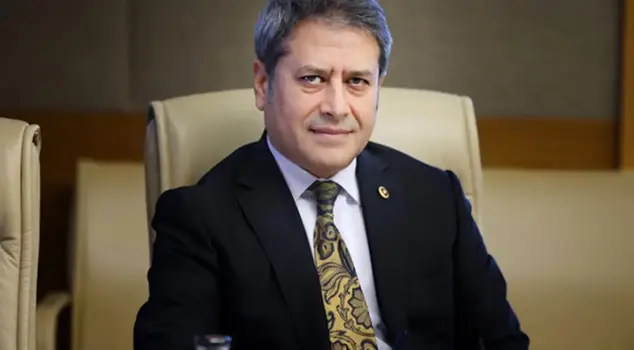
Evaluating the U.S. military intervention to detain Venezuelan President Nicolas Maduro, AK Party Member of Parliament and Chairman of the PARLATINO Turkish Group Ali Şahin emphasized that the ongoing process is a result of Latin America's historical vulnerabilities and the internal instability in Venezuela. Şahin noted that this development accelerates the erosion of international law and poses a risk of a 'domino effect' throughout the region, stating that instability could spread to Colombia, Peru, Chile, and Argentina.
Ali Şahin, the AK Party Gaziantep Deputy and Chairman of the Turkish Group of the Latin American and Caribbean Parliament (PARLATINO), made evaluations regarding the U.S. military intervention to detain Venezuelan President Nicolas Maduro and the subsequent developments.
Shahin's evaluations are as follows:
POST-CHAVEZ PERIOD AND BREAKDOWN IN INTERNAL DYNAMICS
"Venezuela needs to be approached from several different perspectives: First, Venezuela's own internal dynamics; second, the regional context of Latin America; third, the United States; and finally, an assessment from the perspective of international law.
In the post-Chavez period, Venezuela was plunged into a political and economic crisis and instability. Following the elections, Maduro's legitimacy came into question by both the United States, some countries in Europe, and regional countries. Therefore, the country entered a serious turbulence in political, social, and economic terms. One of the most important factors preparing this process was the lack of harmony and peace among the internal dynamics.
HISTORICAL TRAUMA OF LATIN AMERICA
Additionally, the Latin American region needs to be examined separately. As the Turkish Delegation of the Turkey–Latin America and Caribbean Parliament, we are closely interested in this region. For many years, similar traumatic processes and turbulences have been experienced in Latin America. The region has been a geography of exploitation for about 400 years. There is a history of exploitation from 1492 to the 1830s, followed by a period of political instability, internal conflicts, civil wars, and coups. In fact, the example of Venezuela serves as a small-scale prototype of Latin America.
EXTERNAL PRESSURE CREATED BY NATURAL RESOURCES
This environment of instability creates a ground open to external interventions. The political and economic imbalances in Venezuela have become factors that excite the appetite of external actors. The country's possession of the world's largest oil reserves of 300 billion barrels, 8,000 tons of gold reserves, 400 billion tons of iron reserves, and significant natural gas resources has further increased this interest.
The point that needs to be emphasized here is this: What excites the appetite of external powers is not the fatness of the herd, but the silence and disarray of the herd. The political disarray and instability in Venezuela created an environment that facilitated external interventions.
VIOLATION OF INTERNATIONAL LAW
From the perspective of international law, it was mentioned that the global system established after World War II was based on a structure that centered on law. However, over time, this understanding of law has been violated many times. However, an event such as a president being taken from his bed with his wife in the middle of the night and taken to another country is a situation that is rarely seen in world history. Although examples like Iraq, Panama, Somalia, and Afghanistan have occurred, a scenario where international law is so openly disregarded has not been encountered.
Now, international law has transformed into a structure that does not protect the weak and the just, but rather makes the strong even more tyrannical. A world without law is turning into a kind of "royal forest" where the strong hunt. Concepts like democracy, human rights, and the rule of law are being turned into symbols that power holders abandon when necessary in line with their interests.
From the perspective of the United States, there is a clear loss of hegemony. There is a loss of power on a commercial scale against China and a military and geopolitical scale against Russia. This step towards Venezuela is a show of force for the U.S. and a message that "hegemony is still in my hands."
TURKEY'S BALANCING ATTITUDE
However, the main issue is whether having very powerful armies or having moral and principled armies means real power. As we have seen from historical examples, a culture of a compassionate and just army determines the true strength of civilization.
Turkey's attitude in this process is a reflection of its ancient state tradition. Turkey has shown a reflex that prioritizes its own security, centers international law, and respects the sovereignty rights of countries. This approach is a correct stance both in principle and strategically.
THE RISK OF "DOMINO EFFECT" FOR THE REGION
The biggest risk for Latin America is the "domino effect." There is a possibility that instability starting in Venezuela could spread to Colombia, Peru, Chile, Argentina, and other countries in the region. Similar traumas experienced in the Middle East after the Iraq intervention could also occur in Latin America.
All these developments once again highlight the importance of the statements "The world is bigger than five" and "A fairer world is possible." The example of Venezuela clearly demonstrates the need for a fair and inclusive structure in the global system.