30.10.2026 01:21
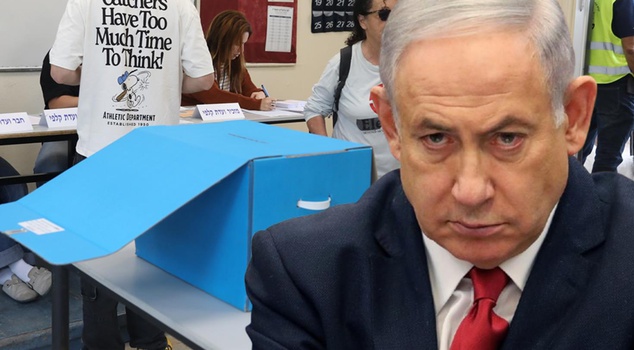
Vote counting has ended in Israel’s general elections. According to unofficial results, Netanyahu’s governing bloc won 53 seats and Eisenkot’s opposition bloc won 48 seats. While the two blocs failed to reach 61 seats, parties representing Palestinian citizens of Israel achieved historic representation with 19 seats.
Vote counting has been completed in Israel's parliamentary elections, which produced coalition uncertainty at the ballot box.
NETANYAHU AND EISENKOT COULD NOT REACH THE REQUIRED NUMBER
According to a report by Israel's state television KAN, more than 5.6 million votes counted showed that neither the ruling bloc led by Israeli Prime Minister Benjamin Netanyahu nor the opposition bloc led by Yashar Party leader Gadi Eisenkot reached the required number for a coalition.
According to the uncertified results that emerged after the completion of the count, the ruling bloc led by Netanyahu won 53 seats, while the opposition bloc led by Eisenkot remained at 48 seats.
Thus, neither bloc reached 61 seats, the sufficient number to form a coalition in the 120-seat Israeli Parliament.
ARAB PARTIES WON 19 SEATS
The parties representing Palestinian citizens of Israel achieved a historic level of representation by winning 19 seats. The Joint List formed by the Hadash, Taal and Balad parties won 11 seats, while the Raam Party led by Mansur Abbas won 8 seats.
In the final picture, the ruling Likud Party led by Netanyahu won 27 seats, while Eisenkot's Yashar Party placed second with 21 seats.
On the opposition side, the 'Together List' of former prime ministers Naftali Bennett and Yair Lapid won 12 seats, Avigdor Liberman's Israel Our Home Party won 7, and the Democrats Party led by Yair Golan won 8 seats.
In the ruling bloc, Shas, representing Ultra-Orthodox Jews (Haredim), won 6 seats, and United Torah Judaism won 7; Netanyahu's far-right allies Itamar Ben-Gvir's Jewish Power Party won 7 seats, and Bezalel Smotrich's Religious Zionism Party won 6 seats.