19.06.2026 22:01
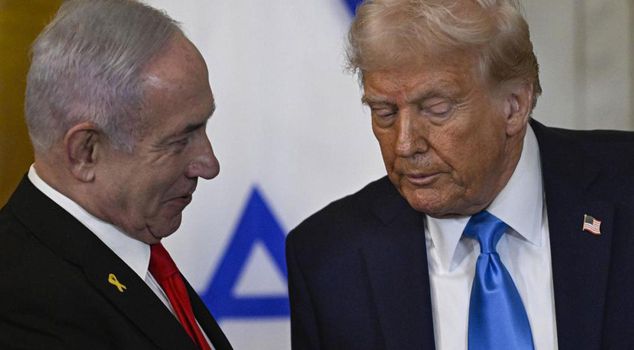
According to researcher Dr. Damla Taşkın, the agreement between the US and Iran has created a deep strategic rift along the Washington-Tel Aviv axis. While keeping the Strait of Hormuz open has become a greater priority for US President Donald Trump than Israeli Prime Minister Benjamin Netanyahu's domestic political needs—in terms of energy prices and preventing war—for Netanyahu, staying outside the agreement weakens his claim to deterrence and his influence over the US.
Researcher Dr. Damla Taşkın evaluated the new memorandum signed between the USA and Iran. Taşkın stated that Israel's exclusion from the memorandum was not a tactical disagreement, saying, "This situation proves that Trump does not see Netanyahu's security priorities as ahead of American interests and now considers him a political liability."
"ISRAEL'S EXCLUSION FROM THE TABLE IS A SIGNIFICANT POLITICAL SIGNAL"
Taşkın, expressing that the memorandum between the USA and Iran has clarified the limits of strategic alignment between Washington and Tel Aviv, noted that the first effects of the memorandum are seen in diplomatic negotiations.
Taşkın summarized the process with these words: "While Trump presents this process as a diplomatic success that will lower oil prices, Netanyahu argues that the agreement will give Iran renewed room to maneuver. Israel's exclusion from the memorandum is not merely a diplomatic preference; it is an important political signal showing that Trump does not view Netanyahu's security priorities as superior to American interests."
"DIFFERENT POLITICAL INTERESTS ARE DIVIDING THE LEADERS"
Taşkın, highlighting that behind the differences of opinion between the two leaders lie the 2026 election calendars and divergent political interests, emphasized that for Trump, offering economic relief to the American electorate is far more of a priority than maintaining Netanyahu's regional security agenda: "Before the U.S. midterm elections in November 2026, opening the Strait of Hormuz and lowering energy costs represent a tangible gain for Republicans. On the other hand, ahead of the elections planned for October 2026 in Israel, public opinion polls indicate that Netanyahu's coalition bloc will lose its majority to form a government. Trapped by corruption cases and international judicial processes, Netanyahu is losing both his claim to regional deterrence and his influence over Trump by being left out of the table."
"THE REAL QUESTION IS NOT THE END OF THE ALLIANCE, BUT NETANYAHU'S REPLACEABILITY"
Dr. Damla Taşkın stated that this rift between the leaders is also dividing pro-Israel circles in the U.S., noting that surveys conducted among American Jewish voters show support for the Netanyahu government is quite low (23 percent).
Taşkın concluded her analysis with this striking observation: "For Trump, lowering energy prices and preventing a new war have become more of a priority than Netanyahu's domestic political needs. The real outcome of the Iran memorandum is that it indicates Trump has begun to discard not Israel, but Netanyahu's influence over regional politics. In the coming period, the fundamental question is not so much whether the alliance between the two leaders will completely end, but to what extent Netanyahu will become a surpassable and replaceable actor for the Trump administration."