30.10.2026 02:41
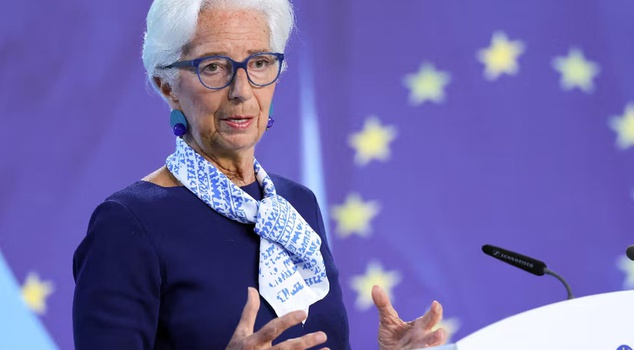
European Central Bank (ECB) President Christine Lagarde announced that she has decided to resign one year before her term ends. Lagarde, who will leave her post on February 7, 2027, is said to have made the decision because of her desire to participate more actively in politics. Following the resignation, which comes at a critical time when inflation and borrowing costs are rising in Europe, attention has turned to who will be the new president.
European Central Bank (ECB) President Christine Lagarde announced that she has resigned. Lagarde, who has been at the center of speculation about her future for months, will leave office on February 7. The decision comes at a time when Europe faces increasing inflationary pressure, volatility in bond markets, and political uncertainties.
SHE DID NOT WAIT FOR HER TERM TO END
Lagarde, whose term would normally end in October 2027, decided to leave earlier than expected.
Sharing a short video on social media, Lagarde said in her assessment of her tenure that she was leaving the institution prepared for the future and that she was pleased with the work done.
It drew attention that Lagarde's resignation took place before the upcoming presidential elections in France.
IS POLITICS BEHIND HER RESIGNATION?
A source close to the matter suggested that Lagarde's desire to speak out more actively about political developments in France and internationally was influential in her decision to resign.
The role of ECB president requires political neutrality to protect the institution's independence.
It is assessed that Lagarde's departure will give European Union leaders the opportunity to determine the new president before the presidential elections in France.
TWO NAMES STAND OUT AS POSSIBLE SUCCESSORS
European Council President Antonio Costa announced that the process to determine Lagarde's successor would be launched immediately.
For the new presidency, the names of former President of the Netherlands Central Bank Klaas Knot and former President of the Bank of Spain Pablo Hernández de Cos stand out.
Danske Bank economist Piet Haines Christiansen noted that both names are experienced central bankers and said that a possible change of office might not have a major impact on markets.
CRITICAL PERIOD FOR THE EUROPEAN ECONOMY
Lagarde's resignation coincided with a period when the European Central Bank is preparing to make important decisions in the fight against inflation.
The pressure created by the war in Iran on oil prices has increased inflation risk in Europe through energy costs.
The ECB is considering interest rate hikes to prevent rising energy prices from being reflected in other goods and services prices and then in wages.
However, the rise in bond yields increasing households' and businesses' borrowing costs also brings concerns about economic growth.
EYES TURN TO INTEREST RATE DECISION
In the interest rate decision the European Central Bank will announce on Thursday, it is expected to keep the deposit rate unchanged at 2.5 percent.
However, it is assessed that a new interest rate hike may occur in December due to the effect of energy prices on inflation.
Pricing in money markets indicates that the ECB may make three more interest rate hikes by the end of next year. In this scenario, it is stated that the deposit rate could reach 3.25 percent.
DEBT CRISIS IN FRANCE RAISES CONCERNS
One of the major problems facing the ECB is rising public borrowing costs in France.
Uncertainties regarding the country's increasing debt burden and fiscal policy have raised investors' risk perception toward French bonds.
While the interest rates France pays when borrowing from bond markets have reached their highest levels in about 25 years, the bond yield spread between France and Germany has also widened.
It is being debated whether the ECB will use its existing tools for bond markets if market volatility continues.
MARKETS RESPONDED LIMITEDLY TO THE RESIGNATION
Following Lagarde's resignation announcement, there was no major movement in financial markets.
Simon Dangoor, Head of Fixed Income Macro Investments at Goldman Sachs, noted that the ECB is now a central bank with an established institutional structure and said that a change of president is not expected to create significant differences in the institution's functioning.
After Lagarde's departure, how the European Central Bank will proceed in monetary policy and who the new president will be have become matters of curiosity.