31.10.2026 14:10
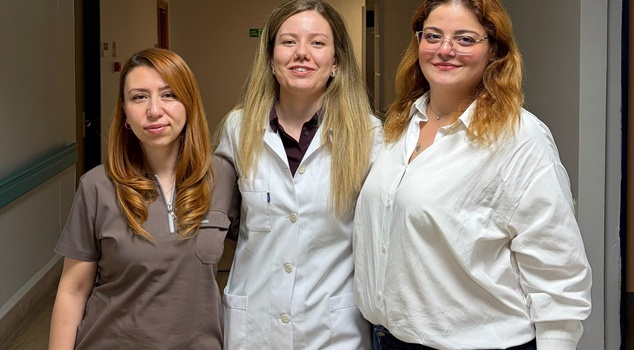
Assistant doctor Ezgi Renkli Çelik, who works at Ümraniye Training and Research Hospital, and nurse Yasemin Özer received treatment under physician supervision at the hospital's obesity clinic. Çelik, who at one point weighed up to about 150 kilograms, lost 50 kilograms in 9 months, while Özer, who is 152 centimeters tall, went down from 80 kilograms to 50 kilograms in one year. In the process carried out with diet, exercise, and medical treatment, Özer reached her goal, and Çelik's treatment continues.
At Ümraniye Training and Research Hospital, assistant doctor Ezgi Renkli Çelik, who was treated for excess weight, lost 50 kilos in 9 months, while nurse Yasemin Özer lost 30 kilos in 1 year.
Çelik, who works as an assistant doctor in the hospital's Internal Medicine Clinic, and Özer, who works as a nurse at the same institution, applied to the Internal Medicine-Obesity Outpatient Clinic due to excess weight problems and began treatment under physician supervision.
Özer, whose medical treatment has been completed, continues her exercise and diet program, while Çelik's treatment is ongoing.
Specialist Dr. Gözde Özsoy Şen from Ümraniye Training and Research Hospital's Internal Medicine-Obesity Outpatient Clinic stated that excess weight is among the important health problems of the 21st century.
ASSISTANT DOCTOR HAD REACHED UP TO 150 KILOS
Dr. Ezgi Renkli Çelik stated that she applied to the outpatient clinic due to the weight problem she had experienced since childhood.
Çelik said, “I went through a period when I reached about 150 kilograms. In the process I continued with Ms. Gözde, I lost 50 kilos. We carried out this process with diet, exercise and medical treatment.”
Çelik, stating that her treatment process continues and that she wants to continue her follow-up after reaching her target weight, expressed that in addition to monthly check-ups, her doctor's motivational support, medical treatment, diet and exercise contributed to the weight-loss process.
Çelik, stating that she and her doctor set a target of 74 kilos, said that her ideal weight would become clear as a result of follow-ups and that she would continue her check-ups after the weight-loss process.
Şen, noting that Dr. Ezgi Renkli Çelik had previously tried exercise and diet methods, recorded that because her body mass index was in the 40-50 range, they also added medical methods to the treatment process.
Şen, stating that the treatment of Çelik, who lost 50 kilos in 9 months, continues, said that thousands of patients have been treated to date at the Internal Medicine-Obesity Outpatient Clinic, which opened for service in 2023.
NURSE WAS EXPERIENCING NIGHTTIME HUNGER ATTACKS
Nurse Yasemin Özer also stated that she had experienced a weight problem due to her chronic illness since her adolescent years.
Özer, expressing that although she sometimes dieted and exercised, she could not lose weight, reported that after the obesity outpatient clinic opened, she decided to apply to a doctor.
Özer said that her doctor first performed blood tests and, upon seeing increased insulin resistance in the results, referred her to a dietitian.
Özer, recounting that she restarted a diet and exercise program but switched to medical treatment because she could not lose enough weight, recorded that during the treatment process she went down from 80 kilos to 50 kilos.
Özer, reporting that with the completion of her medical treatment she reached her target weight and continues her exercise and diet program, said, “After I reached my target weight, the calorie amount and content of my diet changed. I am trying to make exercise a part of my life as well. If I am going somewhere, I prefer to walk. I try not to use the elevator and to take the stairs. In this process, I think I have gained healthy eating and exercise habits that I could not include in my life before. I am continuing my life in a healthy way.”
Şen, reporting that Nurse Özer also applied to the outpatient clinic due to excess weight, explained that the patient could not lose weight despite adequate exercise and diet and experienced hunger attacks especially at night.
Şen recorded that they followed the patient with an exercise and diet program for a while, and when she could not lose weight despite adequate calorie restriction and physical activity and her insulin resistance progressed, they started medical treatment.
Şen stated that Özer, who is 152 centimeters tall, went down from 80 kilos to 50 kilos in one year.
Şen, reporting that Özer exercised regularly and adhered to her diet, explained that her medical treatment had ended and she continued with exercise and diet.
WHICH MEDICATIONS ARE USED IN MEDICAL TREATMENT?
Şen, reporting that body mass index is calculated based on height and weight and is a very simple and practical method for physicians, expressed that their perspective on obesity has deepened recently.
Şen stated that the treatment in question is possible with a multidisciplinary approach.
Şen, noting that in the assessment of excess weight they do not look only at body mass index in patients, recorded that they also examine waist circumference, muscle and fat masses, and metabolic parameters.
Şen, noting that excess weight can cause type 2 diabetes, hypertension and cardiovascular diseases, recorded that genetic predispositions, hormonal disorders and a sedentary lifestyle can also be effective in weight gain.
Şen stated that after evaluating patients, they take into account their compliance with exercise and diet programs, and in appropriate cases they can apply medical treatment methods.
Şen, underlining that exercise, diet and medical methods are at the forefront in treatment, said, “The quality of the weight lost is as important as the amount. Our patients generally apply to us because they cannot comply with exercise and diet programs or because they cannot lose weight despite following them. In some of our patients, hunger attacks can be seen especially in the evening hours, and we can frequently encounter excess weight in the young age group.”
Şen emphasized that physical inactivity and unbalanced nutrition can be effective in excess weight gain, and that underlying diseases should also be evaluated in these individuals.
Şen, noting that in medical treatment, different medications such as metformin and GLP-1 receptor agonists can be used under physician supervision according to the patients' clinical conditions, recorded the following:
“These treatments are applied together with nutritional regulation and physical activity, taking into account the patients' metabolic conditions and individual needs. Incretin-based treatments, known among the public as ‘weight-loss injections,’ are medications that help with weight control by reducing appetite and increasing the feeling of fullness. These treatments are applied in appropriate patients under physician supervision, usually in the form of subcutaneous injections. Oral metformin, on the other hand, is a medication used especially in the regulation of insulin resistance and blood sugar metabolism. In our patients, these treatments are planned together with nutritional regulation and physical activity, evaluating their individual metabolic characteristics and accompanying diseases.”