29.03.2026 07:00
As the war between the US-Israel and Iran enters its 30th day, a first in a long time has occurred in the region. Pakistan's Foreign Minister Muhammad Ishaq Dar announced that Iran has allowed 20 ships flying the Pakistani flag to pass through the Strait of Hormuz.
Pakistan's Foreign Minister Muhammad Ishaq Dar reported that Iran has allowed 20 more Pakistan-flagged ships to pass through the Strait of Hormuz, with 2 ships passing through the strait daily.
2 SHIPS WILL PASS DAILY
In a statement made via the social media platform of the US-based company X, Dar expressed, "I am pleased to announce that the Iranian government has agreed to allow 20 more Pakistan-flagged ships to pass through the Strait of Hormuz, and that 2 ships will pass through the strait daily."
"THIS IS A SIGN OF PEACE"
Dar emphasized that they welcomed this step and that it was a "constructive gesture" made by Iran, stating, "This is a sign of peace and will help ensure stability in the region." He shared the view that "dialogue, diplomacy, and such confidence-building measures are the only steps forward."
TAGGED SENIOR US OFFICIALS
In his post, Pakistan's Foreign Minister Dar tagged US Vice President JD Vance, Secretary of State Marco Rubio, Iranian Foreign Minister Abbas Araghchi, and US President Donald Trump's Special Representative Steve Witkoff.
WHAT IS HAPPENING IN THE STRAIT OF HORMUZ?
Recent developments in the Strait of Hormuz have turned the region into a tension zone that poses not only military but also global energy crisis risks. The escalating conflict between the US-Israel and Iran has created a de facto crisis environment in the strait, one of the world's most critical oil transit points.
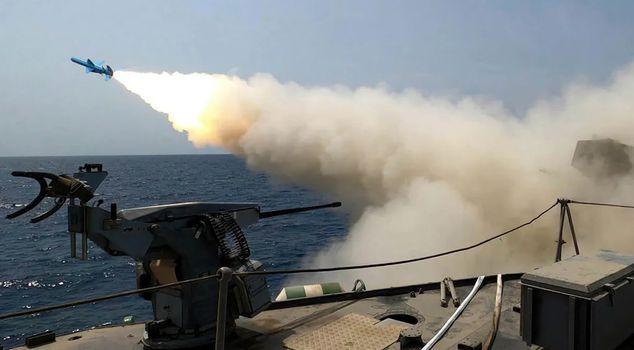
In response to US and Israeli attacks on Iranian territory, Iran has begun to retaliate harshly in the Strait of Hormuz. The Iranian Revolutionary Guards announced that they targeted oil tankers they claimed were linked to the US, hitting some ships with missiles and drones. Most recently, it was reported that the Marshall Islands-flagged oil tanker "Safesea Vishnu" was struck for failing to comply with warnings.
US AND ISRAEL EFFECTIVELY BANNED
The Iranian administration not only limited itself to attacks but also declared that it has effectively banned the passage of all ships linked to the US and Israel. In statements made, it was noted that the Strait of Hormuz is "under control," and there was a warning that commercial ships attempting to pass through the region could also be targeted.
Following these developments, tanker traffic in the strait has nearly come to a halt. The disruption on this route, through which a significant portion of global oil supply passes, is considered one of the largest energy shocks in history. The disruption in the strait, where approximately 20 million barrels of oil pass daily, quickly drove oil prices up and created serious uncertainty in the market.
GLOBAL ENERGY FLOW AT RISK
The US side is preparing to respond to the crisis with military and economic measures. The Washington administration has raised the idea of having the navy escort tankers to ensure their safety and announced insurance and escort plans to protect energy shipments. However, experts believe that these measures may not be sufficient due to the heavy tanker traffic and increasing risk of attacks.
Additionally, it has been reported that Iran has also carried out missile and drone attacks not only at sea but also against US bases in the Gulf. This situation strengthens the possibility that the crisis may not be limited to maritime security but could escalate into a large-scale regional conflict.
Looking at the current situation, what is happening in the Strait of Hormuz is not a "low-intensity conflict," but rather a crisis that directly threatens global energy flow. Tanker attacks, passage bans, and military buildup have made the region one of the world's most critical geopolitical fault lines.
US-ISRAEL'S ATTACKS ON IRAN
While negotiations continue between Tehran and Washington, Israel and the US launched a military attack on Iran on February 28. Iran responded with attacks on targets it identified in several regional countries, including Qatar, the UAE, and Bahrain, where US bases are located, in addition to Israel. In the US-Israel attacks, former Iranian leader Ali Khamenei and many senior officials were killed.