06.03.2026 19:03
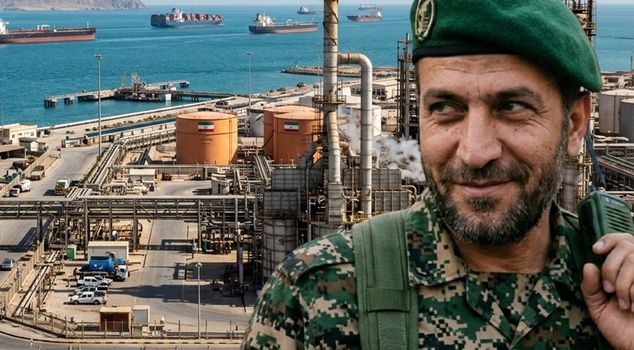
A worrying development for global oil markets has occurred following Iran's closure of the Strait of Hormuz. Kuwait announced that it has decided to halt oil production due to a lack of storage capacity.
Kuwait has decided to halt oil production due to a lack of storage capacity.
KUWAIT SUSPENDS OIL PRODUCTION
Iran, which responded to the attacks of the US-Israel with drone and missile retaliations, did not neglect to play its economic card at the very beginning of the war. While closing the Strait of Hormuz, which is vital for global oil trade, Iran announced that it would strike any ship attempting to pass through.
The first country affected by this decision was the Gulf nation of Kuwait. Ranking 10th in the world for daily crude oil production, Kuwait halted oil production due to a lack of storage capacity.
KUWAIT'S POSITION IN WORLD OIL PRODUCTION
Kuwait, one of the most strategic players in the global energy market, ranks 10th in world crude oil production with an average daily output of 2.6 to 2.8 million barrels as of 2026. The country maintains a dynamic production capacity in line with OPEC+ quotas and is the 7th country in the world with proven reserves of 101.5 billion barrels. In line with the strategic goals of the Kuwait Petroleum Company (KPC), there are plans to increase sustainable production capacity to 3.2 million barrels by 2026; this massive energy supply continues to constitute approximately 90% of the country's export revenues, making it a cornerstone of the Kuwaiti economy.
THE IMPORTANCE OF THE STRAIT OF HORMUZ
The Strait of Hormuz is considered the most critical and sensitive "jugular vein" of global energy security; approximately one-third of the oil transported by sea and a significant portion of liquefied natural gas (LNG) pass through this narrow waterway. Located between Oman and Iran, this strait, which has a narrowest point of about 33 kilometers, is a challenging gateway that connects the major oil producers in the Persian Gulf to the open seas.
During periods of escalating regional tensions, the mere possibility of closing the strait can cause panic waves in global energy markets and lead to rapid price increases, making control and navigation security over Hormuz a geopolitical issue that directly affects not only the countries in the region but the entire world economy.