18.08.2026 11:00
Archaeologists who opened the tomb of a young woman dating back approximately 1,500 years on the Mangyshlak Peninsula in Kazakhstan discovered gold-plated shoes specially crafted for the burial ceremony and jewelry with mythological motifs. This find, which proves that the region was located on the ancient trade corridor, revealed the level of craftsmanship and high social status of the period.
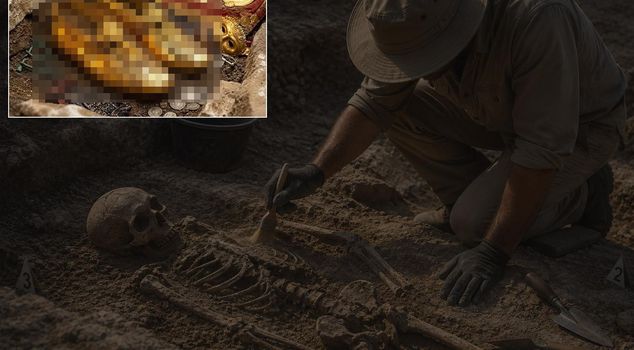
A tomb of a distinguished woman dating back approximately 1500 years was found on the Mangyshlak Peninsula on the Caspian Sea coast, located in the west of Kazakhstan. In the excavation that excited archaeologists, gold-plated shoes specially prepared for the burial ceremony and ornate jewelry were unearthed.
During archaeological excavations at the Karakabak cemetery near the city of Aktau, a wealthy woman's tomb dated between the second half of the 5th century AD and the first half of the 6th century was discovered. The most striking find in the tomb, identified as belonging to a young woman, was the gold-ornamented shoes.
SPECIALLY COATED TO LOOK LIKE GOLD
According to the archaeologists' examinations, it was understood that the shoes were not entirely made of gold; the buckles and connecting parts made of wood and organic materials were covered with thin gold sheets. It was determined that this craftsmanship gave the shoes the appearance of being entirely made of gold.
Not only the shoes, but also the deceased's burial attire was adorned with gold details:
- Gold-ornamented headdress: The woman's headdress features round gold plates, a crown made of red fabric, and mask figures.
- Mythological echoes: It was determined that the main ornament on the forehead region imitated the Gorgoneion (Medusa) depiction from the Hellenistic period.
- Belts with bird figures: It was observed that the belt buckles were designed in the shape of a bird of prey with spread wings.
NOT PRODUCED FOR DAILY USE, BUT FOR THE FUNERAL CEREMONY
The most important detail that surprised the researchers was the non-functionality of some parts. The buckles on the shoes and belts being unsuitable for daily use showed that these ornate clothes were not items the woman wore during her lifetime. It is assessed that all these jewelry and accessories were produced specifically only for the funeral ceremony and burial process.
THE REGION WAS AN IMPORTANT TRADE AND CRAFT CENTER
Researchers Andrei Astafyev and Evgeny Bogdanov believe that these magnificent pieces were not imported from outside but were produced directly in local workshops in Karakabak. Traces of metalworking, jewelry, and glassmaking had already been found in previous excavations in the region. Another element proving that Karakabak was not an ordinary settlement is the more than 150 ancient coins unearthed during the excavations. The presence of coins belonging to great civilizations such as Parthian, Khwarezmian, Sogdian, Sasanian, Byzantine, and Chinese at the same point proves that the area was a key stop on the Azov-Caspian trade corridor connecting Central Asia to the Caucasus and the Volga region.
The gold-plated shoes unearthed reveal not only the existence of a high-status woman but also the advanced level of craftsmanship of the Caspian communities 1500 years ago.