24.03.2026 11:21
North Korean leader Kim Jong Un officially declared South Korea as the "most hostile state," drawing attention. With this decision, the Pyongyang administration is opening the door to a new and harsher era in relations with Seoul, while it is assessed that tensions on the Korean Peninsula may further escalate.
North Korean leader Kim Jong Un officially declared South Korea as the "most hostile state," escalating tensions on the Korean Peninsula to a new level. The Pyongyang administration signaled a fundamental change in both its political and military doctrine with this step.
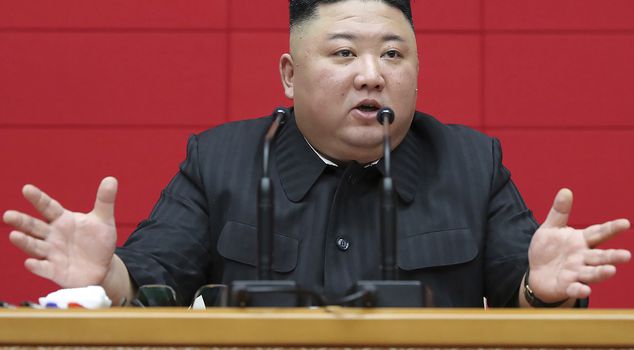
In a speech at the Supreme People's Assembly, Kim stated that the rhetoric of South Korea being "part of the same nation" has now lost its validity, directly labeling the Seoul administration as an enemy. This statement is considered to be a precursor to expected constitutional changes.
NUCLEAR MESSAGE AND HARSH RHETORIC
Emphasizing that his country will maintain its nuclear power status and will not back down, Kim stated that security can only be ensured through strong military capacity. Declaring North Korea as an "irreversible nuclear power," Kim once again rejected U.S. calls for disarmament.
Citing the attacks by the U.S. and Israel on Iran as examples, Kim argued that power is decisive in the international system and expressed that nuclear deterrence is of vital importance.
TENSIONS ESCALATING IN THE REGION
Experts assess that this statement could be a strategic move by North Korea to completely sever diplomatic ties with South Korea and increase military tension. If Pyongyang defines South Korea as a permanent enemy through constitutional changes, a further deterioration in relations between the two countries is expected.
The South Korean administration reacted by stating that Kim's statements are negative for peaceful coexistence on the Korean Peninsula.