13.03.2026 15:21
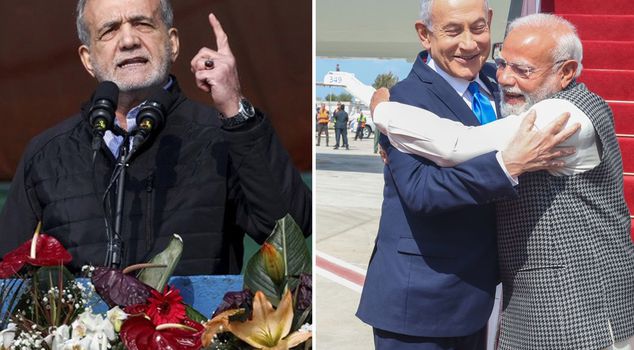
Recently, Indian Prime Minister Narendra Modi, who made headlines with images of him embracing Israeli Prime Minister Netanyahu, requested Iranian President Masoud Pezeshkian to allow Indian ships to pass through the Strait of Hormuz. Pezeshkian rejected this request without hesitation.
The war, which began with the first attack by Israel and the US on Iran and the Tehran administration's strikes on almost all countries in the region, has taken on a new dimension. In the early days, ballistic missiles, Kamikaze drones, and intense airstrikes were in the spotlight. However, the new phase that started with Iran's statement, "We will strike every ship passing through the Strait of Hormuz," has also changed the course of the war.
ITS IMPACT COULD SHOCK THE WHOLE WORLD
At this point, the war is not limited to a regional crisis but is veering towards producing economic consequences that could shake the entire world. This is because the Strait of Hormuz, which Iran does not allow passage through, is one of the vital arteries of the global energy equation. The inability of LNG or oil-laden tankers to pass through here has serious repercussions.
MODI'S REQUEST TO "ALLOW"
In this context, Indian Prime Minister Narendra Modi, who was in the news during his embrace with Israeli Prime Minister Binyamin Netanyahu a few days ago, requested Iranian President Masoud Pezeshkian to allow Indian ships to pass through the Strait of Hormuz.
REQUEST REJECTED
Modi's request was conveyed to the Iranian administration through diplomatic channels. However, Iranian President Masoud Pezeshkian rejected this request without consideration.