02.11.2026 11:35
In the war that began with the US and Israel’s attacks on Iran, Brent crude rose 56.5 percent compared with before the war. In the US, the price of a gallon of gasoline rose from $2.98 to $4.17. Of the $468 billion in additional costs caused worldwide by the oil shock, $160 billion was reflected on the US. Experts suggested that rising energy costs could make the Republican Party pay a political price in the midterm elections on November 3.
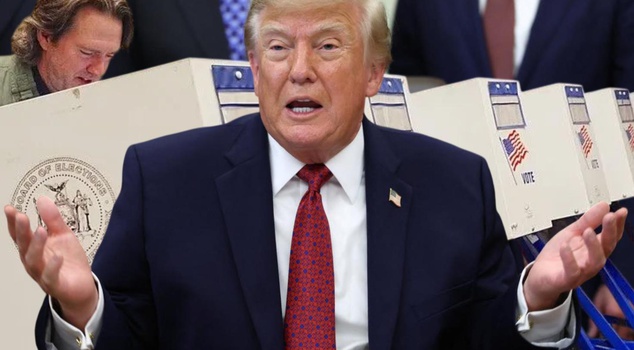
The conflicts in Iran pushing oil prices to the highest level in recent years have placed the greatest burden of fuel costs on the United States. Pressure on the administration of U.S. President Donald Trump, who promised to lower prices, is increasing with just hours left before the midterm elections.
BRENT CRUDE EXCEEDED $126
Brent crude, which stood at $72.48 per barrel before the war, has risen above $126 since the fighting began. Brent ended the week ending October 30 at $113.43, recording an increase of about 56.5 percent compared with before the war.
The rise in oil was also reflected in fuel prices in the United States. According to data from the American Automobile Association (AAA), the average gasoline price, which was about $2.98 per gallon before the war, rose to $4.17 as of November 1. Thus, gasoline prices have increased by about 40 percent since the war began.
ONE-THIRD OF THE ADDITIONAL COST IS IN THE U.S.
According to an analysis by the Center for Research on Energy and Clean Air (CREA), the oil shock originating from the Strait of Hormuz brought $468 billion in additional fuel costs to consumers worldwide. The portion of this cost amounting to about one-third, or $160 billion, occurred in the United States.
74 PERCENT OF AMERICANS ARE CONCERNED
According to a study published by the U.S.-based Pew Research Center on October 30, 74 percent of Americans are seriously concerned about gasoline and energy prices. This rate was 60 percent in July and 43 percent in January.
The increase in public concern has also brought about debates over the steps Washington could take to lower oil prices.
“THE REPUBLICAN PARTY IS EXPECTED TO PAY A POLITICAL PRICE”
Francesco Sassi, a postdoctoral research fellow at the University of Oslo, who gave assessments to an AA correspondent, argued that the war has called into question the understanding that the United States is independent of the rest of the world in the energy field.
Arguing that rising energy costs will put pressure on Trump in the midterm elections, Sassi said, “Rising energy costs are inevitably expected to exact a political price from the Republican Party in the midterm elections. The election results will show the extent to which the party leadership has weakened or whether the administration will be forced to acknowledge the costly failures of the war.”
Stating that he does not expect a decline in oil prices in the near term, Sassi made the following assessment regarding the Trump administration’s short-term options: “Even its strategy to strengthen the United States’ dominance in the energy field cannot be very effective in the face of a crisis of this magnitude caused by its own policies.”
STRATEGIC RESERVES AT LOWEST LEVEL SINCE 1982
Julien Mathonniere, an oil markets economist at London-based Energy Intelligence Group, said it is difficult to estimate whether the Trump administration foresaw the size and duration of the disruptions in energy markets when the war began. Mathonniere said, “However, we can say that the policy tools at the disposal of the U.S. administration were designed for a short-term crisis.”
Mathonniere recalled that, under the decision taken in March under the coordination of the International Energy Agency (IEA), the release of 172 million barrels from the U.S. strategic petroleum reserves onto the market over about four months was planned, but that implementation is still ongoing. According to Mathonniere, the country’s strategic petroleum reserves have fallen to 283 million barrels, the lowest level since 1982.
“THERE ARE TWO OPTIONS AFTER THE ELECTION”
Describing retail fuel prices in the United States as Iran’s most effective means of pressure on Washington, Mathonniere said, “The political impact of rising fuel prices in the United States is reaching its highest level before the November 3 midterm elections. After the election pressure is removed, the White House has two options: reach an agreement with Iran or further intensify military operations.”
“DIPLOMACY IS THE ONLY TOOL THAT CAN ELIMINATE THE RISK PREMIUM”
Arguing that the Trump administration has used all the options it could resort to in the short term to lower fuel prices, Mathonniere continued as follows:
“Diplomacy is the only tool that can eliminate the risk premium reflected in oil prices. Therefore, the proposal currently being discussed in Tehran, which envisions the reopening of the Strait of Hormuz in exchange for the lifting of the blockade imposed by the United States, is more important than any additional use of oil that could be made from strategic reserves. On the other hand, consumers have also begun to adapt to price increases by reducing their consumption. Gasoline demand in the United States fell by about 4 percent during the summer months. This is a rarely seen decline in gasoline consumption.”
“PRICES ARE LIKELY TO CONTINUE THEIR VOLATILE COURSE”
Paolo Scafetta, Senior Petrochemicals Expert at ICIS, also drew attention to the continued uncertainty in oil markets. Scafetta commented, “With the weakening of supply and demand conditions in the markets, RBOB prices, which are considered the benchmark for gasoline futures in the United States, may decline, but crude oil prices are likely to continue their volatile course.”
Noting that the gradual recovery of oil flows through the Strait of Hormuz and the end of the Russia-Ukraine War could ease gasoline and diesel markets in the period ahead, Scafetta recorded the following:
“On the other hand, the fact that gasoline prices along the U.S. Gulf Coast are lower and freight rates on the TC2 route used to transport refined petroleum products from the Amsterdam-Rotterdam-Antwerp (ARA) region in Europe to the U.S. East Coast are rising makes gasoline shipments from Europe to New York economically unattractive. Freight rates and inventory levels are key indicators that need to be closely monitored.”