23.08.2026 16:00
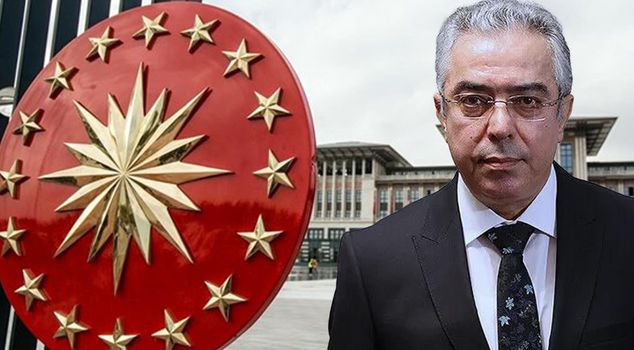
Presidential Chief Advisor Mehmet Uçum made striking evaluations regarding Law No. 7595, known publicly as the "framework law." Stating that the law is not an ordinary counter-terrorism regulation, Uçum said it will produce positive legal consequences for those who meet personal conditions and negative ones for those who do not.
{"text":"
Chief Advisor to the President and Vice Chairman of the Presidential Law Policies Board Mehmet Uçum shared the details of Law No. 7595, known publicly as the \"Law on Strengthening National Solidarity and Social Cohesion,\" and the Terror-Free Türkiye vision with the public.
AN \"EXTRAORDINARY PROCESS\"
Mehmet Uçum emphasized that this law, which has entered into force, is not standard counter-terrorism legislation. Pointing out that the current process is out of the ordinary, Uçum stressed that the primary purpose of the law is to definitively and permanently eliminate systematic terrorism. Stating that the law was designed based on general national needs rather than party agendas or daily politics, Uçum stated that the state pursues a superior national and public interest policy through positive law.
CONDITIONAL LEGAL CONSEQUENCES AND EXCEPTIONS
According to Uçum's assessments, practical steps such as the organization ending its de facto existence and laying down arms form the basis for the implementation of the law. As a general condition, the determination that the organization has been eliminated, its approval by a National Security Council decision, and its publication in the Official Gazette are taken as the basis. Following the relevant decision, judicial postponement mechanisms will be activated for those who apply within six months and meet the personal conditions set forth in the law. For those who do not meet the conditions or commit terrorist crimes during the postponement process, penal executions and all legal sanctions will be applied immediately.
Stating that the law does not constitute an amnesty and does not cover everyone, Uçum stated that very clear lines have been drawn for certain types of crimes. In this context, perpetrators of crimes committed before June 1, 2005, requiring life imprisonment or aggravated life imprisonment, and those involved in intentional homicide committed within the framework of organizational activities are definitively excluded from the scope of the law.
EXECUTIVE AND MONITORING BOARD
Noting that new mechanisms have been established for the healthy functioning of the process, with the administrative, judicial, and legislative bodies working in coordination, Uçum stated that an administrative Board, to be formed under the chairmanship of the Vice President, will monitor the elimination process of the organization with periodic reports. Uçum noted that those who comply with the dynamics of the process's mandatory stages will benefit, while those who resist will have no place in Türkiye's political future.
Uçum's full assessment is as follows:
\"To reiterate, the state has initiated a transition process in which it will make a comprehensive move, with the aim of permanently ridding Türkiye of the systematic terrorism threat domestically and in the region, eliminating the terrorist tutelage over certain parts of democratic politics, and ending the practice and language of terrorism and its social, economic, and cultural effects in all channels, and has developed a new paradigm in this framework.
President Recep Tayyip Erdoğan, who holds the constitutional title of head of state, explained this paradigm in detail at the Ahlat and Malazgirt programs on August 25-26, 2024, at the Victory Day event on August 30, 2024, and in his speech at the opening of the new legislative year of the Grand National Assembly of Türkiye (TBMM) on October 1, 2024. Mr. Devlet Bahçeli, the Chairman of the MHP, who possesses great experience and wisdom, paved the way for the practical process with courageous moves.
The transition process to a Terror-Free Türkiye has been carried out robustly up to this stage thanks to the national leadership of our President Erdoğan, the determined, uncompromising, and pioneering approaches of Mr. Bahçeli, the strong will of the People's Alliance, and the meticulous work of state institutions.
The transition process towards the goal of a Terror-Free Türkiye, which began as a state initiative and continues as state policy, has reached a very important stage by merging with the goal of a terror-free region during this period. In its visible aspect, the transition process to a Terror-Free Türkiye, which has been in effect since October 1, 2024, has surpassed the fundamental threshold with many advancements over the past twenty-two months and has come closest to the goal.
One of the most critical steps in approaching the goal is the adoption of the transition process law. The TBMM adopted this law on August 10, 2026, a law that deserves to be at the forefront among the laws of high importance in its history. The law entered into force by being published in the Official Gazette dated August 18, 2026, and numbered 33344. It is evident that Law No. 7595 will have a historic mission. This law constitutes the framework law for the transition process in which Türkiye is definitively and permanently eliminating systematic terrorism.
Once this law begins to be implemented and its implementation is successfully completed within the specified period, the transition process to a Terror-Free Türkiye will be completed. In other words, Law No. 7595 is not an ordinary counter-terrorism law. This law has a general purpose aimed at ending systematic terrorism. Therefore, when analyzing, evaluating, and interpreting Law No. 7595, it cannot be seen merely as an ordinary piece of legislation within the positive legal system, nor can it be considered within those limits. Law No. 7595 should not be subjected to evaluation independent of its general purpose. Any interpretation of the law under positive law must be made in accordance with its general purpose.
1- The methodology problem regarding Law No. 7595
Atypical periods are managed with atypical methods. The transition process to a Terror-Free Türkiye is one of the most significant atypical periods in our republican history. The main criterion of atypicality is to evaluate the issue at hand not through current politics but through a general policy approach. It is to look at the issue based on the country's needs rather than the agendas of party politics. It is to manage the process within the general functioning of the state, not its current operations.
For this reason, the legal policy of the transition process also needed to be specifically developed. The transition process law is the concrete product of this approach. This is a law produced not by the TBMM's ordinary legislative activity, but by extraordinary legislative activity appropriate for the transition process, which carries extraordinary conditions. The fact that the law proposal bore the will of eight parties and the signatures of 367 deputies, one of the highest numbers in history, is the first major indicator of this extraordinary legislative activity. The unique aspects of the proposal's deliberation process also point to this. The much higher consensus and vote count, emerging with the votes of 467 deputies in the adoption of the law, became the decisive evidence of this extraordinary legislative activity. These revealed that the issue was addressed by transcending current politics and party agendas, and viewed through general politics and the country's needs.
Therefore, the will of the legislator is to give decisive superiority to the general purpose of the law. In this case, the general purpose of the law should be adopted as the fundamental principle of interpretation in interpreting all provisions of the law. It can be said that teleological interpretation is always considered when interpreting a law. But that is not enough."}
The method of resorting to purposive interpretation only when verbal interpretation is insufficient is not appropriate under Law No. 7595. Law No. 7595 should, in principle, be interpreted purposively, and verbal interpretation should also be conducted in a manner that serves the general purpose of the law. Specifically, the postponement and other institutions included in the law should be evaluated through purposive interpretation, and assessments strictly tied to the missions of these institutions in positive law should be taken into account only to the extent that they are compatible with purposive interpretation.
Law No. 7595 is not an ordinary legal regulation. Therefore, it cannot be treated as an ordinary counter-terrorism law. The extraordinary aspect of the law is its general purpose. The general purpose is the definitive and permanent eradication of systematic terrorism. The criminal and execution policies of the Law have been formulated with the approach of serving this general purpose. It is necessary to avoid evaluating the criminal and execution approaches in the Law in a way that deviates from the general purpose. Once the Law achieves its purpose, the outcomes that will emerge after the postponements will not constitute an amnesty, either in a technical or general sense.
"THE STATE IS IMPLEMENTING A NATIONAL AND PUBLIC SUPERIOR INTEREST POLICY THROUGH POSITIVE LAW"
For a national and public superior interest, the state has a policy of granting conditional restart opportunities to the addressees. There will be ancillary outcomes dependent on the success of this policy. In other words, the state is implementing a national and public superior interest policy through positive law. The fact that this policy, upon achieving success, will produce legal consequences for the addressees is a secondary matter. What is essential is the successful, definitive, and permanent elimination of systematic terrorism. Nevertheless, if one still wishes to make an assessment regarding the legal nature of the law, as stated in its general justification, this law is 'by its legal nature, a limited and conditional legal regulation concerning the criminal justice system and execution law.'
Another issue is the impact on the concepts in the law of its specificity to the PKK/KCK terrorist organization and all related formations—that is, its coverage of extra-legal structures. Expressions in the law such as 'the actual termination of the terrorist organization' and 'the complete dissolution of the organization' do not mean a legal termination or legal dissolution. These will proceed and be completed as practical processes. When completed, if the personal conditions regarding the addressees are also fulfilled, certain positive legal consequences arising from the law will occur. If the personal conditions are not fulfilled, negative legal consequences will arise. Furthermore, even if dissolution is used as a legal concept, this does not mean that the concept of dissolution cannot be used in a political, social, or cultural context. Therefore, we must take into account that a concept or term does not have to carry a single meaning and can be attributed different meanings depending on the context in which it is used. Indeed, interdisciplinary concept transitions can occur frequently. Likewise, one discipline can borrow concepts from another. Hence, it is always more accurate to approach the subject from the perspective of the context-concept relationship.
2- The relationship between the Commission report and the law
The TBMM National Solidarity, Brotherhood, and Democracy Commission completed its report on February 18, 2026, and submitted it to the Presidency of the Assembly. Established with a high level of representative composition, the Commission undertook a historic responsibility and duly fulfilled its requirements. It should be noted that the Commission report strengthened social consensus regarding the transition process from the perspective of legal policy.
In Section 6 of the Commission report, titled 'Legal Regulation Proposals Regarding the Process,' a clear framework for transition process law has been drawn:
• According to the Commission, the state's security units must detect and confirm that the dissolved PKK terrorist organization has laid down its arms and dissolved itself in all its elements, and a mechanism for this detection and confirmation must be in place.
• The Commission reached a general consensus on the need to make the necessary legal regulations during the process of the organization's dissolution in all its elements and the delivery and relinquishment of weapons.
• The report stated that, for transition process law, which would also strengthen integration with society, there is a need for a purpose-specific, standalone, and temporary legal regulation.
• Again in the report, in addition to a standalone and temporary law, references were made to criminal and execution law regulations, and the necessity of judicial proceedings concerning members of the dissolved organization was indicated. It was also emphasized that the regulations and proceedings to be carried out should not create a perception of impunity or amnesty in society.
• The report proposed the establishment of a monitoring and reporting mechanism within the Executive for the transition process. It stated that this mechanism should both inform the public and submit its prepared reports to the TBMM.
• The Commission also included in its report the provision of legal guarantees for those taking roles and duties in the process.
As can be seen, Law No. 7595 is consistent with the framework drawn by the Commission in almost all its fundamental principles. Detection and confirmation, standalone and temporary law, the necessity of judicial proceedings, not creating a perception of impunity or amnesty, monitoring and reporting mechanisms, and legal guarantees are the fundamental principles of the Commission report, all of which have been regulated in the law. Furthermore, the Commission's general consensus was reflected very effectively in the proposal and adoption process of the law.
Therefore, the TBMM's will regarding the transition process to a Terror-Free Türkiye first emerged as a will to direct legislative activity by creating a concrete framework in the Commission report. Subsequently, it came into effect as legislative will with the adoption of a law that corresponds exactly to this framework in terms of its fundamental principles. For this reason, when evaluating Law No. 7595, it is necessary to always keep in view, take into account, and attach importance to this organic link established by the legislator between the Commission report and the law—that is, the integrity of the relationship between the law and the report.
3- Explanations regarding the nature of the law and its provisions
a. Nature of the law and its general purpose
The law, in accordance with the Commission report, is a special law of a standalone and temporary nature. Its standalone nature means that the law is limited solely to the PKK/KCK terrorist organization and formations linked to the organization. Its temporary nature arises from the fact that benefiting from the law is subject to a six-month period following the announcement of the relevant National Security Council (MGK) decision. Since the legal regulations required to end systematic and organized terrorism cannot be made through general provisions, the law's status as a special law is a necessity. Of course, while being drafted with special provisions, the law has been prepared in compliance with the prohibition on individual cases, which must be observed in special laws, and the principle of equality as an objective condition. The law is compatible with the prohibition on individual cases because it covers an indefinite number of actions and activities of the PKK/KCK terrorist organization and related formations. Moreover, the PKK/KCK terrorist organization's voluntary decisions to dissolve and lay down arms have created a distinct situation.Ending systematic and organized terrorism is directly linked to this distinct situation. Therefore, applying different rules to those in different situations does not violate the principle of equality, and the law is compatible with the principle of equality.
Moreover, the law has a general purpose. When considering the provisions of the law, it is extremely important to view the general purpose of the law as the fundamental measure. Law No. 7595 is not an ordinary counter-terrorism law. This law has a general purpose aimed at ending systematic terrorism. This general purpose is expressed as a general perspective in the name of the law. A positive designation has been preferred in the law. The name 'Strengthening National Solidarity and Social Cohesion' indicates that the purpose of the law is not merely ordinary counter-terrorism, but is directed towards the general aim of completely eradicating systematic and organized terrorism, and that achieving this aim will elevate national solidarity and social cohesion to very advanced levels. Therefore, both when evaluating the provisions of the law and when interpreting them in practice, the general purpose should be positioned as the only true compass and main bearing.
b. The concrete purpose of the law
The concrete purpose provision of the law, oriented towards the general purpose, consists of six elements. These can be listed as follows:
• Ending the actual existence of the PKK/KCK terrorist organization and all types of formations linked to it.
• The surrender of all types of weapons and ammunition under the control of the organization.
• The determination of the surrender of weapons and ammunition by security institutions.
• The adoption of a National Security Council decision confirming the determinations that the organization has ended its actual existence and that weapons and ammunition have been surrendered, and the publication of this decision in the Official Gazette.
• The postponement of investigations and prosecutions conducted following the publication in the Official Gazette, as well as conviction sentences.
• The execution of all other procedures related to the entire process (such as recording, investigation permission, follow-up, and procedures concerning protective measures).
c. The scope of the law
The scope of the law is regulated in three categories. These are the organizational scope, the scope in terms of persons, and the scope in terms of offenses.
Organizationally, the PKK/KCK terrorist organization and all types of formations linked to it fall within the scope of the law. The expression 'all types of formations' refers to all illegal structures linked to the organization. Not only formations containing active terrorist elements, but also all formations containing elements supporting terrorism are within the scope.
In terms of persons, the scope includes founders, leaders, and members, persons who knowingly and willingly assist the organization, those who engage in organization propaganda, and other persons who commit crimes within the scope of the organization's activities. However, being within the scope in terms of persons does not automatically grant the right to benefit from the law. For those within the scope in terms of persons to benefit from the law, there must be no judicial action or judgment against them regarding the excepted offenses. Therefore, claims that 'senior leaders will benefit from the law merely because they are within the scope in terms of persons or because there is no final conviction against them' are entirely unfounded. Persons against whom judicial action, that is, an investigation or prosecution, has been initiated for excepted offenses cannot benefit from the law even if they have no conviction.
In terms of offenses, the scope includes all offenses committed within the scope of organization activities, except for excepted offenses, propaganda and assistance offenses, and offenses under the law concerning the prevention of the financing of terrorism.
d. Exceptions in the law
i. Exception Regulation Based on a Date Limit
The current Turkish Penal Code entered into force on June 1, 2005. According to an expert opinion on this matter, 'The date of June 1, 2005, in the law is a legal milestone in the Turkish criminal justice system, where the classification of offenses, the lower and upper limits of penalties, execution regimes, and counter-terrorism law were completely renewed. The legislator has taken this date as a turning point to ensure legal harmony and uniformity. For the period before June 1, 2005, there are very old conviction files where judicial processes spanning decades have been fully completed and finalized. The rule in the law that 'offenses requiring life imprisonment or aggravated life imprisonment committed before June 1, 2005, are excluded from the scope' aims to keep the most severe penalties from the past period, when organizational activities were most intense and conflicts were most severe (for example, initial-period trials regarding organization leadership or the most severe actions), completely outside this postponement mechanism.'
Perpetrators of offenses committed before June 1, 2005, which are kept within the scope of the exception and require aggravated life imprisonment or life imprisonment, cannot benefit from the law for these offenses even if there is no conviction against them. For the exception, it is sufficient that an investigation or prosecution procedure has been initiated.
ii. Exception Regulation Based on Intentional Homicide
Intentional homicide offenses committed within the framework of organization activities are within the scope of the exceptions without any time limit. For this exception to come into effect, a final conviction is not required. It is sufficient that judicial action has been initiated against the perpetrators, that is, an investigation or prosecution has been commenced.
iii. Determination of Exceptions
When applications begin, the competent judicial authorities will evaluate each application based on the person's file and determine whether they have the right to benefit from the law. In other words, the law will not automatically or spontaneously initiate a postponement procedure for persons within the scope. A file-based and person-based examination will be conducted. This examination will not be conducted ex officio but will be carried out upon a written application by persons requesting to benefit from the law. If, as a result of the examination, it is understood that the person is subject to the exceptions, the postponement request will be rejected. Of course, judicial appeal avenues are open against rejection decisions.
At this point, it is necessary to evaluate the possibility for persons whose existing investigation and prosecution files fall within the scope of excepted offenses that, during the trial process, the legal character of the offense may change, or the offenses charged with the rendered judgment may fall within the scope of the law. If six months pass in the meantime, these persons will not benefit from the law. Therefore, it may be appropriate for everyone within the scope to apply when the six-month period begins. If, among those subject to exceptions at the time of application, there are those who later fall within the scope, even if their initial application was rejected, the subsequent change in favor of the person will be taken into account because the application requirement was fulfilled on time.
e. Practice of postponement
The regulation in Law No. 7595 concerning the postponement of ongoing investigations and prosecutions and conviction sentences is a staged practice subject to various conditions. These are the general condition, special condition, evaluation, decision, process, and result stages. Before moving to these stages, it is necessary to specify the postponement periods for offenses within the scope of the Law. Accordingly, investigations and prosecutions for offenses requiring a penalty of 15 years or less, and the execution of penalties, are postponed for 5 years.Investigations and prosecutions for crimes requiring more than 15 years of imprisonment or aggravated life imprisonment, as well as the execution of sentences, shall be postponed for a period of 10 years. The postponement periods shall begin upon the finalization of the decisions regarding the postponement.
The general condition for the postponement to take effect is the adoption of a National Security Council decision confirming the determinations that the organization has ended its actual existence and that weapons and ammunition have been surrendered, and the publication of this decision in the Official Gazette. The general condition consists of the elements of determination, confirmation, and announcement.
The special condition is that, within a six-month period after the announcement, the persons within the scope must submit a written application to the competent authorities. Applicants may make their written applications in person or through their lawyers.
The evaluation process refers to the examination to be conducted by the competent judicial authorities (chief public prosecutor's offices, courts, and execution judgeships). The first stage of the examination is to determine whether the applicant falls within the personal scope of the law. Then, it is examined whether the crimes associated with the person are within the scope of the law. Finally, the person's situation with respect to the exceptions is determined.
After these examinations, the decision stage is reached. Accordingly, if the applicant falls within the scope of the law in terms of the person, if the related crime or crimes are also within the scope of the law, and if they are not among the excepted crimes, the applicant's request is accepted and a postponement decision is issued. In other words, three conditions must be met together for a postponement decision. Therefore, if the applicant is not within the scope of the law in terms of the person, or even if they are within the scope, if the related crime or crimes are not included in the law, or even if they are, if they are among the excepted crimes, the applicant's request is rejected. There is a right to appeal against the decisions. The postponement period will begin upon the finalization of the decisions as a result of the appeal or without appeal.
During the postponement process, unlike the postponement institutions in the system, a supervision procedure is not envisaged. The reason for this is the need for a unique postponement institution in line with the general purpose of the law. Therefore, it would be appropriate to evaluate this situation not as a deficiency but as a requirement of the transition process. However, the board to be activated pursuant to the Law will subject the postponement decisions to periodic evaluation. For this, it should be noted that a follow-up system will operate. Therefore, although the postponement institution specific to the transition process is not subject to a supervision procedure, it will be subject to a follow-up system due to the mandatory periodic evaluation.
If the crimes defined during the postponement period are committed, a negative consequence will occur; if the postponement period is completed in accordance with the law, a positive consequence will occur. If the person commits a terrorism crime during the postponement period, the postponement decision is revoked. The term terrorism crime in the Law is used as a general expression. No conscious reference has been made to Article 3 of the Anti-Terror Law, which regulates the crime of terrorism. Since crimes committed with terrorist purposes under Article 4 of the Turkish Penal Code (TCK) are also considered terrorism crimes, the term terrorism crime in the Law also covers crimes committed with terrorist purposes.
When postponement decisions regarding investigations and prosecutions are revoked, the investigation and prosecution shall continue. If a conviction is rendered in the continued judicial proceedings, the execution of the imposed sentences shall not be postponed, and all consequences of the conviction provisions shall arise. If no terrorism crime is committed during the postponement period, a decision of no need for prosecution shall be issued regarding investigations, and a decision of dismissal shall be issued regarding prosecutions.
If the decision regarding the postponement of execution is revoked, it shall also be decided to continue the execution of the sentence. If no terrorism crime is committed during the postponement period, the sentence shall be deemed to have been executed.
During the postponement period, the statute of limitations for prosecution shall not run regarding investigations and prosecutions. Regarding conviction provisions, the statute of limitations for punishment shall not run.
It should be noted that it is sufficient for the newly committed terrorism crime to be committed within the postponement period. It is not necessary for the court decision regarding conviction for this crime to be finalized within the postponement period. However, the postponement decision shall be revoked after the conviction decision for the terrorism crime is finalized. Therefore, the initiation of an investigation or prosecution against the person for a terrorism crime will not cause the revocation of the postponement decision; the finalization of the conviction decision for this crime will be required. A similar practice exists in the revocation of existing conditional release.
f. Confiscation in investigations and prosecutions
According to the Law, when a postponement decision is issued regarding investigations and prosecutions, a liquidation decision shall also be issued together with the postponement decision regarding the goods and assets subject to confiscation, and they shall be registered as revenue to the Treasury. There is a right to appeal against the confiscation decision. The confiscation decision shall indicate the right to apply and appeal, its duration, and the authority. The constitutionality of liquidating the goods and assets subject to confiscation and registering them as revenue to the Treasury before a final decision has been made has been a subject of evaluation. Here, since the regulation is limited only to goods and assets used in the crime or obtained from the crime, there is no unconstitutionality. If such a regulation were not made, in the event that the postponement period is spent without committing a crime, the possibility of making a decision regarding the goods subject to confiscation would disappear. Furthermore, there is no legal interest in preserving weapons, ammunition, and other goods that are the subject of the crime during the postponement period. The competent judicial authorities can identify the goods subject to the crime through expert reports. On the other hand, the decision regarding the liquidation process is also subject to judicial review. Another important point is that if there is a situation in favor of the person in investigations and prosecutions, a postponement decision shall not be issued. From this perspective, in the event that the person is acquitted, since the conditions for confiscation will not arise, the goods and assets that are not the subject of the crime can be returned to their owner. Considering all these, the liquidation of goods and assets upon the issuance of a postponement decision regarding investigations and prosecutions will not result in a violation of the property right under the Constitution.
g. Protective measures
Issuing a postponement decision in investigations and prosecutions will not automatically result in the removal of protective measures regarding arrest and judicial control. Therefore, in addition to the postponement decision, the competent judicial authority will make a separate evaluation regarding protective measures and, if the conditions exist, decide to remove these measures. Therefore, applicants requesting a postponement decision must also request the removal of protective measures in their applications.
h. Recording system
The postponement decisions regarding investigation, prosecution, and execution shall be recorded in a special system. This system can be considered as a system to be developed jointly by the Council of Judges and Prosecutors (HSK) and the Ministry of Justice.These records may only be requested by a Republic chief public prosecutor, judge, or court in connection with an investigation or prosecution, and can only be used if a situation arises regarding the lifting of the postponement decision.
i. Committee within the executive
The Law regulates the establishment of a committee within the executive for the framework of monitoring, coordination, and implementation. This committee is chaired by the Vice President and consists of the Ministers of Justice, Foreign Affairs, Interior, and National Defense, along with the Secretary General of the Presidency, the Head of the National Intelligence Organization (MIT), and the Secretary General of the MGK. The committee determines its own working procedures and principles. The committee's nature is that of an administrative body. Therefore, its decisions are subject to administrative judicial review. The committee's main duty is to manage the process of completely dissolving the organization in line with the purpose and scope of the Law.
The committee may conduct periodic evaluations based on the observation reports it will obtain regarding this situation. When deemed necessary, the committee may make requests regarding judicial, administrative, and legal regulations. A distinction should be made between the committee making requests and giving instructions. The committee may give instructions to administrative authorities regarding administrative processes. However, the committee has no authority to give instructions to judicial authorities or the legislative body. Regarding judicial authorities and the legislative body, the committee can only make requests. Furthermore, the committee has no authority to directly carry out the procedures that judicial authorities and the legislative body are required to perform. The committee regularly informs the Turkish Grand National Assembly (TBMM) about its activities. If necessary, sub-commissions may be established by the committee, and representatives of ministries, institutions, and organizations, as well as individuals deemed necessary, may be invited to committee and commission meetings. The committee may assign tasks within sub-commissions to ensure the progress of the process concerning the organization. The secretariat services of the committee are carried out by the Secretariat General of the Presidency.
j. Investigation permit
One of the duties assigned to the committee by the Law is subjecting new investigations related to crimes within the scope of the Law to the committee's permit. According to the relevant provision, investigations concerning offenses committed before the publication of the MGK decision in the Official Gazette, which are to be initiated after this date, are subject to the committee's permit.
Here, a typical investigation permit institution has been established. The primary rationale for this regulation is to prevent, through central oversight, various practices that might conflict with the general purpose of the Law. Since the committee's authority is a typical authority to grant or deny an investigation permit, all decisions made by the committee in this regard are subject to judicial review. Judicial recourse can be sought against the granting of an investigation permit, as well as against the rejection of a request for an investigation permit.
k. Periodic evaluation for liquidation
The committee's most important duty is the obligation to conduct periodic evaluations for the complete liquidation of the organization. The committee will conduct these evaluations based on the observation reports it will obtain. If the committee identifies any shortcomings in these evaluations, it has the responsibility and authority to give instructions regarding administrative processes and to make requests regarding judicial and legislative processes to remedy these shortcomings. The periodicity of the periodic evaluations is determined by the committee. The committee may request observation reports from all relevant administrative authorities.
l. Deprivation of rights and periodic evaluation: Provisional deprivation of rights/deprivation of rights by judgment
One of the committee's duties is to periodically evaluate postponement decisions. The most significant outcome of periodically addressing postponement decisions will arise in evaluations concerning deprivations of rights. The committee may apply to the criminal judgeship of peace or the court to completely eliminate the deprivation of rights arising from investigations and prosecutions.
The committee may request from the execution judgeship the complete elimination of the deprivation of rights arising from conviction sentences. For the committee to make these applications, at least 2 years must have passed for postponement decisions given for a period of 5 years, and at least 3 years must have passed for postponement decisions given for a period of 10 years.
Here, a debate could be held on whether there is a deprivation of rights connected to investigations and prosecutions. As a rule, deprivation of rights arises from a judgment. However, in our positive legal system, there are also regulations where deprivation of rights (such as removal from duty, inability to perform certain duties, inability to be recorded in the professional registry) is applied based on investigations and prosecutions until a final decision. Therefore, the law takes into account not only deprivation of rights arising from judgment but also legal consequences that come into effect with investigations and prosecutions and result in deprivation of rights.
m. Commission within the legislature
According to the Law, a Monitoring Commission is established by the Speaker's Office of the TBMM to monitor activities within the scope of this Law. The Monitoring Commission monitors activities within the scope of the Law and may make recommendations. It is legally possible for this Commission to consist of representatives of all parties, regardless of the condition of having a group in the TBMM. The decision on this matter will be made by the Speaker's Office of the TBMM. The Speaker's Office of the TBMM may directly determine the working procedures and principles of the Monitoring Commission, or it may decide that the procedures and principles be determined by the Monitoring Commission.
n. Delivery of weapons and materials
According to the Law, weapons, ammunition, vehicles, equipment, explosive substances, and all kinds of materials brought by or declared by members of the organization are recorded. The procedures and principles regarding this matter are determined by the Ministries of Interior and National Defense, upon receiving the opinion of security institutions.
o. Period and application
Those who wish to benefit from the Law must apply within a certain period. This period is 6 months following the publication in the Official Gazette of the MGK's decision regarding determination and confirmation. The Law contains no provision for extending the 6-month period. Applications must be in writing. Those wishing to apply may make a written application either in person or through their lawyers. Applications may be made to the chief public prosecutor's offices where the individuals are located or to institutions assigned by the committee.
p. Administration's duty to facilitate
According to the Law, assigned duties are carried out urgently by the relevant public institutions and organizations. The legislator has imposed a duty on all public institutions and organizations to facilitate the process, in line with the general purpose of the Law.
r. Immunity/protection provision
The Law regulates that persons performing assigned duties will not incur legal, administrative, or criminal liability. For the immunity provision to come into effect, the fundamental and sufficient condition is the performance of a duty within the scope of the Law's purpose and activities. The determination of this is, of course, made by judicial authorities.Such an arrangement is not a matter of debate. A similar provision of non-liability was also included in Law No. 6551 in the past.
Conclusion
From now on, it can be said that the predominant topics in the process will be practical matters, while judicial proceedings and other procedures to be carried out under the law that has entered into force will occupy a proportionally smaller place. This assessment is in terms of workload. It does not mean that judicial proceedings and other procedures are less important.
The elements of systematic terrorism that will be definitively and permanently eliminated by the Law can be listed as follows: the elimination of active terrorist practice, the elimination of practices supporting active terrorism, the elimination of the language established and nourished in the shadow of terrorism in every medium, and the elimination of terrorist tutelage over democratic politics are the main requirements. Another important issue is the 'illegitimate and top-down cadre tutelage' created over democratic politics through illegal structures, whether old or new style. The complete elimination of this problem and preventing such attempts henceforth is a significant dimension of the liquidation process. Complementing these, it can be foreseen that the liquidation process will be largely completed with the judicial proceedings against members of the dissolved organization based on written applications and the steps to be taken regarding their integration with society.
Therefore, not prolonging the steps to be taken under the Law and the rapid fulfillment of the responsibilities of the remaining elements of the dissolved organization, including the completion of the concrete acts of laying down arms, will be the most important practices for the proper conduct of the process. The State, with its strong will at every level and its entire institutional capacity, is ready for the implementation of the Law and the fulfillment of its requirements.
As can be seen, those who recognize the gradual nature of the process and act in harmony with the dynamics of these compulsory stages contribute and will contribute to Turkey's collective victory. Those who resist will lose and will have no place in Turkey's democratic political future.
Turkey's path is now bright and its way is clear. The strengthening process of the fully independent, anti-imperialist democratic Republic of Turkey will take place on the basis of more advanced democracy and a larger and fairer economic foundation. In the Turkish Century, the second century of the Republic, Turkey's rise will achieve success.