04.03.2026 05:40
As tensions rise in the Gulf due to Iran's attacks, experts indicate that Tehran aims to pressure the Trump administration to halt the war by targeting regional countries. The claim that Qatar has participated in operations against Iran has further complicated the balance in the region.
The escalating war between the US-Israel and Iran has directly affected the Gulf countries. As ports, cities, and oil facilities in the region are targeted, attention has turned to how the Gulf countries will respond. According to experts, Iran aims to pressure the Gulf countries into urging the Washington administration to halt the war by targeting them.
"GULF COUNTRIES WILL BE INVOLVED IN THE OPERATION"
Abdulaziz Sager, Director of the Gulf Studies Center, stated that the regional countries are facing a difficult choice, saying, "The Gulf countries will either be involved in the US operation by allowing their territories and bases to be used or even participating directly in attacks, or they will face a higher risk of attacks on their own soil."
WAR IS ESCALATING
Experts warn that if the Gulf countries directly participate in attacks against Iran, the war could escalate further. On the other hand, if they prefer to stay away from the conflicts, it is expressed that their security, economic stability, and international reputation could be harmed.
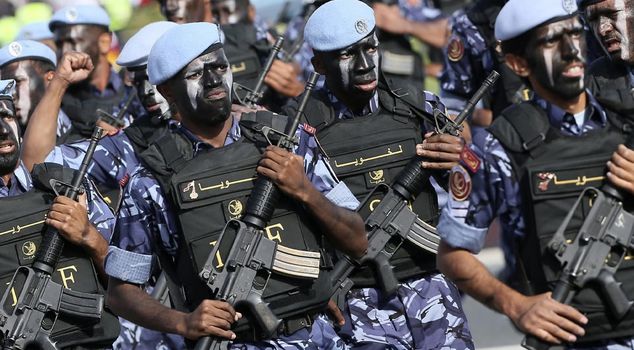
"QATAR HAS JOINED THE OPERATIONS"
The Jerusalem Post, published in Israel, claimed that Qatar has begun participating in operations against Iran and has carried out attacks within Iranian territory. The United Arab Emirates described Iran's attacks as "terrorist acts."
Mohammed Baharoon, Director of the Dubai Public Policy Research Center, stated that the UAE's announcement strengthens the idea of an expanding coalition against Iran, saying, "Iran is pushing the Gulf countries into a broader coalition against itself by attacking them."
"THE GULF CANNOT WITHSTAND A LONG-TERM CONFLICT"
Ebtesam Al-Ketbi, President of the UAE Policy Center, emphasized that scenarios such as the continuation of attacks and the closure of the Strait of Hormuz would directly affect global energy security. Al-Ketbi stated, "The Gulf cannot withstand a long-term conflict. If oil transport routes are cut off or the Strait of Hormuz is closed, intervention from other countries becomes inevitable."
The Gulf Cooperation Council, consisting of Saudi Arabia, the United Arab Emirates, Qatar, Bahrain, Kuwait, and Oman, also held an extraordinary ministerial meeting on Sunday. In the statement made after the meeting, it was noted that red lines were drawn under Article 51 of the United Nations Charter, while a message was conveyed that they are ready for collective defense in the face of increasing security risks and concerns over energy supply.