27.02.2026 14:37
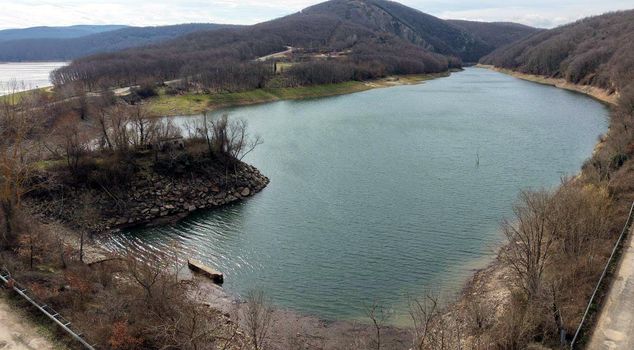
Prof. Dr. Lokman Hakan Tecer from Namık Kemal University stated that the Marmara Region has experienced the lowest average rainfall in 64 years. Tecer expressed that if the expected rains do not come in March and April, the region and Turkey as a whole will face a serious water shortage problem. Tecer noted that the water level in the reservoirs in Istanbul is at 44% and that this rate is expected to be 74.5% in 2025.
Prof. Dr. Lokman Hakan Tecer from Tekirdağ Namık Kemal University (NKU) stated that the Marmara Region has experienced the lowest average rainfall in 64 years, saying, "If there is no rainfall above seasonal norms in the upcoming March and April, we will have to spend the summer months in this region and Turkey, especially in Istanbul, struggling with water shortages and drought."
Prof. Dr. Lokman Hakan Tecer, Dean of the Faculty of Engineering at NKU Çorlu, said that the rainfall in the autumn and winter months in the Marmara Region is not sufficient for the summer months in terms of reservoirs. Prof. Dr. Tecer stated, "We were a bit hopeful, as if our reservoirs were full and overflowing, perhaps we wanted to believe that, but unfortunately, that is not the case. As of today, the filling rates of the reservoirs feeding Istanbul are around 44%. So, do you know what this rate was in February 2025? It was 74.5%. There is a significant difference in between. We have not reached the reservoir filling rates we expected," he said.
'THE LOWEST AVERAGE RAINFALL IN 64 YEARS OCCURRED IN 2025'
Prof. Dr. Tecer, who stated that the Marmara Region remained at the lowest average rainfall in 64 years in 2025, said, "The reports published by the General Directorate of Meteorology show that the overall average rainfall for 2025 is 27.6% lower. The rainfall that should fall in Turkey is 27.6% lower than long-term averages. When we come to the Marmara Region, the long-term average rainfall here is 670 millimeters. However, the rainfall here is around 454 millimeters. This means that the Marmara Region received 31.7% less rainfall in 2025, which is among the lowest figures in the last 64 years. Therefore, the rain that fell in January and February does not mean that it has reached sufficient levels for this region, which received less rainfall the previous year," he said.
'IT SHOULD HAVE REACHED 70%'
Prof. Dr. Tecer stated, "The filling rates of our reservoirs were around 28% in January. It was a bit lower in December. In February, it was around 44%. Therefore, for us to pass the summer months without any issues, our reservoir filling rates should have reached 70% by the end of April. Otherwise, we will face a very serious drought and water shortage problem this summer as well. You know; water consumption is higher in the summer months, and evaporation is also much higher. If we consider that 20% is lost to evaporation, last year, due to high temperatures, this evaporation loss reached up to 25%. Therefore, it means we will lose a quarter of the rains due to evaporation. If there is no rainfall above seasonal norms in the upcoming March and April, we will have to spend the summer months in this region and Turkey, especially in Istanbul, struggling with water shortages and drought."
'THE TYPE OF RAIN THAT WILL FEED THE RESERVOIRS IS SNOW'
Prof. Dr. Tecer stated, "The intensity of the rainfall and the amount of precipitation are important. There used to be normal rainfall levels, but now it rains as if it is pouring from a bucket. A month's or perhaps six months' worth of rain is released all at once. This largely flows into rivers and then into the seas. Therefore, it does not turn into nourishment for the reservoirs. At the same time, we miss the time for a seepage that would reach the underground waters. Yes, a certain amount of underground waters may have been replenished, but the surface runoff waters, which we call lost waters, unfortunately, do not get absorbed sufficiently into the soil or fill the reservoirs in a way that we can benefit from. There should have been snowfall during this period. The type of precipitation that will fill and nourish the reservoirs and underground waters is snowfall. Unfortunately, there has not been enough snowfall in this region, in Istanbul and the Thrace Region. This is one of the reasons why underground waters and reservoirs are not sufficiently filled," he said.
'WE ARE VERY LIKELY TO FACE PERIODS OF DESPERATION DUE TO WATER SHORTAGE'
Prof. Dr. Tecer stated, "Especially in large cities; in Istanbul and other large cities, the water used in sites, irrigation water, or the water we call gray water must be obtained through rainwater harvesting. I believe there has been a regulatory change recently. But it needs to be implemented. We cannot remain spectators to the rains turning into floods and flowing away; we must not. Besides this, we also need to use water sparingly on a personal level. Everyone says this, we always say it, but it needs to become a way of life for us. Because we are very likely to face periods where we will struggle with severe water shortages and be desperate due to lack of water. Because the rainfall in January and February, unfortunately, was not a season where we could say, 'Oh, thank goodness, this year there is plenty of rain.' It was below seasonal norms. These rains occurred in the form of rapid and sudden downpours. Therefore, we unfortunately lost them as they quickly flowed away," he said.