28.02.2026 13:06
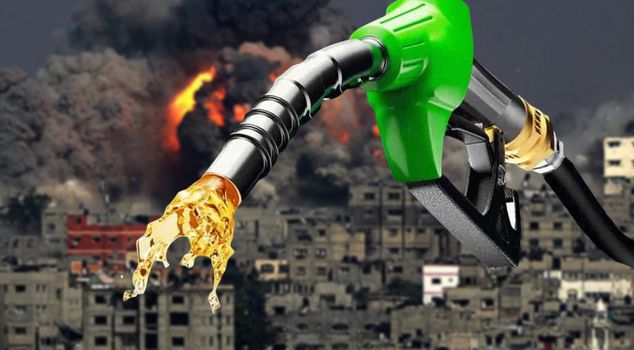
As negotiations between the US and Iran continue to face disagreements over uranium enrichment, it is estimated that today’s attack by Israel and the US on Iran could lead to an approximately 10% increase in oil prices.
U.S. President Donald Trump announced that he was not satisfied with the course of the nuclear negotiations that began on February 26, claiming that Tehran did not exhibit a "goodwill and open" attitude. Trump emphasized that they do not want Iran to acquire nuclear weapons, stating that the search for a diplomatic solution continues, but the parties are struggling to reach a consensus on expectations.
ISRAEL AND THE U.S. HAVE LAUNCHED AN ATTACK ON IRAN
Following these developments, it was reported today that Israel has launched a "preventive attack" against Iran. As of 08:14, sirens were sounding across Israel, and warning alerts were sent to mobile phones. Some reports from Israeli media suggested that the attack on Iran was carried out jointly by the U.S. and Israel. Trump confirmed the claims with his statement, "We have launched a major operation against Iran."
The most fundamental disagreement in the negotiations is that while Iran demands the lifting of international sanctions in exchange for continuing its nuclear program within the framework of limitations that would prevent the production of atomic bombs, the U.S. insists that Tehran completely halt its uranium enrichment activities.
THE U.S. CONTINUES TO INCREASE ITS MILITARY PRESENCE IN THE MIDDLE EAST
While diplomatic contacts with Iran continue, the rapid increase of the U.S. military presence in the Middle East is noteworthy. Trump indicated in a statement on February 19 that the process with Iran could become clearer within 10-15 days, saying, "We must make a meaningful agreement with Iran; otherwise, very bad things will happen." In his State of the Union address in Congress, Trump also mentioned Iran's long-range missile development efforts, stating that he preferred a diplomatic solution but emphasized that they would not allow Tehran to acquire nuclear weapons.
In a statement following the talks in Geneva, Trump highlighted the uncertainty regarding whether a possible military intervention would lead to regime change, responding, "It would be nice if we could do it without the military, but sometimes you have to do it."
According to open-source intelligence reports, more than 330 U.S. military aircraft have been deployed in the region, and this number reportedly increased by about 10% within two days. Experts state that the military deployments aim to provide rapid support capacity against a possible operational order that could come from the White House and simultaneously strengthen the element of diplomatic pressure.
GEOPOLITICAL RISK PERCEPTION IN MARKETS IS RISING
The military activity in the region is increasing the perception of geopolitical risk in global markets, while concerns about supply security in energy markets are supporting prices upward.
Oil prices closed the last trading day of February at $73.12, up about 3%, reaching the highest level since June 2025. A barrel of West Texas Intermediate (WTI) crude oil traded at approximately $67.22, up 2.7%.
While it is anticipated that volatility in energy markets could increase if tensions in the region escalate, experts indicate that the U.S. administration may not risk a possible military intervention against Iran due to the potential for sustained and high price pressure in global markets caused by low oil prices.
A 10% INCREASE IN OIL PRICES IS EXPECTED
Osama Rizvi, Energy and Economics Analyst at the international data company Primary Vision Network, stated in his assessment that he does not expect the oil price increases resulting from geopolitical developments to be permanent, saying, "I don't think the U.S. administration will risk a market environment where oil prices remain high for a long time due to potential pressures on employment and consumer spending."
Rizvi expressed that the shock effect in the markets would depend on the severity and scope of the attack, continuing his remarks as follows:
"The increase in oil prices will depend on whether energy infrastructure is targeted. I believe that in a possible attack, the U.S. will avoid targeting energy infrastructure. However, even in this case, an increase of about 10% in oil prices could be observed. If the attack remains very limited, a decrease in oil prices could occur on Monday. The selling pressure in global stocks will also depend on the nature and severity of the attack. A significant portion of the markets is already pricing in a possible attack. Therefore, a larger escalation than expected is required for a sharp fluctuation. However, in the coming days, selling pressure may be observed in global markets due to uncertainty."
Rizvi pointed out that if the Strait of Hormuz is closed, prices could rise sharply, stating, "In the event of the closure of the Strait of Hormuz, oil prices could rise to $150 per barrel, global growth could be under pressure by about 1.5%, gold prices could rise above $6,500, and U.S. inflation could approach 4.5% again."
Rizvi emphasized that a prolonged conflict in the Middle East would most affect developing markets, stating, "In developing countries, energy dependence reaches levels of 80-95% in some cases. This situation could further deepen food inflation and the cost of living crisis. If the conflict expands to include other regional actors, especially if Saudi Arabia and Israel become involved, the markets may begin to price in the risk of regional war."