22.02.2026 14:00
The English medium Craig Hamilton-Parker, who describes himself as the "new Nostradamus," suggested that a targeted war could break out between the US and Iran in March 2026. This claim has resurfaced as Washington sends aircraft carriers and fighter jets to the Middle East. The military activity in the region and mutual harsh statements have increased the likelihood of conflict. However, Hamilton-Parker's statements are not based on an official intelligence assessment, and uncertainty remains.
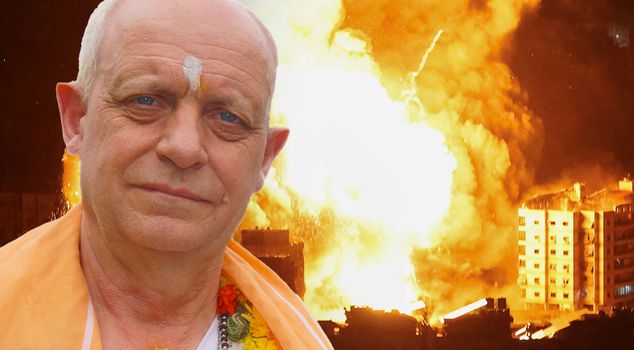
Craig Hamilton-Parker, who describes himself as the "new Nostradamus," claimed in statements featured in IBTimes UK that he has "long predicted attacks on Iran's nuclear infrastructure" and stated that he expects "a highly targeted follow-up move in March 2026." Hamilton-Parker also expressed that he does not foresee ground forces entering the field, but rather anticipates "air strikes and a rapid operation."
FIELD TENSION: AIRCRAFT CARRIER, FIGHTER JETS, AIR REFUELING
This prediction coincides with a period when the U.S. military activity in the region has increased in recent weeks. Reports indicate that the USS Gerald R. Ford, belonging to the U.S. Navy, is heading to the region to join the USS Abraham Lincoln, and that fighter jets and air defense elements are also positioned along the Middle East line.
Developments reported by Al Jazeera also highlighted that Washington has renewed its stern messages towards Tehran while nuclear negotiations are ongoing, and the announcement of the Iran-Russia joint naval exercise has drawn attention.
"AUTHORITY DISPUTE" AND DOMESTIC POLITICS DIMENSION
U.S. President Donald Trump's potential military move signal towards Iran has intensified the debate in Washington over "Can the President order an attack unilaterally?" Time wrote that a large-scale military step without Congressional approval would create legal discussions within the framework of constitutional authority and the War Powers Act.
"AGREEMENT" PRESSURE, "WE WILL NOT BOW" NARRATIVE
On the Iranian side, the emphasis on "not bowing to pressure" has come to the forefront. The New York Post reported that Iranian President Masoud Pezeshkian's messages in this direction coincided with the U.S. buildup in the region.
HOW DOES THE FOREIGN PRESS READ IT?
Evaluations in the foreign press indicate that, on one hand, the risk has increased due to "the buildup on the ground and harsh rhetoric," while on the other hand, they emphasize that uncertainty continues. The Times wrote that the U.S. has amassed significant military capacity in the region, but questions remain about how this will be tied to a strategic objective.