28.01.2026 07:30
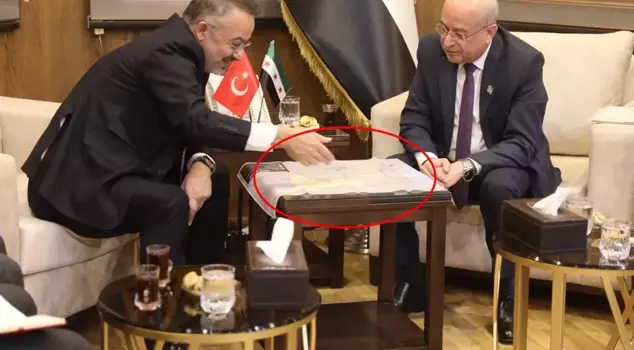
Turkey and Syria have taken action to revive the Hejaz Railway, one of the most important projects of the Ottoman Empire. In a meeting between Turkey's Ambassador to Damascus, Nuh Yılmaz, and Syria's Minister of Transport, Yarub Bedir, the revitalization of the line was discussed as one of the key topics on the agenda.
Contacts have begun between Turkey and Syria for the revitalization of the Hejaz Railway, one of the most important projects of the Ottoman Empire, extending from Istanbul to Medina.
JOINT STEP FROM ANKARA AND DAMASCUS
Turkey's Ambassador to Damascus, Nuh Yılmaz, visited Syrian Transport Minister Yarub Bedir. During the meeting, the revival of the Hejaz Railway was also discussed. Yılmaz stated in a photo he shared regarding the meeting that the revitalization of the Hejaz Railway is one of the topics on the table.
During the meeting between Yılmaz and Bedir, steps to be taken to increase non-transfer bilateral and transit passages within the framework of the Road Transport Agreement and to develop cooperation in the field of railways were also discussed.
HISTORICAL IMPORTANCE OF THE HEJAZ RAILWAY
The Hejaz Railway, one of Sultan II. Abdulhamid's most important initiatives, was opened 117 years ago. The project, whose foundation was laid on September 1, 1900, coincided with the 25th anniversary of Sultan Abdulhamid's ascension to the throne.
The line, extending from Damascus to Medina and measuring 1,464 kilometers in length, not only facilitated the pilgrimage journey but also provided military and economic contributions to the Ottoman State. A Commission was established in Istanbul for the construction of the project; during the process, thousands of bridges, tunnels, and stations were built.
The financing of the railway was largely covered by donations from Ottoman lands and Muslims in different parts of the world. The first donation was made by Sultan Abdulhamid with 50,000 lira.
The 450-kilometer section between Medina and Mecca, opened in 1908, could not be completed due to Bedouin attacks and political obstacles. Nevertheless, the line played a critical role in the Ottoman's troop transportation and regional trade.
Sultan Abdulhamid showed special sensitivity in the sections close to Medina by laying felt under the tracks. It was stated that this practice was done to ensure that the noise of the train did not disturb the spirituality of the Prophet Muhammad.