20.10.2026 19:50
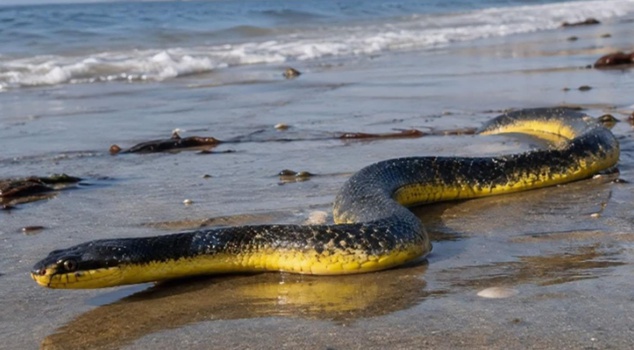
Venomous sea snakes washing ashore in the US state of California have caused panic. While the stranding of yellow-bellied sea snakes, which live in tropical waters and are known for their potent venom, has drawn attention, experts point out that ocean temperatures and currents have changed the movements of marine creatures.
In the US state of California, attention is being drawn to tropical marine creatures being seen further north, outside their usual habitats. The stranding of a yellow-bellied sea snake, known for its potent venom, on Crystal Cove beach has brought unusual natural events in the region back into the spotlight. Experts note that this species is rarely seen off the California coast.
EL NIÑO HAS CHANGED THE ROUTE OF MARINE CREATURES
Changes in seawater temperatures in the Pacific Ocean are affecting the movements of tropical marine creatures. Events such as El Niño, which alter ocean and atmospheric conditions, can cause some species to reach areas where they are not normally seen.
Sightings of tropical species such as whale sharks, hammerhead sharks, flying fish, and rays off California are also linked to these changes. However, it cannot be said that the same factors play a role in every species' northward movement; ocean currents and seasonal conditions can also be determining factors.
FAMILY WHO ENCOUNTERED VENOMOUS SEA SNAKE WAS STUNNED
A family walking on Crystal Cove beach encountered a yellow-bellied sea snake that had washed ashore. In the incident in September, the snake, found away from the water, was seen to be moving slowly. It was reported that the family used a palm leaf to return the animal to the sea.
The yellow-bellied sea snake is a species living in tropical and subtropical waters and known for its potent venom. These snakes, adapted to living in the open sea, can sometimes be carried to the shores by currents.
EXPERTS' WARNING: DO NOT TOUCH
The venom of the yellow-bellied sea snake can pose a serious danger to humans. Although the species generally avoids encounters with humans, handling a snake that has washed ashore or become weak creates a risk.
Experts recommend that if such a snake is encountered on the beach, the animal should not be touched, no attempt should be made to return it to the sea, and the authorities should be notified. If a bite occurs, emergency medical help should be sought even if symptoms do not appear immediately.
Scientists point out that the appearance of tropical marine creatures off the California coast does not mean that these species have permanently settled in the region. Changes in seawater temperatures, ocean currents, and climatic conditions can affect where these creatures are seen.