13.04.2026 17:30
The U.S. naval blockade in the Strait of Hormuz began at 5:00 PM Turkey time. So what does this move, which will deeply shake the global economy, mean? What note did the U.S. military send to sailors in the region shortly before the blockade began, and what will happen next? Details in our news...
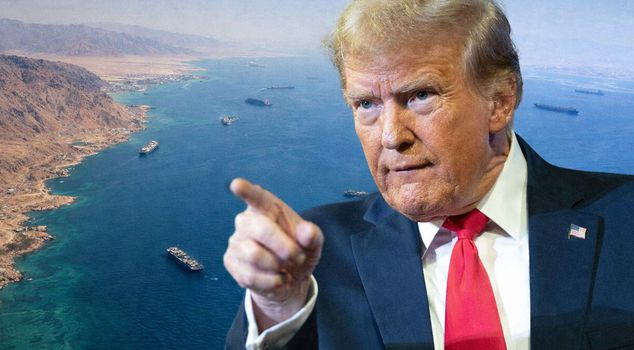
By the order of U.S. President Donald Trump, the Strait of Hormuz has officially been blockaded. The U.S. Navy announced that while civilian ships will be allowed, all vessels passing through to Iran will be targeted. Iran, on the other hand, announced that if the U.S. attempts to cross Hormuz, its navy will strike these ships. The world has focused on the Strait of Hormuz with concerns of a possible naval war.
WHAT WILL THE U.S. DO IN THE BLOCKADE?
In the blockade expected to cover all Iranian ports in the Persian Gulf and the Gulf of Oman, the passage of ships going to ports outside Iran via the Strait of Hormuz will not be hindered. U.S. President Donald Trump announced on April 12 via Truth that every ship paying a transit fee to Iran in international waters will be stopped and that the mines in the Strait of Hormuz will begin to be destroyed. Trump wrote on social media, "No one paying illegal transit fees will be able to safely pass in open waters," and stated, "Any Iranian who fires at us or peaceful ships will be sent to hell!"
A NOTE WAS SENT TO MARINERS IN THE REGION
Shortly before the blockade began, the U.S. military sent a note to mariners in the region. The note stated, "Any ship entering or leaving the blockaded area without permission is subject to being stopped, redirected, and seized."
The statement announced that a blockade would be implemented in the Arabian Sea east of the Gulf of Oman and the Strait of Hormuz, and that any ship entering the blockaded area without permission or departing from this area would be subject to stopping, rerouting, and detention procedures.
FLAG DISTINCTION WILL NOT BE OBSERVED
While it was announced that the blockade would apply to all ship traffic without flag distinction, it was emphasized that neutral transit passages to and from destinations outside Iran via the Strait of Hormuz would not be hindered. It was stated that neutral ships could be subjected to "visit and search" inspections to determine whether they carry illegal cargo, and that humanitarian aid, including food, medical supplies, and other essential needs, would be allowed, subject to inspection.