13.04.2026 16:12
After the negotiations between Iran and the USA in Pakistan ended without results, a notable activity occurred in the airspace of the Middle East. A significant increase was observed in the number of fighter jets heading to and departing from the region, while the intense traffic of military transport aircraft was particularly striking. These developments raised the possibility of a potential new military attack.
After the negative outcome of the negotiations held between Iran and the USA in Islamabad, the capital of Pakistan, a significant increase was observed in the number of warplanes both heading to and departing from the Middle East.
WARPLANE ACTIVITY AT HIGH LEVEL
According to information compiled by AA reporter from various social media accounts that conduct open-source intelligence and data analysis (OSINT), an extraordinary increase was observed in the movement of US warplanes in the region following the unsuccessful negotiations between Iran and the USA.
CARGO PLANES IN MAJORITY
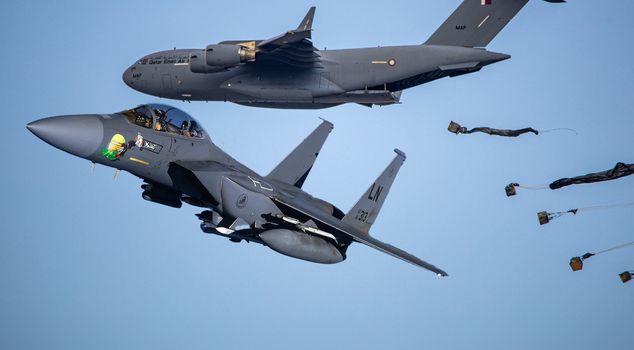
The majority of the aircraft sent to the region consists of C-17 Globemaster III military transport planes. The largest transport aircraft of the US Air Force, the "Lockheed C-5M Super Galaxy," and the strategic transport aircraft produced by Boeing, the "Boeing KC-46 Pegasus," were also observed in European airspace.
While it was seen that the traffic created by transport aircraft in the Middle East significantly increased after the negotiations, it was also determined that military air refueling tanker aircraft of the Boeing KC-135R Stratotanker type were among those departing from the region.
PREPARATION FOR AN ATTACK AGAIN?
Many users conducting OSINT analysis on social media suggested that this activity indicates that the USA is "preparing to resume attacks on Iran" after the negotiations.
Some users claimed that the transport planes departing from the region were "evacuating the injured and deceased from the US/Israel-Iran war."
NO RESULTS FROM THE NEGOTIATIONS
The Washington and Tehran administrations had conducted negotiations in Islamabad through Pakistan.
US Vice President JD Vance stated that the direct negotiations with Iran in Islamabad, the capital of Pakistan, ended "without reaching an agreement."
In Iranian media, it was suggested that the reason for the inability to reach a common framework and agreement in the Tehran-Washington talks in Islamabad was the excessive demands of the USA.