27.02.2026 11:15
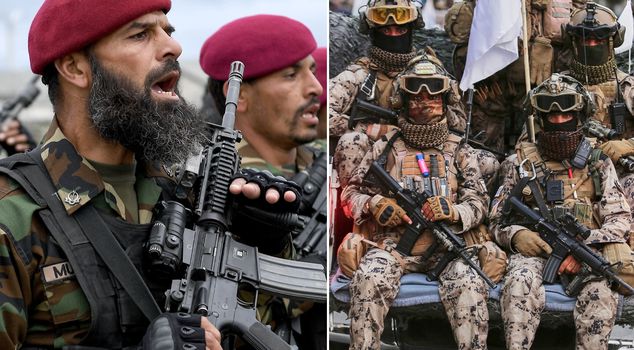
The war that began today between Pakistan and Afghanistan has once again put the military capabilities of both sides under scrutiny. The Pakistani army, with approximately 654,000 active soldiers, over 400 fighter jets, and an estimated 160-170 nuclear warheads, demonstrates a clear numerical and technological superiority; while the Taliban forces in Afghanistan are trying to resist on the ground with between 150,000 and 200,000 fighters, limited air power, and experience in asymmetric warfare.
The war that officially began today between Pakistan and Afghanistan has brought the military capabilities of both sides back into focus. While mutual air and ground operations continue along the border line, the number of personnel, air power, and defense capacity of the parties are critically important for the balance on the ground.
PAKISTAN HAS 654 THOUSAND ACTIVE SOLDIERS
The Pakistan Armed Forces have approximately 654 thousand active soldiers. In addition, there are nearly 550 thousand reserve personnel. The Army constitutes the largest structure, while the Pakistan Air Force has around 70-75 F-16 fighter jets, over 150 JF-17s, and a total of over 400 fighter aircraft of various types in its inventory. The ground forces have over 2,500 tanks, more than 12,000 armored vehicles, and a strong artillery capacity. Pakistan also possesses an estimated 160 to 170 nuclear warheads, providing the country with strategic deterrence.
THE STATE ARMY IN AFGHANISTAN HAS EFFECTIVELY ENDED POST-2021
On the Afghan side, the classical state army structure has effectively ended post-2021. The Taliban regime does not have a clear and transparent official army structure. According to expert estimates, the Taliban's armed force consists of between 150,000 and 200,000 fighters. However, this force is not in a regular army format; it operates more in the form of regional commands and mobile units. Although the Taliban has thousands of light weapons, armored vehicles, and some helicopters captured after the U.S. withdrawal, its active and operational air power is considered quite limited compared to Pakistan.
PAKISTAN IS CLEARLY SUPERIOR IN AIR POWER
In terms of air power, Pakistan is clearly superior, while the Afghan side stands out more with guerrilla tactics, border line control, and asymmetric warfare methods. The Taliban's heavy air defense systems are limited; they mainly operate with portable air defense systems and light weapons.
THERE IS A SIGNIFICANT DIFFERENCE IN DEFENSE BUDGETS
There is also a significant difference in defense budgets. Pakistan's annual defense expenditure is around 7-8 billion dollars, while the Taliban regime in Afghanistan does not have a regular and internationally recognized defense budget.
"SUPERIORITY IS ON THE PAKISTAN SIDE"
Experts state that the numerical and technological superiority is on the Pakistan side, but the Taliban forces in Afghanistan may show resistance on the ground due to their geographical advantage and irregular warfare experience.