02.11.2026 11:32
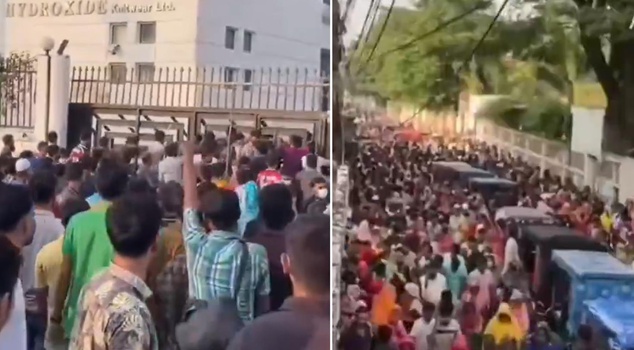
Protests launched by textile workers in Bangladesh demanding a 140 percent salary increase have thrown the country into turmoil. Clashes occurred between police and protesters, and some vehicles were set on fire. Activities at 529 factories halted, while approximately 1 million workers were affected by the incidents. Despite the government establishing a wage commission, protests continue.
Thousands of workers employed in Bangladesh's ready-made garment sector took to the streets, saying their wages were insufficient in the face of rising living costs. In protests held mainly in the capital Dhaka as well as in Gazipur, Savar and Ashulia, workers demanded that the current monthly minimum wage of 12,500 taka (about $105) be raised to 30,000 taka (about $250).
Workers seeking a 140 percent raise said they were struggling to make ends meet due to increases in food, rent, transport and health expenses.
PRODUCTION HALTED AT 529 FACTORIES
According to data from the Bangladesh Garment Manufacturers and Exporters Association (BGMEA), 529 factories across the country were temporarily closed due to the protests. A total of 987,190 workers were affected by the developments.
While production activities were disrupted in the industrial areas where the demonstrations intensified, serious transportation problems were also experienced due to the closure of main roads.
THEY CLASHED WITH POLICE, SET VEHICLES ON FIRE
During the protests, fierce clashes occurred between workers and security forces. After demonstrators blocked roads in Dhaka's Mirpur area, police used tear gas, sound bombs and water cannons to disperse the crowd.
During the incidents, a police vehicle was set on fire, while fires also broke out in Gazipur and Savar. Some factory buildings and vehicles were damaged.
It was reported that 30 people were detained in connection with the incidents in Mirpur.
THE GOVERNMENT TOOK ACTION, BUT PROTESTS DID NOT STOP
Following growing protests, the Bangladesh government formed a six-member wage commission to reassess textile workers' wages.
Minister of Labour and Employment Ariful Haque Chowdhury announced that the commission was established after talks with worker and employer representatives.
Minister Chowdhury called on workers to return to work, while warning that if the actions continued, there could be delays in export shipments and payments from international buyers.
However, despite the government's move, protests continued on November 2.
ONE OF THE WORLD'S LARGEST TEXTILE PRODUCERS
Bangladesh is one of the world's largest ready-made garment exporters, after China.
The textile sector, which employs about 4 million people, accounts for more than 80 percent of the country's total export earnings. It is noted that production disruptions in the sector could also affect the supply chains of international clothing brands.
Meanwhile, it was reported that factories began reopening on November 2, but there are concerns about new work stoppages due to the ongoing wage dispute.