28.01.2026 18:10
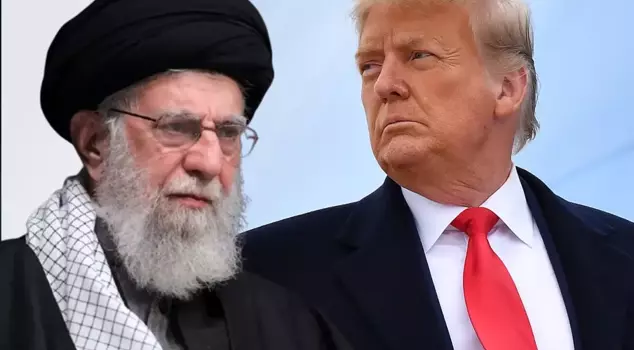
U.S. President Donald Trump's threat, "A large fleet is heading towards Iran. At the forefront of this fleet is the great aircraft carrier Abraham Lincoln. There are no nuclear weapons. Time is running out, make a deal," received a strong response from Iran. Iran stated, "If the U.S. attacks, we will respond more fiercely than ever before."
A response came from Iran to Trump's threat. In a statement from Tehran, Washington was threatened with the words, "We will respond harshly if the US attacks."
IRAN DID NOT BACK DOWN: OUR RESPONSE TO THE US WILL BE HARSH
The tension between Iran and the US in the Middle East has reached its peak. Iran quickly responded to US President Donald Trump's latest threat. Iran stated, "If the US attacks, we will respond more harshly than ever before."
"THE US CANNOT FORCE US TO NEGOTIATE"
Additionally, Iran's Deputy Foreign Minister Kazim Garibabadi stated that Tehran currently prioritizes defending the country over negotiating with the US, saying, "If the Americans want a negotiation with an uncertain outcome, Iran will accept it, but the US cannot force us to negotiate through military deployment."
"THEY KNOW OUR RESPONSE WILL NOT JUST BE PROPORTIONAL"
Addressing the possibility of a limited US attack, Garibabadi said, "We will target every base or point from which an attack is launched against us. Military intervention is not an easy option for the US because they know that Iran's response will not just be a proportional one. Our response is designed in such a way that they will not even think about conducting limited attacks again."
"OUR PRIORITY IS TO PREPARE THE COUNTRY FOR DEFENSE BY 200 PERCENT"
Garibabadi stated that if the negotiation process with the US begins, Iran will not lower its level of preparedness for a possible war, saying, "Considering the enemy's war posture, negotiation is not a priority for us; Iran's priority is to be 200 percent ready to defend the country."
Meanwhile, US President Trump said the following in his latest threat to Iran: "A large fleet is moving towards Iran. It is moving quickly, with great power, determination, and purpose. At the head of this fleet, which is larger than the one sent to Venezuela, is the large aircraft carrier Abraham Lincoln. Like in the case of Venezuela, it is ready, willing, and capable of carrying out its mission with speed and violence if necessary. I hope Iran quickly 'comes to the table' and negotiates a fair and balanced agreement for all parties."
TRUMP: THE NEXT ATTACK WILL BE MUCH HEAVIER
No nuclear weapons. Time is running out; this is really critical. As I have said before to Iran, make a deal. They did not, and 'Operation Midnight Hammer' took place; Iran suffered great destruction. The next attack will be much heavier. Do not allow this to happen again."
THE US IS BUILDING UP IN THE MIDDLE EAST
The US Central Command (CENTCOM) confirmed yesterday that the USS Abraham Lincoln aircraft carrier strike group has been deployed to the Middle East "to support regional security and stability."
Some US officials speaking to the New York Times claimed that the US has sent more Patriot and THAAD air defense systems to the region to protect US forces from retaliatory attacks that could come from Iran's short and medium-range missiles.
It was stated that the US has dispatched a dozen more F-15E aircraft to the region to increase the number of attack aircraft.
IRAQ'S CHALLENGE TO TRUMP
On the other hand, Trump noted that if Nuri al-Maliki, the Prime Minister candidate of the Shia parties with a majority in the Iraqi Parliament, assumes the prime minister's seat, the US will no longer assist Iraq, saying, "Let's make Iraq great again." Maliki, in a post on his social media account, referred to Trump's statements, stating, "We reject US intervention in Iraq's internal affairs."
PROTESTS IN IRAN
Protests that began on December 28, 2025, led by shopkeepers in the Grand Bazaar of Tehran due to the rapid depreciation of the local currency against foreign currencies and the deepening economic troubles spread across the country.
After the events that escalated during the protests in the capital Tehran on January 8, the country’s administration blocked internet access. In recent days, after the protests ended, internet access has been partially and limitedly restored.
In a statement on January 21, based on the Forensic Medicine Institution of the Iranian Martyrs and Veterans Foundation, it was announced that 3,117 people, including security forces and civilians, lost their lives during the events that occurred during the protests. The US-based Iranian Human Rights Activists News Agency (HRANA) reported that 5,848 people lost their lives in the events during the protests, and 41,283 people were detained.
The US and Israel have repeatedly supported the protests, and tensions in the region have escalated. While Trump continues his threats, Israeli Prime Minister Netanyahu also claimed that any attack by Iran on Israel would be a very big mistake, threatening that they would respond very strongly in such a case.