01.12.2025 15:12
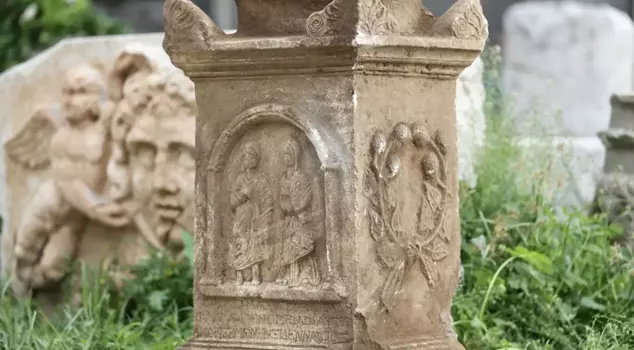
In the Seydikemer district of Muğla, a grave stele in the form of an altar, discovered by a shepherd, has been protected by the Fethiye Museum Directorate and prepared for exhibition. The artifact dates back to the Roman Period and is particularly notable for its iconic figures.
While grazing his goats in the forested area of Kayacık Neighborhood, a shepherd noticed a stele (tombstone) and reported the situation to the Fethiye Museum Directorate. In the examination conducted by the teams that went to the region, the artifact, determined to be historical, was buried in the ground to prevent damage due to its weight, and a camera trap was placed in the area.
After preparations, the teams returned to the area, reached the site by walking for about 45 minutes from the road, and retrieved the artifact. The tombstone, estimated to weigh around 300 kilograms, was carefully wrapped before the transportation process. The stele in the rugged terrain was carried by archaeologists and workers for about 7 hours. The artifact, brought to the Fethiye Museum Directorate, will be exhibited after the necessary procedures.
"THE FRONT SIDE OF THE ARTIFACT FEATURES A FEMALE AND MALE FIGURE"
Archaeologist Ahmet Meke, who participated in the transportation process, told AA correspondent that the artifact was found by a person engaged in livestock farming in the region and that a detailed examination was conducted by experts upon notification.
Meke stated that they assessed the artifact to belong to the Roman Period, specifically the 1st to 3rd centuries AD, saying, "The artifact is an example of the altar-type tombstone commonly seen in Anatolia. What makes this stele special is its relief, iconographic depictions, and its epigraphic feature due to the inscription underneath. The front side of the artifact features a female and male figure, which likely represents a family portrait. We observe the family culture of the Roman Period, the clothing depicted, and the socio-cultural status of that time."
BELONGING TO AN IMPORTANT PERSON
Meke explained that the inscription on the artifact contains information about the deceased person. He noted that there is a wreath and depiction on the side of the artifact, stating, "The wreath represents victory and honor. It indicates that the figure in the artifact was an important person in society. As we see in this example, it is very important for our citizens to be prudent in terms of protecting cultural heritage."
Meke urged those who find or identify cultural artifacts to report them to museum directorates or law enforcement agencies for protection.
TEAMS CARRIED IT IN 7 HOURS
After security measures, Meke stated that they transported the artifact in about 7 hours, saying, "We carried it from a steep and rocky terrain. Our artifact, brought to the Museum Directorate, will be registered after cleaning and conservation works and will be exhibited. We have proposed a site area regarding the area where the artifact was found. Camera traps have also been placed in the area for security reasons."