03.03.2026 18:51
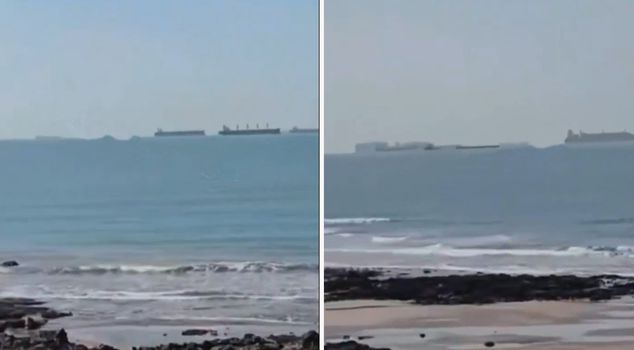
After Iran closed the Strait of Hormuz, hundreds of oil tankers and cargo ships began to wait in the region. As a queue stretching for kilometers formed, those moments were captured on camera.
As a result of Iran's closure of the Strait of Hormuz, a queue stretching for kilometers consisting of hundreds of oil tankers and cargo ships has formed in the region.
SHIPS WAITING IN THE STRAIT OF HORMUZ
The waters in the Strait of Hormuz are heating up. Following Iran's announcement of the closure of this strategic transit route, maritime traffic in the region has come to a complete standstill. While giant oil tankers and commercial cargo ships are creating queues stretching for kilometers at the entrance of the strait, it is reported that the waiting is increasing costs with each passing hour.
Following this situation, which has caused great panic in global energy markets, oil prices have rapidly surged. Experts warn that if this blockage in one of the world's most critical waterways continues, a global supply crisis could occur.
THE IMPORTANCE OF THE STRAIT OF HORMUZ
The Strait of Hormuz is considered the most critical and sensitive "jugular vein" of global energy security; as approximately one-third of the oil transported by sea worldwide and a significant portion of liquefied natural gas (LNG) passes through this narrow waterway. Located between Oman and Iran, this strait, which is approximately 33 kilometers at its narrowest point, is a challenging gateway that connects the giant oil producers in the Persian Gulf to the open seas. Even the possibility of the strait being closed during periods of escalating regional tensions causes waves of panic in global energy markets and leads to rapid price increases, making control and navigation safety over Hormuz a geopolitical issue that directly affects not only the countries in the region but the entire world economy.