03.01.2026 17:13
Hugo Chavez, the former President of Venezuela, who came back into the spotlight with a scene he described in a documentary in 2001, recounted that his grandfather had a revolutionary background and that he had to kill an officer to protect his family's honor. Chavez stated that after this act, his grandfather joined revolutionary movements and fought for the ideals of Bolívar. He emphasized that his grandfather's story gave him great strength and that his grandfather was not a murderer, but a revolutionary.
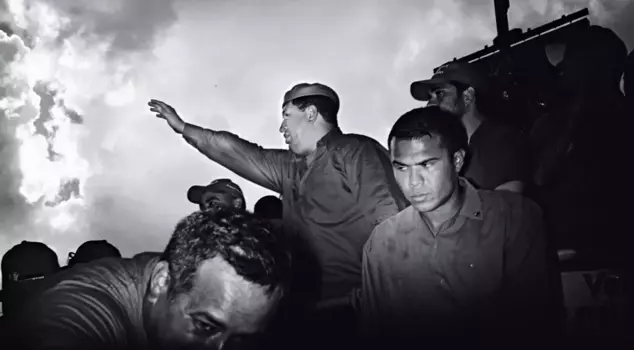
Former Venezuelan President Hugo Rafael Chavez Frías, known for his tough stance against Washington and for expelling the U.S. Ambassador from the country, has come back into the spotlight with a scene from the 2001 documentary titled "Live from the Revolution - Chavez & Venezuela."
The documentary reveals the strong bond between Chavez and the people, as well as the background of the revolutionary process unfolding in Venezuela. Hugo Chavez, referred to as the new leader of Latin America, was elected president in the democratic elections held in 1998 with an overwhelming majority.
Despite being oil-rich, Venezuela had significant economic and political interests from the U.S., while its people lived in poverty. Chavez quickly attracted global public attention with his unique rhetoric and policies. Drawing inspiration from Simón Bolívar, who liberated the country from Spanish colonialism in the 19th century, Chavez often expressed his goal of freeing Venezuela from modern forms of colonialism.
In the documentary, Hugo Chavez, providing examples from his life story and past, recounted in a speech that his grandfather was also a revolutionary who fought for Bolívar's ideals.
THE FAMILY DRAMA THAT HUGO CHAVEZ COULDN'T FORGET
Chavez shared a childhood memory that has never faded from his mind with these words:
"I have a childhood memory that never leaves me. My grandmother and mother were fighting. My grandmother shouted at my mother: 'Your grandfather was a killer. He would go to any village and kill everyone... He would chop off their heads with a machete... He was a killer, and that's why you are an assassin...'
I thought: 'A killer grandfather!' My mind was in turmoil. That's why I set out to find him. First of all, he was born and raised in Los Pinos and had killed a man there. He killed a colonel because, according to the stories, when he returned home, he found Petra pregnant. The colonel did not take responsibility. Petra's father was also killed. My grandfather was 16 years old at that time and without thinking, he killed the colonel. His aim was to restore the family honor. Then he fled. This happened around 1890."
According to Chavez, his grandfather had to kill an officer to protect his family's honor when he was just 16 years old in the 1890s, and then he had to flee. During his escape, his grandfather joined the revolutionary movement and became one of the guerrilla fighters who took to the mountains for Bolívar's ideals.
Chavez describes his grandfather with these words:
"With a long pango on his shoulder and a fur Cobijo - that is, a hat. A pistol and an ammunition belt. Clouds and tobacco smoke above him. Horses are neighing; the herons may have heard. At night, milk drips from the sky - that is, rain. A rebellious cavalryman. He sings, he stops, he sings. The cavalryman goes ahead. Towards the unknown. With forty horses in tow." Thus, I discovered his trace.
Chavez stated that this story gave him great strength, expressing that his grandmother's accounts stemmed from misguidance, saying, "He was not a killer; he was a guerrilla. He was a revolutionary."
This scene in the documentary is striking in terms of revealing the historical roots of Hugo Chavez's revolutionary identity and his bond with the people.