02.04.2026 13:20
Iran's Chief of General Staff Abdolrahim Hatemi instructed commanders to closely monitor enemy movements and prepare for a possible ground operation. His statement, "If there is a ground attack, none should survive," drew attention and led to comments that the war could enter a new phase. As tensions in the region rise, the possibility of ground warfare has gained strength.
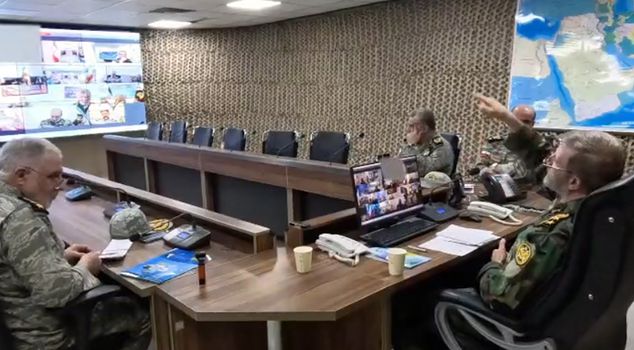
As tensions rise every day in the Iran war, one of the toughest directives from Iran's Chief of General Staff, Abdolrahim Hatemi, has emerged. According to state media, Hatemi directly ordered commanders during a video conference with operational centers to "be ready for a ground attack."
“NONE SHOULD SURVIVE” DIRECTIVE
Hatemi, displaying a firm stance against a possible ground operation, stated, “If the enemy initiates a ground operation, none of them should survive.” He requested commanders to monitor enemy movements “with the highest suspicion and sensitivity.”
THE POSSIBILITY OF GROUND WAR IS INCREASING
These statements have strengthened the possibility that the operations conducted by the U.S. and Israel through airstrikes could turn into a ground operation. Indeed, it is known that the Pentagon is considering sending tens of thousands of soldiers to the region and is working on ground scenarios for strategic points. The Iranian side warns that such an initiative would “escalate regional warfare.”
HEAVY LOSSES IN WAR
The toll of the war, which began on February 28, is increasingly severe. It has been reported that approximately 1,900 people have lost their lives in Iran, and more than 20,000 have been injured. While Israel and other countries in the region are also affected by missile and drone attacks, the conflicts have spread to Lebanon, the Gulf, and Iraq.
GLOBAL IMPACT: HORMUZ CRISIS
One of the most critical consequences of the war has been the disruption in the Strait of Hormuz. The drop in oil and gas shipments by up to 90% has triggered a global energy crisis. This situation has led to serious supply issues not only in energy but also in the chemical and food sectors.
LEADERSHIP LOSSES AND POLITICAL TURMOIL
The killing of Iran's religious leader Ali Khamenei in an airstrike at the beginning of the war completely changed the political balances in the country. Following this, the targeting of high-ranking military and intelligence figures pushed the Iranian government towards a tougher and more defensive line.
TENSION AT A NEW STAGE
Hatemi's recent statements indicate that the war may no longer be limited to airstrikes and that the possibility of ground conflict is seriously on the table. According to experts, if this scenario occurs, it may be inevitable for the war to escalate from a regional conflict to a broader crisis.