01.03.2026 11:20
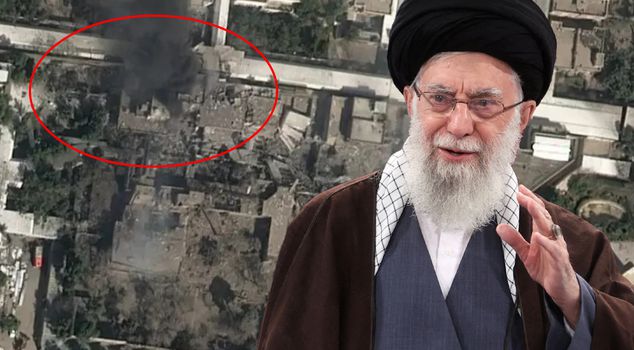
Iran's religious leader Ali Khamenei was killed in an attack organized jointly by the U.S. and Israel. It was claimed that Khamenei, who lost his life along with his daughter, son-in-law, grandchild, and daughter-in-law in the attack carried out by Israeli warplanes on his residence with 30 bombs, was pulled from the rubble and that shrapnel had hit his body. Furthermore, it was alleged that photos of Khamenei's corpse were presented to Netanyahu and security officials.
While the attacks by the US and Israel against Iran, which began yesterday, continue, Iran's religious leader Ali Khamenei was killed in an attack on his residence.
40 DAYS OF MOURNING DECLARED
Iranian media confirmed that religious leader Ayatollah Ali Khamenei was killed in the attacks by the US and Israel. Following Khamenei's death, 40 days of mourning were declared in Iran. A 7-day official holiday was announced across the country.
"THE LEADER OF THE ISLAMIC REVOLUTION HAS ATTAINED MARTYRDOM"
Iran's state television reported Khamenei's death, stating, "The leader of the Iranian Islamic revolution has attained martyrdom."
"WILL NOT GO UNPUNISHED"
Following the announcement of Khamenei's death, the Iranian government made a statement. The statement indicated that the attack in which Khamenei was killed would not go unpunished, mentioning that the perpetrators and those who ordered the attack would be "made to regret." The Iranian presidency also stated that the attack on Khamenei would "not go unpunished."
TRUMP: ONE OF THE WORST PEOPLE IN HISTORY HAS DIED
US President Donald Trump, in a post on his Truth Social account, commented on Iranian leader Ayatollah Ali Khamenei, who has had varying reports about whether he is alive, stating, "Khamenei, one of the worst people in history, has died."
Trump noted that Khamenei could not escape "US intelligence" and "advanced tracking systems," stating, "By working closely with Israel, there was nothing he or other leaders killed alongside him could do."
"THE GREATEST CHANCE FOR THE IRANIAN PEOPLE TO TAKE BACK THEIR COUNTRY"
Addressing the Iranian people, the US President remarked, "This is the only and greatest chance for the Iranian people to take back their country." Trump argued that most of the Iranian Revolutionary Guards and other security forces "no longer want to fight," sharing the message, "Now they can gain immunity, but later only death awaits them."
Trump also noted that the attacks by the US and Israel could continue for a while longer, stating that the attacks would continue "as long as necessary."
HIS RESIDENCE TARGETED WITH 30 BOMBS
On the other hand, details of the joint operation by the US and Israel in which Khamenei was killed have emerged. It was claimed that in the attack carried out by Israeli warplanes on his residence with 30 bombs, Khamenei, who lost his life along with his daughter, son-in-law, grandchild, and daughter-in-law, had his body retrieved from the rubble and was hit by shrapnel. Furthermore, it was alleged that photos of Khamenei's corpse were presented to Netanyahu and security officials.
WHO IS AYATOLLAH ALI KHAMENEI?
Ayatollah Ali Khamenei was born on April 19, 1939, in the city of Mashhad. Khamenei, who received religious education in Mashhad and Qom, joined the movement initiated by Ayatollah Khomeini against the Shah in 1962. He was arrested and exiled at various intervals.
In 1978, Khamenei, one of the founders of the Islamic Republic Party, took on the role of Deputy Minister of Defense of the Islamic Republic of Iran in July 1979, after the revolution. On November 24, 1979, he was appointed as the head of the Islamic Revolutionary Guard Corps and was also appointed as the Friday prayer leader of Tehran that same year. In 1980, he was appointed as a representative to the Supreme Defense Council of Iran by Imam Khomeini. That same year, he was elected as a member of the Iranian Parliament representing Tehran.
On June 27, 1981, he was seriously injured in a bomb attack allegedly carried out by the People's Mujahedin group at the Abu Zar Mosque in Tehran. In the elections held in October 1981, he was elected as the third President of the country after the revolution. He became President for the second time by winning the presidential elections in 1985. After Khomeini's death, Khamenei was elected as the Supreme Leader of the country in 1989 by the Assembly of Experts, responsible for selecting and overseeing the country's leader, with the support of Hashemi Rafsanjani.
Throughout his administration, Khamenei was prominent for his anti-Western stance and sought to establish good relations with Russia and China. While the President elected in Iran has limited powers, the leadership position represented by Ali Khamenei has the authority to have the final say on domestic and foreign policy matters with its constitutional powers, above all state organs.
The Leader, who has authority over all state organs, including the President, also played a decisive role in internal security and foreign policy as the Commander-in-Chief of the Iranian Armed Forces. Especially in recent years, Khamenei has become a target of anti-government activists in street protests arising from administrative issues and economic problems.