17.03.2026 16:42
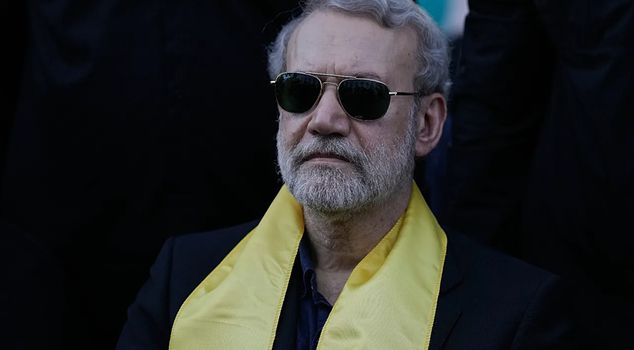
In a statement made today by the Israeli army, it was announced that Ali Larijani, who was the architect of many critical decisions ranging from Iran's nuclear program to regional defense strategies, has been killed. Following the death of Ali Khamenei on February 28, Larijani was seen as the most important "civil figure" ensuring the continuity of the system in the resulting power vacuum.
The Israeli army announced that the "strategic mind" of Iran's politics, former Speaker of Parliament and current Secretary General of the Supreme National Security Council, Ali Larijani, was killed in an airstrike.
Belonging to one of Tehran's most established and intellectual families, Larijani was among the "indispensable" figures of the Iranian regime with both military and academic backgrounds.
A NOBLEMAN BORN IN NAJAF: THE LARIJANI DYNASTY
Ali Larijani was born on June 9, 1958, in Najaf, Iraq, a city sacred to Shia Muslims. His father was Ayatollah Mirza Hashim Amuli, one of the greatest clerics of his time. The Larijani family held a power that could be considered a "dynasty" within the bureaucratic and religious structure of the Islamic Republic of Iran. His brother, Sadegh Larijani, served as the head of the Iranian Judiciary from 2009 to 2019. His brother, Mohammad Javad Larijani, held positions in foreign policy consulting and served as the secretary of the Human Rights Council for many years. Larijani was the son-in-law of Morteza Motahhari, the chief ideologue of the 1979 Revolution. This marriage provided him with an unbreakable bond with the founding core of the regime.
FROM THE GUARDIANS OF THE REVOLUTION TO KANT'S PHILOSOPHY
The most significant feature that distinguished Larijani from many other conservative politicians was his ability to blend military discipline with deep academic knowledge. He joined the Islamic Revolutionary Guards in 1981 and took an active role on the front lines during the Iran-Iraq War.
Despite receiving education in mathematics and computer science, he turned to his true passion, Western Philosophy. He completed his master's and doctoral studies on the famous German philosopher Immanuel Kant at the University of Tehran.
Larijani was known for frequently using philosophical references in political debates and for acting like a "chess player" with his logical arguments.
NUCLEAR CHIEF NEGOTIATOR
Larijani began his political career as Minister of Culture in the 1990s and was appointed by Ali Khamenei as the head of the Islamic Republic of Iran Broadcasting (IRIB) in 1994. During his ten-year tenure, he consolidated the regime's propaganda power in one hand.
In 2005, he took over the position of Secretary General of the Supreme National Security Council, which had been vacated by Hassan Rouhani.
He sat at the negotiating table as the "chief negotiator" in talks with the West regarding Iran's nuclear program. Through tough negotiations with the EU representatives of the time, he created an image of being a "tough but rational interlocutor."
HE MAINTAINED A BALANCE OF POWER IN PARLIAMENT FOR 12 YEARS
Larijani was elected Speaker of the Iranian Parliament in 2008 and held this position for a full 12 years (until 2020).
During this time, he served as a balancing element between hardline conservatives and the moderate/reformist wing.
He played a key role in the passage of the nuclear agreement (JCPOA) through the conservative parliament in 2015.
HE ASSUMED DE FACTO LEADERSHIP AFTER ALI KHAMENEI
Following the assassination of Ali Khamenei in the regional war that began on February 28, 2026, Larijani was appointed head of the Supreme National Security Council, the most critical position once again.
Israeli and US intelligence reports claimed that due to the injury or concealment of the new religious leader Mojtaba Khamenei, Larijani acted as the "de facto" leader of the civilian government.
He was also identified as the "real mind" behind the recent ceasefire messages conveyed through Abbas Araghchi.