29.05.2026 19:21
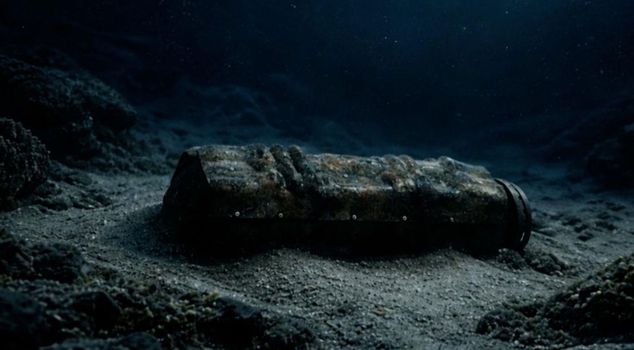
Produced by the Machinery and Chemical Industry, Turkey's first smart bottom mine 'Malaman' can detect and destroy targets with acoustic, magnetic and pressure sensors. Entering the inventory of the Naval Forces Command, 'Malaman' weighs 600 kg and is very difficult to detect thanks to its special casing.
A written statement has been made regarding 'Malaman', Turkey's first smart bottom mine produced by the Machinery and Chemical Industry (MKE).
CAN DETECT ACOUSTIC, MAGNETIC AND PRESSURE CHANGES UNDERWATER
According to the statement; designed in accordance with the seabed structure, Malaman can safely perform its duties without being affected by overheating or bullet impacts. Entering the inventory of the Naval Forces Command, Malaman weighs approximately 600 kilograms, including 400 kilograms of insensitive underwater explosive. Malaman has the capability to detect, analyze, and evaluate acoustic, magnetic, and pressure changes occurring underwater in real time.
Equipped with high-tech sensors, the system can detect frigates, submarines, attack boats, and tankers thanks to this capability, and instantly reports the information to the management center. The Ignition System, which has the ability to process signals from the sensors, can be adjusted with different parameters and successfully neutralizes the detected enemy target by igniting the explosive. Multiple locking mechanisms are located on the mine to prevent uncontrolled explosions and ensure safety.
DIFFICULT TO DETECT ON THE SEABED
With its special hull structure, Malaman makes it difficult for mine-hunting sonars to detect it on the seabed; it further strengthens this advantage through three different special composite casings developed to minimize acoustic reflectivity and increase visual concealment. Designed in shapes and colors suitable for the natural structure of the seabed, these casings also reduce the likelihood of Malaman being detected by side-scan sonars and autonomous underwater vehicles to the lowest level.