31.03.2026 19:15
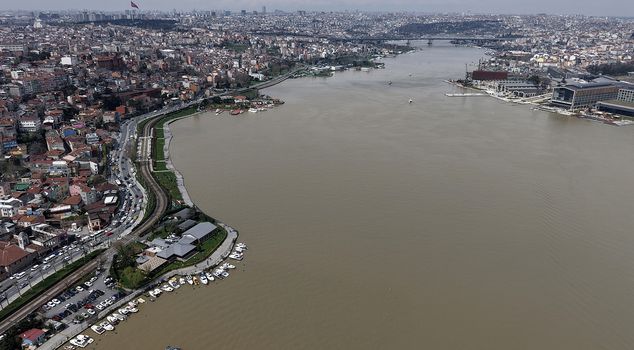
After the heavy rain in Istanbul, muddy water flowing from the streams caused a color change in some parts of the Bosphorus. The Bosphorus and the Golden Horn, which turned brown, were captured in aerial images.
After the heavy rainfall in Istanbul, the muddy water flowing from the streams caused a color change in some areas of the Bosphorus. The muddy flow coming from the Göksu Stream in Beykoz may lead to problems in the coastal ecosystem.
MUDDY WATER MIXED WITH THE ISTANBUL BOSPHORUS
Following the warnings from the General Directorate of Meteorology, the muddy water overflowing from the streams mixed with the Bosphorus after approximately 4 days of rainfall, which amounted to 97.8 kilograms per square meter. This situation particularly led to the water turning brown in areas close to the shore. The intense muddy flow from the Göksu Stream, which flows into the Bosphorus in Beykoz, drew attention, while it was observed that some small boats around the stream took on water and sank.
"LAND-BASED INPUTS WILL INCREASE"
Evaluating the color change, Prof. Dr. Bayram Öztürk, a faculty member of the Department of Marine Biology and Management of Marine and Inland Water Resources at Istanbul University (IU), stated, "This is mud. There may be problems in the coastal ecosystem. When it rains heavily, land-based inputs also increase."
CAPTURED FROM THE AIR
The point where the Göksu Stream merges with the Bosphorus was captured by a drone. Additionally, the images of the Golden Horn covered in mud also drew attention. While the spread of the brown water was clearly visible from the air, moments were also captured where some individuals were trying to salvage their damaged boats and vessels in the area.