28.07.2026 00:30
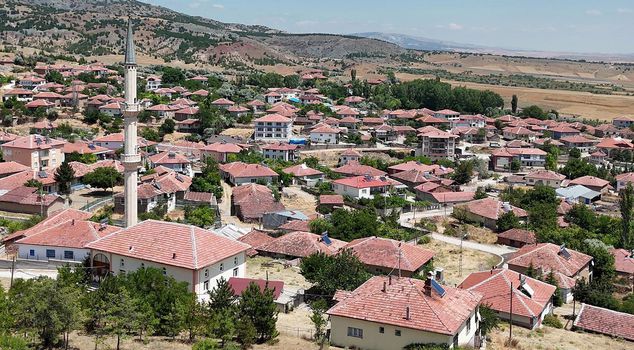
The Kabalı Fruit Growing Project, initiated in 2009 in the village of Kabalı in Yozgat’s Kadışehri district upon the suggestion of the district governor at the time, has transformed the village's landscape. The villagers, who previously subsisted on dry farming, entered a new era with the fruit growing investment. The village, which experienced economic and social relief and saw a halt to outward migration, has become a model production center.
The Kabalı Fruit Growing Project, launched in 2009 in the village of Kabalı in Yozgat's Kadışehri district, transformed the village's prosperity level.
MIGRATION STOPPED, UNEMPLOYMENT ENDED
The villagers, who previously relied on dry farming for their livelihood, entered a new era both economically and socially with the fruit growing investment. While the unemployment problem has largely disappeared in this once migration-prone village, young people can now work in their own village and build their futures.
THE IDEA CAME FROM THE DISTRICT GOVERNOR
Hüseyin Ünal, former village head of Kabalı and one of the project's founders, described the project's inception: "We started the project in 2009, the Kabalı Fruit Growing Project. A district governor came to our district. Governor Bey held a meeting. Our district governor is İsmail Şanlı. When he asked, 'What do you do?' we said, 'We do dry farming, planting barley and wheat.' He said, 'Do these things bring you any profit?' I said, 'No. Every year we sell one cow or calf to cover our fuel costs.' It neither fed us nor alleviated hunger. Still, we were doing what we learned from our ancestors. Governor Bey said, 'Then let's make a project. Let's consolidate the lands. If you come together, small-scale production won't cause losses.' I said, 'I can do this.' I took the floor in a meeting of 35 village heads. I came to my village and gathered my villagers."
MOST FIELDS WERE LYING FALLOW
Ünal noted that Kabalı village, with a population of about 1,200 to 1,300 at the time, was constantly losing people to migration, and they worked hard to convince the villagers of the project. He said, "Back then, our village was a large one, but we were always giving out migrants. People were going to Istanbul and Ankara. I told my villagers, 'Why should we leave? We have land.' Because of migration, most fields were lying fallow. I got consent from about 70 percent. Then the others also joined the project."
PRODUCTION BEGAN ON 10,000 DECARES
Stating that the implementation process of the project was not easy, Ünal expressed that initially, 5,640 decares of land were brought into production. Ünal said, "With the support of Governor Bey, we established a family company. Later, I served as cooperative president for many years. Our village's total land area is 10,540 decares. We divided the project into two phases. In the first phase, we activated 5,640 decares. It seemed easy on paper, but we faced great difficulties in practice. Tenders were held, and work began."
"PROSPERITY INCREASED, SOCIAL LIFE REVIVED"
Emphasizing that the project changed the economic and social structure of the village, Ünal stated that young people can now work in their village and added, "People's prosperity level increased. The unemployment problem in Kabalı Village was solved. Today, our young people over 15 come and work during the harvest season. Our students work here when school is out. Our girls buy their own trousseaus, our young people can get married. They get to know each other while working here. Social life in our village has also revived."
"WEALTH BRINGS PEACE, POVERTY BRINGS FIGHTS"
Noting that social peace increased alongside economic development in the village, Ünal said he hopes the project sets an example for all villages and added: "We solved the unemployment problem of our village. Wealth brings peace, poverty brings fights. I have hardly seen any divorce petitions filed in my village since 2010. Everyone has a job. There are no fights, no noise. Every morning, after sending kids to school, both women and men come to work. It's a wonderful thing. I wish it existed in every village. We thank the politicians, governors, and district governors of that time. Let there be such projects in everyone's village in this region."