30.03.2026 17:21
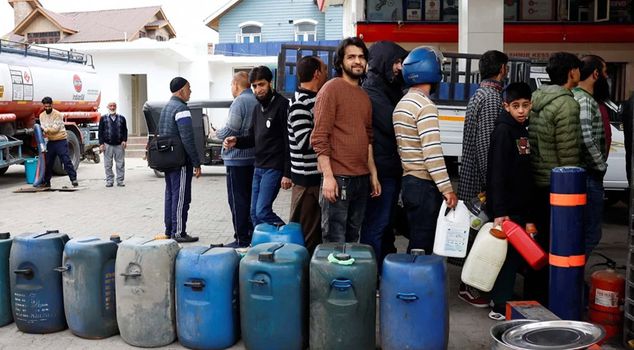
As the global energy supply crisis deepens, with fuel shortages and price increases growing, experts warn that if the situation worsens, fuel may be distributed on a rationing basis in countries.
As the largest energy supply shock in history passes its first month, fuel shortages and price increases that began in Asia have started to spread towards Europe and the US. Experts warn that the world has not yet fully grasped the seriousness of the crisis, indicating that more severe scenarios are on the horizon.
FUEL SHORTAGES EMERGE IN ASIA
The contraction in global oil supply has led to sharp price increases, while growth expectations are being revised downward. Many Asian countries, from Thailand to Pakistan, are experiencing serious fuel shortages, and representatives from the energy sector state that the crisis is still in its early stages.
EXPERTS: THE WORLD IS UNAWARE OF THE SITUATION
In discussions with over 30 individuals from the oil and gas sector conducted by Bloomberg, the common view was that the scale of the crisis is not sufficiently understood on a global level. Many experts compare the current situation to the oil crisis of the 1970s, noting that the closure of the Strait of Hormuz could lead to a much larger systemic crisis.
200 DOLLAR OIL SCENARIO
The closure of the Strait of Hormuz means a daily drop of approximately 11 million barrels in global oil supply. The 9 million barrel gap that has formed in the market has reached a level that exceeds the total consumption of Europe's major economies. TotalEnergies CEO Patrick Pouyanne stated that if the crisis lasts more than 3-4 months, it would pose serious risks to the global system. Wall Street analysts and US officials have raised the possibility of oil prices reaching 200 dollars per barrel.
NATURAL GAS SITUATION IS MORE CRITICAL
While emergency stocks in oil provide a limited buffer, the lack of alternative routes for liquefied natural gas (LNG) is deepening the crisis. A significant portion of global LNG supply passes through the Strait of Hormuz, and the damage to a major LNG facility in Qatar, along with the announcement that the repair process will take years, has heightened concerns.
RISK GROWS FOR EUROPE AND THE US
Even in the US, which is relatively distant from the center of the crisis, fuel prices have started to rise. According to Bloomberg Economics data, inflation in the US has quickly increased due to the impact of fuel prices. Analyses suggest that if oil prices rise to 110 dollars, it will increase inflation in the Eurozone while slowing down growth. At the 170 dollar level, the risk of stagflation on a global scale comes into play.
RADICAL STEPS FROM GOVERNMENTS
Some countries have already begun to take measures to mitigate the effects of the crisis. The Philippines has transitioned to a four-day workweek, while the International Energy Agency has called for increased remote work and public transportation usage. Carlyle Group's Head of Strategy, Jeff Currie, emphasized that the energy transition is inevitable, noting that this process will be rapid and painful.