15.03.2026 11:18
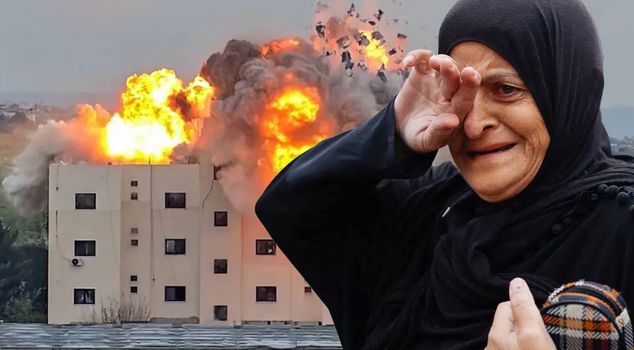
The Lebanese government announced that since March 2, 826 people have lost their lives and 2,009 have been injured in attacks carried out by Israel. Among the deceased are 106 children and 65 women.
The increasing tension between Israel and Lebanon continues to raise the death toll in the region. The Lebanese Ministry of Health announced that the number of people killed in attacks carried out by Israel since March 2 has risen to 826.
In a written statement from the ministry, it was noted that the number of injured has reached 2,009 as a result of the attacks. The statement emphasized that a significant portion of those who lost their lives were civilians, including children and women.
THEY ARE ALSO KILLING WOMEN AND CHILDREN
Authorities announced that among those killed in the attacks were 106 children, 65 women, and 31 healthcare workers. It was also reported that 51 healthcare workers on duty were injured during the attacks.
THEY ARE ALSO TARGETING RESIDENTIAL AREAS
Southern Lebanon and areas near the Israeli border have been subjected to intense bombardment in recent weeks. The Israeli army claims to be conducting operations against Hezbollah targets, while the Lebanese side states that the attacks have also affected residential areas.
Due to the attacks, serious damage has occurred in many settlements along the border, and thousands of civilians have been forced to leave their homes. Infrastructure, hospitals, and health centers in southern Lebanon have also been damaged by the attacks.
THERE IS A RISK OF REGIONAL WAR
On the other hand, the tension in the region is not limited to the Lebanese border. While Israel continues its operations against Hamas in Gaza, mutual attacks with Hezbollah on the northern border are also ongoing. Experts point out that the risk of the clashes at the Lebanese border turning into a larger regional war is increasing.
The international community is concerned about the spread of the conflicts. The United Nations and many countries are calling on the parties to de-escalate the tension, while it is noted that the humanitarian situation in the region is becoming increasingly severe. The Lebanese Ministry of Health warned that if the attacks continue, the death toll could rise even further.
WHY IS ISRAEL ATTACKING LEBANON?
The main reason for Israel's attacks on Lebanon is the military tension with Hezbollah, which operates in southern Lebanon. Israel views Hezbollah as one of the biggest security threats to itself and claims to be responding to attacks along the border. Several key factors lie behind the conflicts:
Ongoing conflict with Hezbollah
Hezbollah is an organization supported by Iran and has a strong military presence in southern Lebanon. There has been a long-standing hostility between Israel and Hezbollah. Israel states that it targets locations in southern Lebanon in response to Hezbollah's rocket attacks or military activities along the border.
Spread of the Gaza war to the region
Following Israel's war against Hamas in Gaza, Hezbollah has occasionally launched rocket and missile attacks against Israel. In response, the Israeli army began targeting Hezbollah positions along the Lebanese border. This situation has led to an increase in clashes on the northern border.
Iran's influence in the region
Hezbollah is seen as one of Iran's strongest allies in the Middle East. Israel frequently expresses its desire to limit Iran's military influence in the region. Therefore, targeting Hezbollah's military infrastructure is also viewed as an indirect struggle against Iran from Israel's perspective.
Border security and deterrence
Israel claims that Hezbollah possesses tens of thousands of rockets capable of targeting Israeli cities. Therefore, it states that it aims to weaken the organization's military infrastructure and reduce threats along the border.
In short, Israel's attacks on Lebanon stem directly from the military tension experienced largely with Hezbollah, rather than with the Lebanese state itself. However, since these conflicts often affect residential areas in Lebanon, there is a serious risk of a humanitarian crisis and significant destruction in the region.